Do Self-Taught Coders Get Hired? A Realistic Guide for 2026
Discover if self-taught coders get hired in 2026. Learn how to build a winning portfolio, navigate job markets, and overcome common pitfalls without a degree.
Thinking about learning to code but not sure where to begin? You’re not alone. Thousands start every year, and most of them wonder the same things: How long will it take? Do I need to spend a lot? Can I start at 35 or older? This guide answers those questions with straight‑up advice you can act on today.
First off, coding isn’t a secret club. All you need is a computer, an internet connection, and a willingness to practice. The biggest hurdle is usually just deciding which resource fits your schedule and wallet.
There are three main ways to learn:
For most beginners, starting free and moving to a paid option only when you’re confident saves time and money. If you’re over 30, you actually have an edge: you bring life experience and discipline that younger newbies often lack.
Here’s how to keep costs low while still getting quality training:
When you feel ready for a deeper dive—say, you want to build a web app or learn data science—consider a short bootcamp that focuses on that niche. Look for alumni success stories and transparent job placement rates.
Remember, coding is a skill you improve by building things. Start with a simple project like a personal website or a basic calculator. Share it on GitHub, ask for feedback, and iterate. That hands‑on practice beats any lecture.
Bottom line: you can learn coding for free, you can learn it at any age, and you can do it without breaking the bank. Pick a path, set a schedule, and start building. Your first line of code is just a click away.
Discover if self-taught coders get hired in 2026. Learn how to build a winning portfolio, navigate job markets, and overcome common pitfalls without a degree.

Discover how to code on your phone in 2026. We review the best apps for Android and iOS, compare cloud IDEs like Replit, and share tips for optimizing your mobile development workflow.
Wondering if coding ever gets easier? Discover the truth about the programming learning curve, from syntax struggles to architectural mastery.

Confused about where to start with coding? This guide breaks down the easiest programming languages for beginners. We compare Python, Scratch, and HTML so you can pick the right path.

Discover which programming languages offer the highest salaries in 2026. We analyze top-paying languages like Rust and Go, compare industry trends, and explain how experience impacts tech earnings.
Can coders be self-taught? Yes - and thousands in India are proving it without degrees or bootcamps. Learn how real people go from zero to job-ready using free tools, consistent practice, and real projects.

Learn the five fundamental types of code-source, machine, assembly, bytecode, and scripting-and how they work together in programming. Essential for beginners and intermediate coders.

Most coders in India now work from home using simple tools and flexible schedules. Learn how beginners can start remote coding jobs, what tools they use, and the real pros and cons of working remotely in 2025.
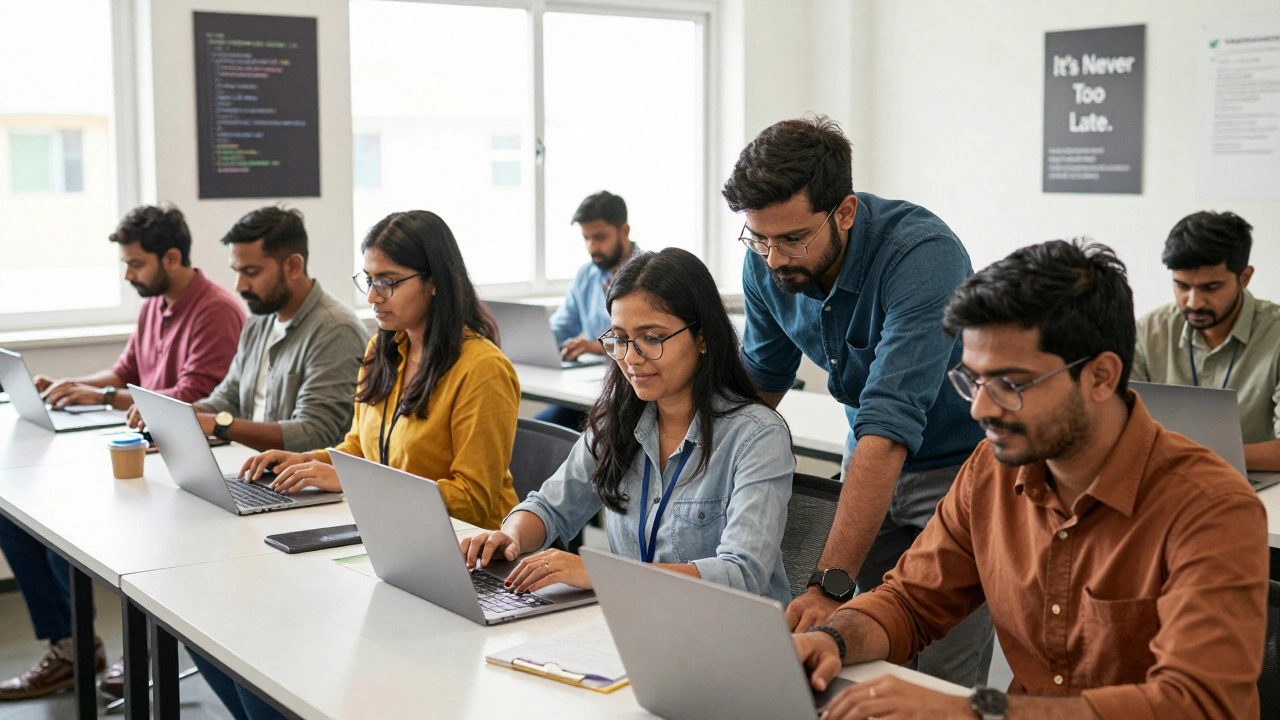
The average coder is not a teenager - they're typically in their early 30s. Learn why people of all ages are switching to coding, what employers really look for, and how it's never too late to start.
Learn how to start coding as a beginner with practical steps, free tools, and real project ideas. No experience needed-just curiosity and consistency.
Python is the best coding language for beginners in 2025 because it's simple, powerful, and lets you build real projects fast. Learn how to start, what to build, and where to go next.
Discover if you can truly learn programming at home, the tools you need, a step‑by‑step curriculum, and tips to stay motivated and avoid pitfalls.