
Study Abroad Budget Estimator
Estimated Annual Total
Pro Tip: Based on the article, consider the 2+2 Model (Community College → University) to potentially reduce these costs by up to 50% if targeting the USA.
Getting an International Degree Without Breaking the Bank
The idea of studying in a fancy city like London or Boston usually comes with a price tag that makes most people recoil. For many, the dream of an international degree feels like it's locked behind a massive paywall of tuition fees and exorbitant rent. But here is the truth: you don't actually need to be a millionaire to get a degree from a world-class institution. There are hidden pathways, strategic choices, and funding models that can make this happen even if your bank account looks empty right now.
If you are staring at a brochure for a university in the US or UK and wondering how on earth you'll afford it, you aren't alone. The goal isn't just to "find money," but to build a financial strategy that combines lower costs with targeted funding. Whether you are looking for a full ride or just trying to cover your living expenses, the approach is the same: shift your focus from the brand name of the city to the actual cost of the education.
Quick Wins for Funding Your Journey
- Target Low-Tuition Hubs: Look at Germany, Norway, or Taiwan instead of the US or UK.
- Apply for "Full Ride" Scholarships: Focus on grants that cover both tuition and living costs.
- Utilize Work-Study Programs: Find universities that offer guaranteed on-campus jobs.
- Consider Community Colleges: Start cheap in the US and transfer to a big university later.
- Explore Crowdfunding and Micro-grants: Use niche platforms for specific academic goals.
Choosing the Right Destination to Save Thousands
One of the biggest mistakes students make is picking the country first and the budget second. If you can't afford a high-cost region, you have to flip the script. Instead of asking "Which university do I want?" ask "Which country offers the best value?"
For instance, Germany is a powerhouse for public universities that offer tuition-free education for both domestic and international students in many states. You only pay a small semester contribution fee, usually between €150 and €400, which often includes a public transport pass. This completely eliminates the biggest hurdle-the tuition fee-leaving you to only worry about your monthly rent and food.
Similarly, Norway and some programs in Finland have historically offered free tuition for all, though some policies are shifting toward charging non-EU students. Even then, the cost of living can be managed if you live in student dorms rather than private apartments. If you look toward Asia, countries like Taiwan provide generous scholarships for international students that cover tuition and provide a monthly stipend, making it a highly viable option for those with zero budget.
| Region | Average Tuition (Annual) | Estimated Living Cost | Funding Availability |
|---|---|---|---|
| USA (Private) | $30,000 - $60,000 | High | High (but competitive) |
| Germany (Public) | €0 - €3,000 | Moderate | Moderate (Stipends) |
| France (Public) | €2,000 - €4,000 | Moderate | High (Government grants) |
| Taiwan | $3,000 - $8,000 | Low to Moderate | Very High (University grants) |
The Art of Winning Fully Funded Scholarships
Most people apply for study abroad scholarships and get rejected because they treat the application like a standard school form. A scholarship isn't a reward for good grades; it's an investment. The organization giving the money wants to see a return on that investment. They aren't looking for a "perfect student"; they are looking for a future leader who will use that degree to solve a specific problem.
Erasmus+ is a gold mine for this. It is an EU-funded program that provides grants for students to study and train in different European countries. It often covers travel and provides a monthly allowance. Because it is designed to promote mobility, it's often more accessible than prestige-based scholarships.
Another heavy hitter is the Fulbright Program. This isn't just about academics; it's about cultural diplomacy. If you can prove that your presence in a foreign country will build a bridge between your home nation and the host nation, your chances of getting a full ride skyrocket. To win these, stop listing your achievements and start telling a story about the impact you want to make.
Strategic Alternatives to Traditional Degrees
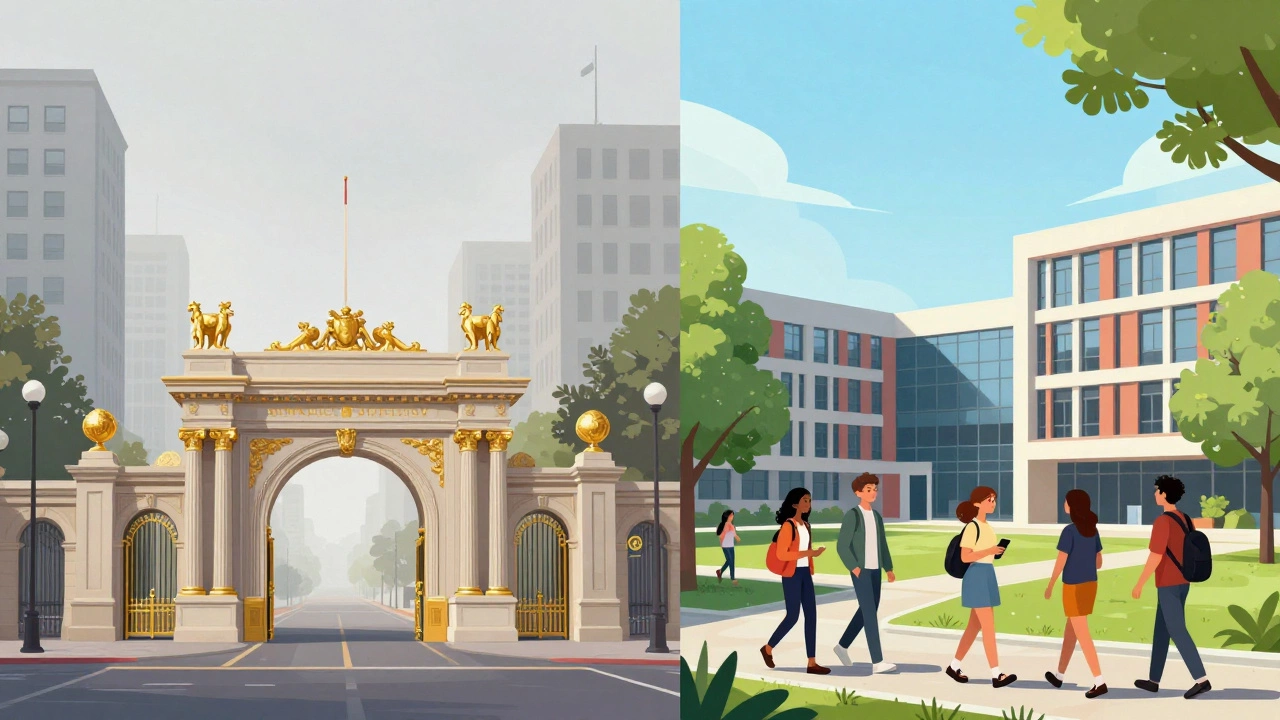
Who says you have to spend four years in a foreign country all at once? There are "budget hacks" that provide the same credentials for a fraction of the cost. One of the most effective is the 2+2 model. This involves spending two years at a community college-which are significantly cheaper and have easier admission standards-and then transferring to a four-year university to finish your degree.
In the US, Community Colleges are two-year institutions that offer associate degrees and transfer pathways to major universities. You can save up to 50% on your total degree cost by doing this. Your diploma at the end comes from the prestigious university, not the community college, so the end result is identical.
Another option is the "Global Degree" or hybrid model. Some universities allow you to do your first two years online or at a satellite campus in a cheaper city and only move abroad for the final specialization. With the rise of digital learning, many institutions are becoming flexible with how they deliver the first half of a degree.
Managing the "Hidden" Costs of Living
Tuition is the obvious cost, but the "hidden' costs-rent, health insurance, and flights-are what usually break a student's budget. To survive, you need to stop thinking like a tourist and start thinking like a local. In cities like Berlin or Madrid, renting a private studio is a luxury. Instead, look for Wohngemeinschaften (WGs) in Germany-shared apartments where students split the cost of a large flat. This can cut your housing costs by 40%.
Cooking at home is a cliché for a reason: it works. A student spending $15 a day on takeout will be broke in three months. A student who buys bulk grains and seasonal vegetables from local markets can survive on a third of that. Also, look for Student Discounts. From software like Adobe and Microsoft to museums and trains, your student ID is essentially a discount card. In Europe, the ISIC (International Student Identity Card) is a must-have for accessing these perks.

Navigating Student Loans Without Getting Trapped
When scholarships aren't enough, loans are the last resort. However, not all loans are created equal. Avoid high-interest private loans that compound daily. Instead, look for government-backed loans or specialized education loans from banks that offer a "grace period."
A grace period means you don't have to start paying the loan back until six months or a year after you graduate. This gives you time to find a job that pays enough to handle the installments. If you must take a loan, prioritize a "co-signer" with a strong credit history to lower your interest rate. Always calculate your "Debt-to-Income" ratio: ensure that your future monthly loan payment doesn't exceed 15-20% of your expected starting salary in that country.
Can I study abroad for free if I have a low GPA?
Yes, it is possible. While "merit-based" scholarships require high grades, many "need-based" grants and government-funded programs (like some in Germany or through certain NGOs) focus more on financial hardship and your potential for growth rather than just a GPA. Focus on your personal statement and a strong portfolio of work.
How do I find universities with the lowest tuition?
Start by researching public universities in Europe, specifically in Germany, France, and Norway. Use databases like DAAD (for Germany) or Campus France. Avoid "for-profit" colleges and look for institutions funded by the state, as they almost always have lower fees for international students.
Is it legal to work while studying abroad?
In most countries, student visas come with a work permit, but it's usually limited. For example, in many EU countries and the UK, you are allowed to work 20 hours per week during the semester and full-time during breaks. Always check the specific visa rules for your destination to avoid legal issues.
What is a 'Full Ride' scholarship?
A full ride covers everything: tuition, room, board, books, and sometimes even a flight to and from the country. These are the most competitive awards, but they are the gold standard for students who cannot afford any out-of-pocket expenses.
Which countries are most affordable for international students?
Countries like Germany, Taiwan, Malaysia, and Poland are often much more affordable than the US or UK. Germany is famous for no tuition at public schools, while Taiwan and Malaysia offer a very low cost of living combined with competitive tuition rates.
Next Steps to Get Started
If you're ready to move forward, don't start by browsing university websites. Start by creating a spreadsheet. Column A should be the country, Column B the average tuition for your course, and Column C the average monthly rent for a shared room in that city. Once you see the numbers, you'll know which countries are realistic.
Next, spend one month focusing solely on scholarships. Don't apply to ten universities; apply to three that offer the best funding. A few high-quality, tailored applications are worth more than twenty generic ones. Finally, start saving a "buffer fund." Even with a scholarship, you'll need a few thousand dollars for the initial visa process, flight, and first month's deposit. Start small, but start now.