7-Day Coding Challenge Planner
Your Path to Job-Ready Code
Start your journey with this proven 7-day plan used by successful self-taught coders. Track your progress and build confidence one day at a time.
Choose Your Starting Point
Progress Tracker
"Start here - Don't overthink. Write one line of code today. Then another tomorrow." - From the article
Your 7-Day Plan
Install VS Code
First freeCodeCamp lesson
Build simple calculator
Push to GitHub
Fix one error
Join programming community
Repeat what you learned
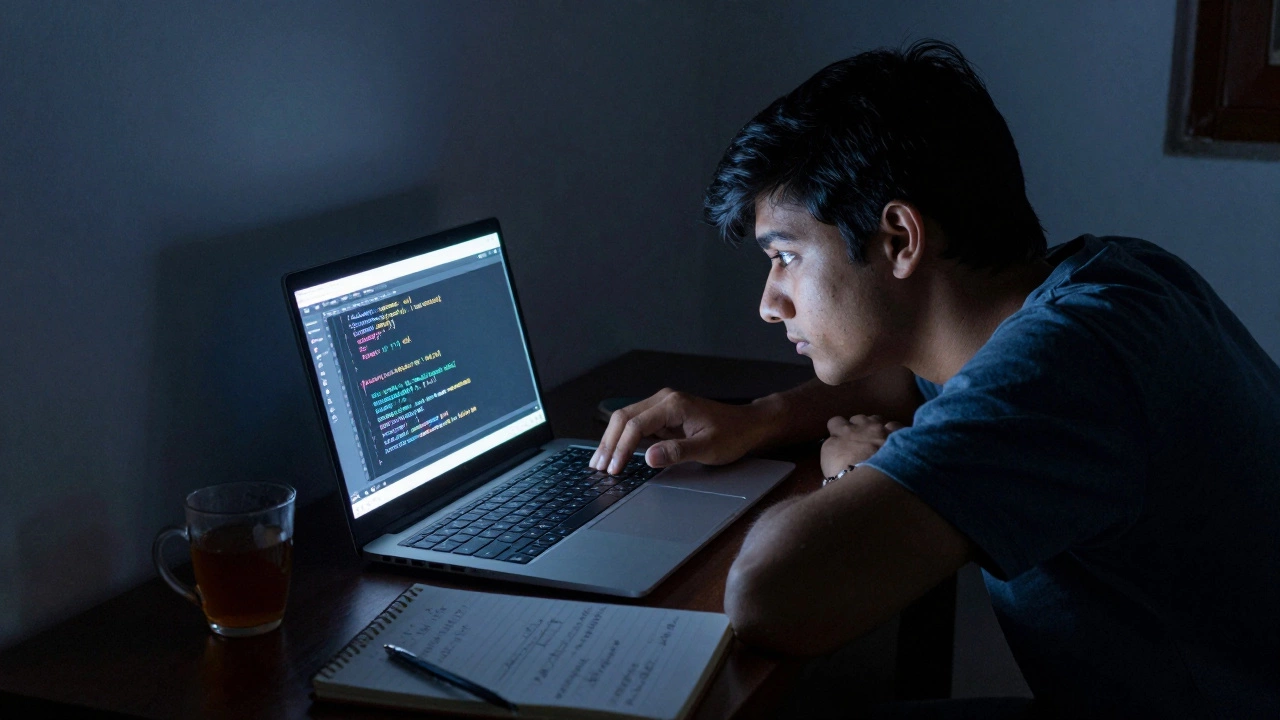
Every year, thousands of people in India quit their jobs, drop out of college, or take a break from school to teach themselves how to code. They watch YouTube videos at 2 a.m., spend weekends on freeCodeCamp, and grind through LeetCode problems until their eyes burn. And yes - many of them land jobs at startups, remote companies, and even big tech firms. But here’s the truth no one tells you: self-taught coders don’t succeed because they’re genius outliers. They succeed because they follow a system most schools ignore.
How many self-taught coders actually get hired?
In 2025, a survey of 1,200 Indian tech hiring managers found that 38% of new junior developers had no formal computer science degree. That’s not a fluke. It’s a trend. Companies like Zomato, Swiggy, and Razorpay now actively recruit from free coding platforms. They don’t ask for your college transcript. They ask for your GitHub, your portfolio, and your problem-solving style.
One developer from Lucknow taught himself Python over 14 months while working part-time at a call center. He built a small inventory tracker for his uncle’s shop, posted it on GitHub, and got a job offer from a SaaS startup after a 30-minute coding test. No degree. No bootcamp. Just code, consistency, and clarity.
What self-taught coders do differently
Most people trying to learn to code on their own fail for the same three reasons:
- They jump between tutorials instead of building real projects
- They wait for perfect understanding before writing code
- They don’t show their work to anyone
Successful self-taught coders do the opposite.
They start with one tiny project - a to-do list app, a weather checker, a quiz game. Not because it’s impressive, but because it forces them to use real tools: Git, debugging, error logs, and deployment. They don’t wait until they "know enough." They learn by breaking things, then fixing them.
They share their progress - even if it’s messy. They post code on Reddit’s r/learnprogramming, ask questions on Stack Overflow, and join local Discord communities. Feedback becomes their teacher. One coder from Coimbatore said, "I got better faster after I started saying ‘this doesn’t work’ out loud than I did after six months of watching tutorials."
The myth of "the right language"
"Should I learn Python or JavaScript?" "Is Java better for jobs?" "What’s the best language to start with?"
These questions trap beginners. The truth? It doesn’t matter - as long as you pick one and stick with it for at least six months.
Python is popular because it’s readable. JavaScript is everywhere because browsers run it. Java and C# power enterprise apps. But companies care less about your first language and more about your ability to learn the next one.
A 2024 study by HackerRank analyzed 45,000 coding tests from Indian applicants. Those who switched languages within their first year scored 23% lower on problem-solving tasks than those who stayed with one language. Depth beats breadth early on.
Free resources that actually work
You don’t need to pay for a bootcamp to learn. Here’s what works:
- freeCodeCamp - Complete the Responsive Web Design and JavaScript Algorithms certifications. Build the projects. Don’t skip them.
- The Odin Project - A full-stack curriculum that mimics real-world workflows. Includes Git, APIs, and testing.
- CS50 by Harvard - Free on YouTube. It’s tough, but it teaches how to think like a programmer, not just how to write syntax.
- LeetCode - Start with Easy problems. Do 3 a week. Focus on patterns, not memorization.
- GitHub - Clone repos. Read code. Break it. Fix it. Then upload your own.
One student from Madurai spent 11 months using only these five resources. He didn’t watch a single paid course. He got hired as a frontend developer at a Bangalore startup after submitting a portfolio with 12 live projects - all built with free tools.
Why bootcamps aren’t magic
Bootcamps promise "job placement in 12 weeks." They’re expensive. And they work - for some.
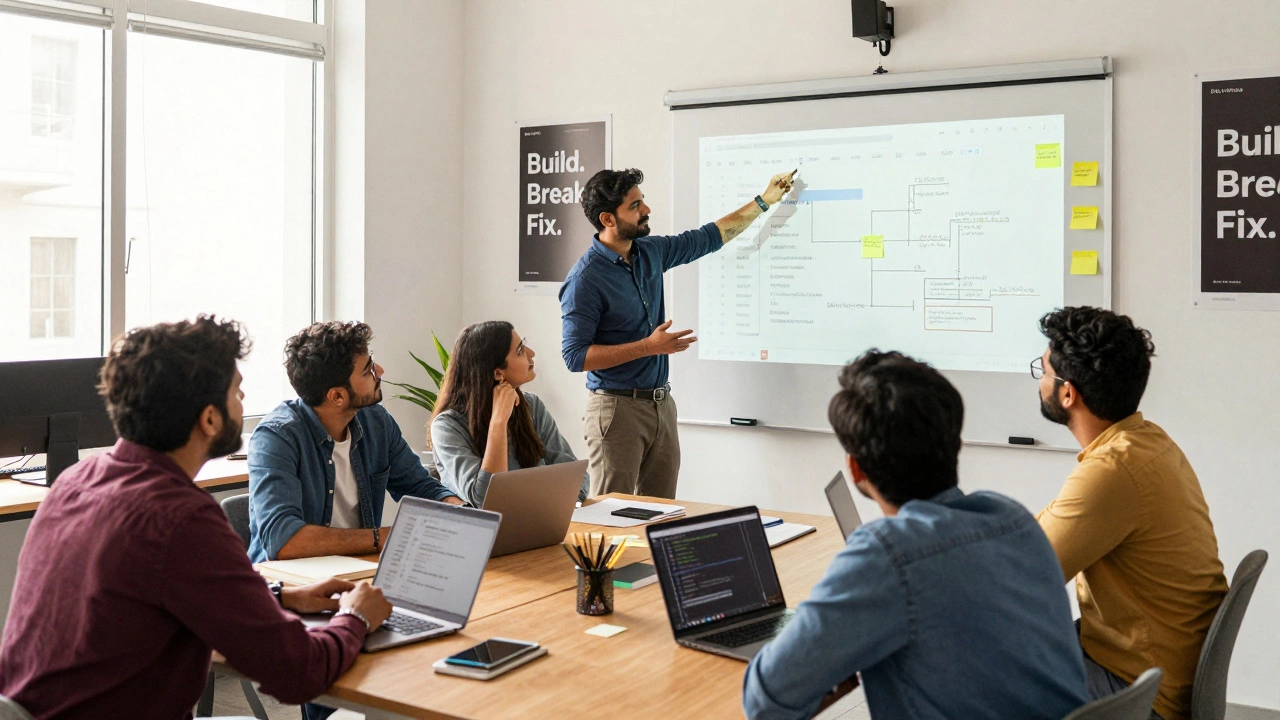
But here’s what they don’t tell you: most bootcamp grads succeed because they’re surrounded by peers, mentors, and deadlines. They’re forced to build, present, and iterate. That structure helps - but it’s not unique to bootcamps.
Self-taught coders can replicate this. Join a local coding meetup. Form a study group with three others. Set weekly goals. Present your work. Get feedback. You don’t need a certificate. You need accountability.
In Chennai, a group of five self-taught coders started meeting every Sunday at a library. They reviewed each other’s code. One of them got a job after six months. The others? All hired within eight.
The hidden skill: learning how to learn
The biggest advantage self-taught coders have? They learn how to learn.
School teaches you to memorize. Coding teaches you to search, test, and adapt. Google is your textbook. Stack Overflow is your tutor. Documentation is your syllabus.
When you hit a wall - and you will - you don’t wait for someone to explain it. You read error messages. You break the problem down. You try three different solutions. That’s the real skill employers want: resilience.
A 2025 survey by NASSCOM found that 67% of Indian tech managers rated "ability to troubleshoot independently" higher than "academic background" when hiring juniors.
What’s stopping you?
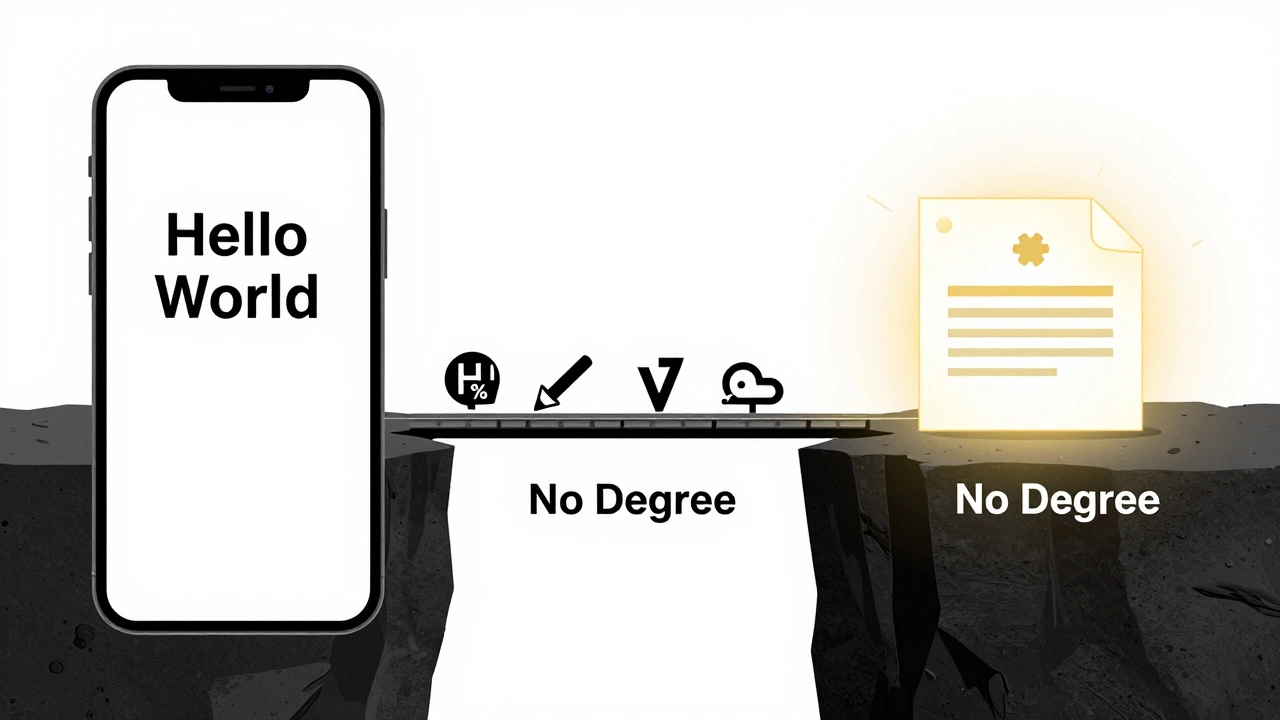
If you’re thinking, "I’m too old," "I don’t have a degree," or "I’m not smart enough," you’re not alone. But those aren’t barriers. They’re stories.
One woman from Thrissur started learning to code at 42 while raising two kids. She coded during nap times. She used her phone’s keyboard to write code on freeCodeCamp. Two years later, she works remotely for a US-based startup.
You don’t need permission. You don’t need a degree. You don’t need a fancy setup. You just need to write one line of code today. Then another tomorrow. And keep going.
Start here: Your 7-day plan
Here’s exactly what to do if you’re starting from zero:
- Day 1 - Install VS Code. Write your first "Hello World" in Python. Don’t overthink it.
- Day 2 - Complete the first freeCodeCamp lesson. Make a variable. Print it.
- Day 3 - Build a simple calculator. Use only what you’ve learned. No tutorials.
- Day 4 - Push your code to GitHub. Create your first repo. Name it "my-first-code".
- Day 5 - Find one error in your code. Fix it. Then write why it broke.
- Day 6 - Join r/learnprogramming. Post your calculator. Ask: "How can I make this better?"
- Day 7 - Repeat. Not tomorrow. Today.
That’s it. No app. No course. No payment. Just seven days of doing.
It’s not about talent. It’s about traction.
Self-taught coders aren’t special. They’re stubborn. They show up. They build. They share. They fail. They try again.
You don’t need to be the best. You just need to be the one who didn’t quit.