Coding Age Checker
How does your age compare to the average coder?
The average coder today is 32 years old globally. Find out how you stack up and get encouraging advice for your coding journey.
Enter your age above to see your results.
When you think of a coder, what comes to mind? A teenager typing furiously in a hoodie? A mid-30s parent switching careers? Or maybe someone in their 50s learning Python after retirement? The truth is, there’s no single face to coding anymore. The average coder today isn’t who you might expect.
Most coders are in their late 20s to early 40s
According to data from Stack Overflow’s 2024 Developer Survey and GitHub’s annual report, the median age of active coders globally is 32. That’s not a college kid fresh out of school - that’s someone with real-world experience, maybe a few years in another job, or even a parent balancing code with family life. In the U.S., the average is 31. In India, it’s 30. In Germany, it’s 34. Across Asia, Africa, and Latin America, the numbers are clustering tightly around 28-35.
This isn’t a fluke. More people are switching into coding after working in sales, teaching, nursing, engineering, or even the military. A 2023 study by Coursera found that 47% of people who started coding in the last two years were over 30. And that number is growing every year.
Why are older people learning to code now?
It’s not just about money - though that’s part of it. Salaries for entry-level developers in India now start at ₹6-8 lakh per year, and in cities like Bangalore or Hyderabad, they can hit ₹12 lakh for those with solid skills. But the real driver is flexibility. Coding offers remote work, freelance options, and the chance to build something that lasts.
Take Ravi, 38, from Chennai. He worked in a family-run textile business for 12 years. When the market shifted, he spent six months learning JavaScript and React through free online courses. Today, he builds websites for small businesses on Upwork. He didn’t go to college for computer science. He didn’t need to.
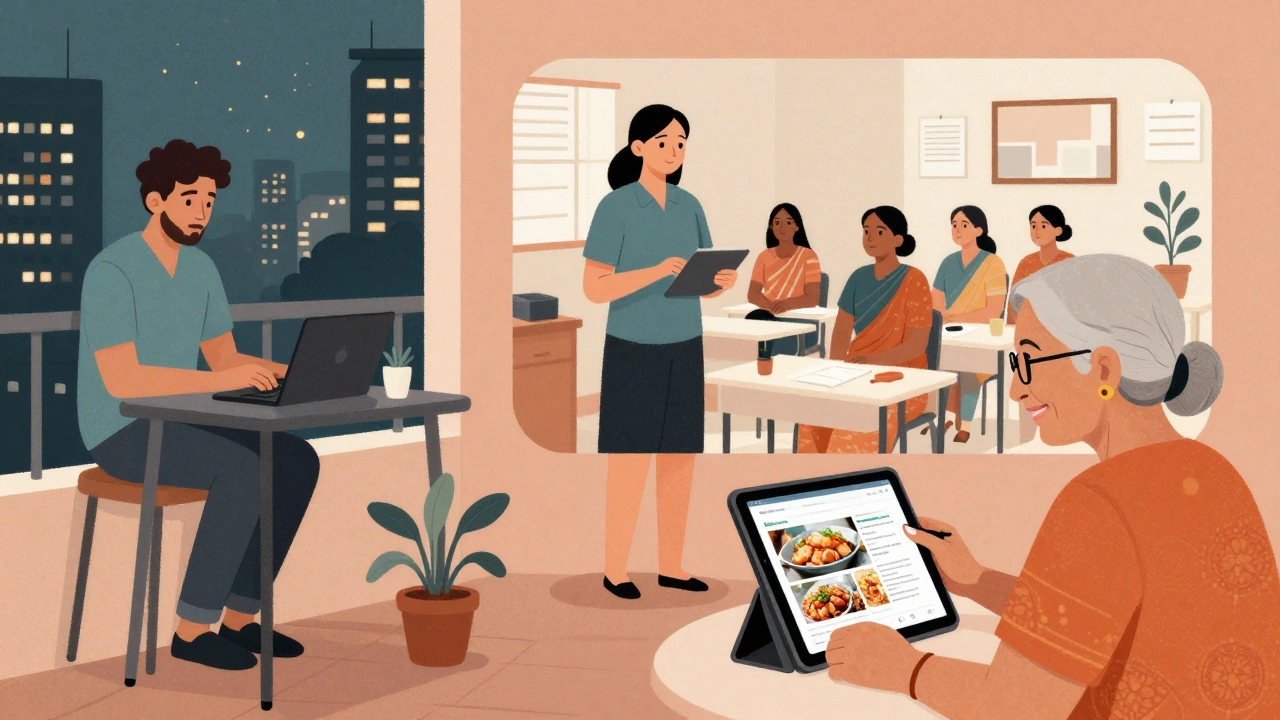
Same with Priya, 41, a former schoolteacher. She started coding after her kids went to college. She wanted to feel useful again. Now she teaches coding to women over 40 in her neighborhood. Her class? Mostly moms, grandmas, and retirees. The oldest student? 67.
Young coders are still out there - but they’re not the majority
Yes, there are 16-year-olds building apps and dropping out of school to start startups. But they’re the exception, not the norm. In coding bootcamps in India, only 18% of students are under 22. In university computer science programs, students under 20 make up less than 25% of enrollments.
Why? Because coding isn’t just about logic anymore. It’s about problem-solving, communication, and understanding people. Those skills come with time. A 20-year-old might write clean code. A 35-year-old knows which features users actually care about, how to explain tech to non-tech clients, and how to fix bugs under pressure.

Age doesn’t matter - experience does
Companies aren’t hiring based on age. They’re hiring based on what you can do. A 2024 report from LinkedIn showed that job postings for junior developers now list “willingness to learn” as the top requirement - not a degree or age.
Here’s what hiring managers actually look for:
- Can you build something real? (Not just tutorials - actual projects)
- Can you explain your code to someone who doesn’t code?
- Do you show up consistently?
- Have you fixed bugs, handled feedback, and kept going when things broke?
None of that requires you to be 20.
The myth of the teenage prodigy
Media loves stories about 14-year-olds launching apps. But those are outliers. They’re the ones that make headlines. The quiet majority? The 33-year-old accountant who learned Python to automate spreadsheets. The 45-year-old mechanic who built a tool to track car repairs. The 52-year-old nurse who created a mobile app for elderly patients to log medications.
These people aren’t featured in TechCrunch. But they’re the ones keeping the digital world running. They’re the ones who show up every day, learn slowly, and get the job done.
It’s never too late to start
There’s no cutoff. No expiration date. People in their 60s and 70s are learning to code right now - and they’re not doing it for fun. They’re doing it because they can. Because they have time. Because they want to stay sharp. Because they’re tired of being told they’re too old.
One woman in Pune, 71, learned HTML and CSS last year. She now runs a small blog about traditional Indian recipes. She says coding gave her back control. “I used to wait for my grandson to fix my website. Now I fix it myself.”
Age doesn’t slow you down if you’re motivated. The real barrier isn’t age - it’s fear. Fear of being too late. Fear of not being smart enough. Fear of failing in front of a room full of 20-year-olds.
Here’s the truth: those 20-year-olds are scared too. They’re just better at hiding it.
What coding classes look like today
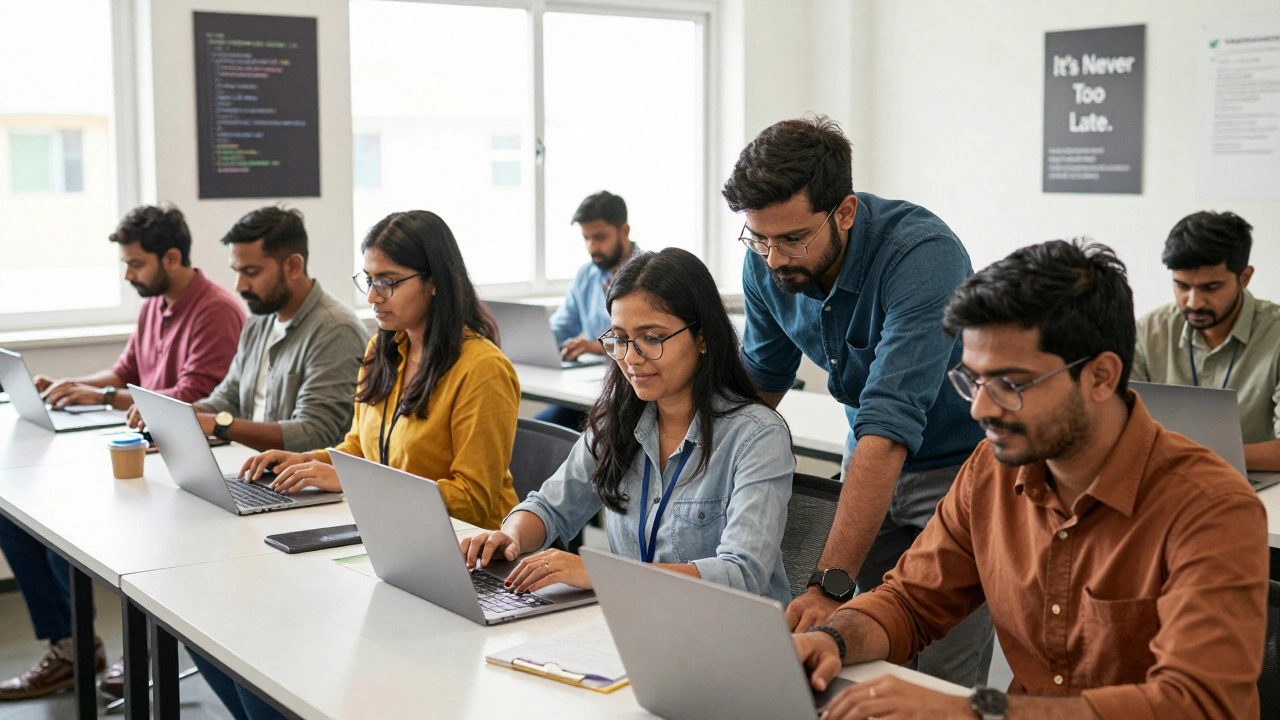
Modern coding classes reflect this shift. In Chennai, coding bootcamps now offer evening and weekend batches specifically for working adults. Some even have childcare options. Online platforms like freeCodeCamp and Udemy have seen a 72% jump in enrollments from users over 35 since 2022.
The curriculum? Less theory. More practice. Instead of spending weeks on algorithms, students build real projects in the first month: a to-do list app, a weather widget, a simple e-commerce page. They learn Git, GitHub, and how to ask for help - skills that matter more than memorizing syntax.
And the instructors? Many are former teachers, ex-engineers, or self-taught coders who switched careers in their 30s. They don’t teach like professors. They teach like mentors who’ve been where you are.
Final thought: You don’t need to be young to be good
The average coder isn’t a teenager. They’re not even in their 20s. They’re people who’ve lived, struggled, changed jobs, raised kids, lost jobs, and decided to try something new. They’re not the loudest. But they’re the most reliable.
If you’re wondering if it’s too late for you - it’s not. The door isn’t closing. It’s wide open. And the people already inside? They’re cheering you on.
Is 30 too old to start coding?
No. The average coder is 32. Many people start coding in their 30s, 40s, and even 50s. What matters is consistency, not age. Companies hire based on skills, not birth certificates.
Can someone over 50 learn to code?
Absolutely. There are documented cases of people in their 60s and 70s learning to code and building real apps. It takes longer to pick up new concepts, but older learners often bring better problem-solving skills, patience, and focus. Many coding bootcamps now offer tailored support for older students.
Do employers prefer younger coders?
No. A 2024 LinkedIn report found that 82% of hiring managers prioritize skills, portfolio, and attitude over age. Many companies actively seek older developers for their experience in communication, project management, and handling pressure. Age discrimination in tech is illegal in many countries - and increasingly rare in practice.
What’s the best way for someone over 30 to start coding?
Start with a project you care about. Don’t begin with theory. Build something useful - like automating a spreadsheet, creating a personal blog, or fixing a tool you use every day. Use free resources like freeCodeCamp, The Odin Project, or YouTube tutorials. Join a local or online community. Focus on finishing small projects, not memorizing everything.
Is coding a good career change after 40?
Yes. Many people over 40 successfully switch to tech. The pay is better than most mid-level jobs, and remote work is common. You’ll need to invest 6-12 months of consistent learning, but the return is high. You don’t need a degree - just a portfolio and the ability to solve problems.