CBSE Performance Estimator
How Your Resources Affect CBSE Results
This tool demonstrates how educational resources influence CBSE performance. Remember: High scores reflect system quality, not innate intelligence.
People often ask which state in India has the highest IQ. It sounds like a simple question, but the answer isn’t as straightforward as a ranking list. There’s no official government data that measures IQ by state. IQ tests aren’t administered nationwide, and even if they were, factors like access to education, nutrition, and socioeconomic conditions would heavily influence results. But if you look at performance in standardized tests-especially those tied to the CBSE syllabus-you can spot clear patterns.
CBSE Students and the Illusion of IQ Rankings
The Central Board of Secondary Education (CBSE) is one of the largest school boards in India, covering over 20,000 schools across the country and even abroad. It sets the curriculum for millions of students in Class 10 and Class 12. When you look at board exam results, especially in subjects like Mathematics, Science, and English, certain states consistently outperform others. But these scores reflect access to quality education, coaching infrastructure, and parental involvement-not innate intelligence.
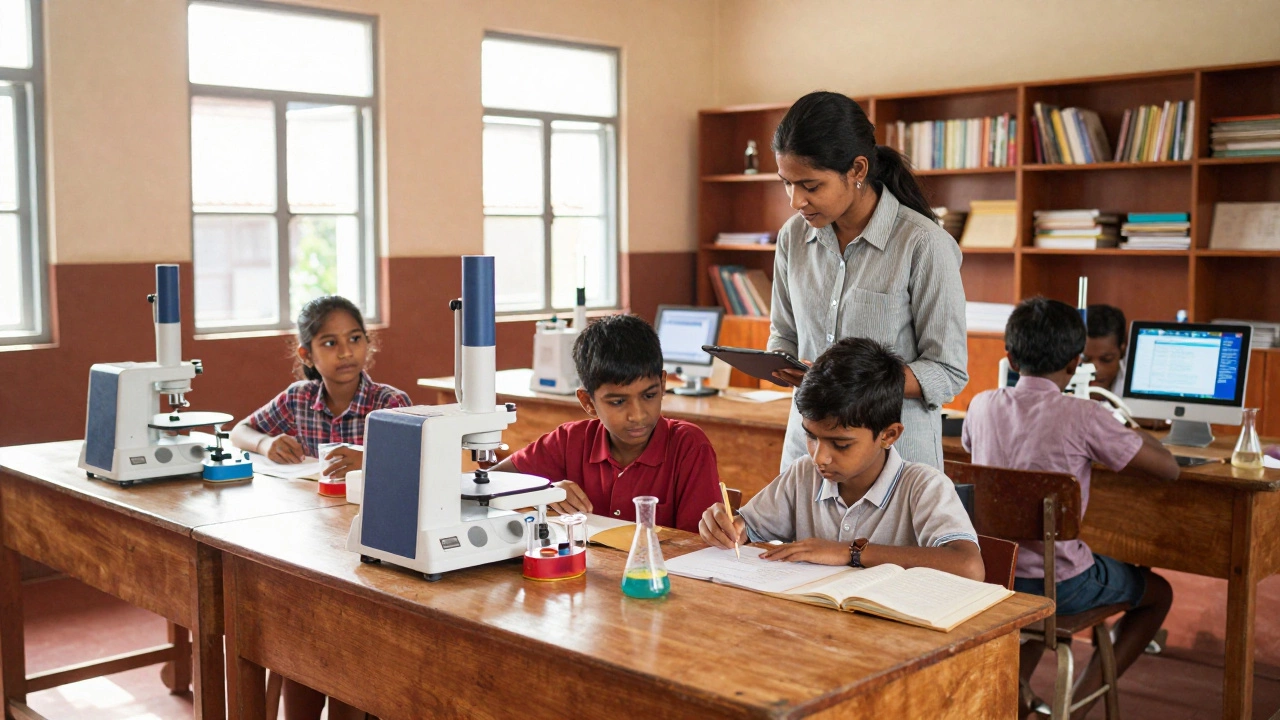
For example, in the 2024 CBSE Class 12 results, Kerala, Delhi, and Tamil Nadu had the highest average pass percentages, with Kerala leading at 99.7%. That’s not because Keralites are born smarter. It’s because their education system prioritizes early literacy, teacher training, and low student-to-teacher ratios. In rural Kerala, even government schools have libraries, science labs, and digital classrooms. Compare that to states where schools lack basic infrastructure, and the difference becomes obvious.
Why Some States Outperform Others
It’s not about genetics. It’s about systems. States that invest early in education see long-term gains. Take Kerala: it has a literacy rate of 96.2%, the highest in India. It started free primary education in the 19th century. Teachers are well-trained, and parents expect their children to study. In contrast, states like Bihar and Jharkhand have literacy rates below 70%. The gap isn’t IQ-it’s opportunity.
Delhi’s performance is another clue. As the national capital, it has hundreds of private schools, coaching centers, and access to national-level resources. Many CBSE-affiliated schools in Delhi are run by elite institutions like DPS, St. Xavier’s, or Ryan International. These schools hire experienced teachers, use updated materials, and offer regular mock exams. Students here aren’t naturally smarter-they’re better prepared.
Tamil Nadu, on the other hand, has a strong public education system. Its government schools follow CBSE and state syllabi with equal rigor. The state mandates teacher attendance, provides free textbooks, and runs after-school tutoring programs. That’s why its CBSE results are consistently high-even in remote districts.
The Role of Coaching and Competition
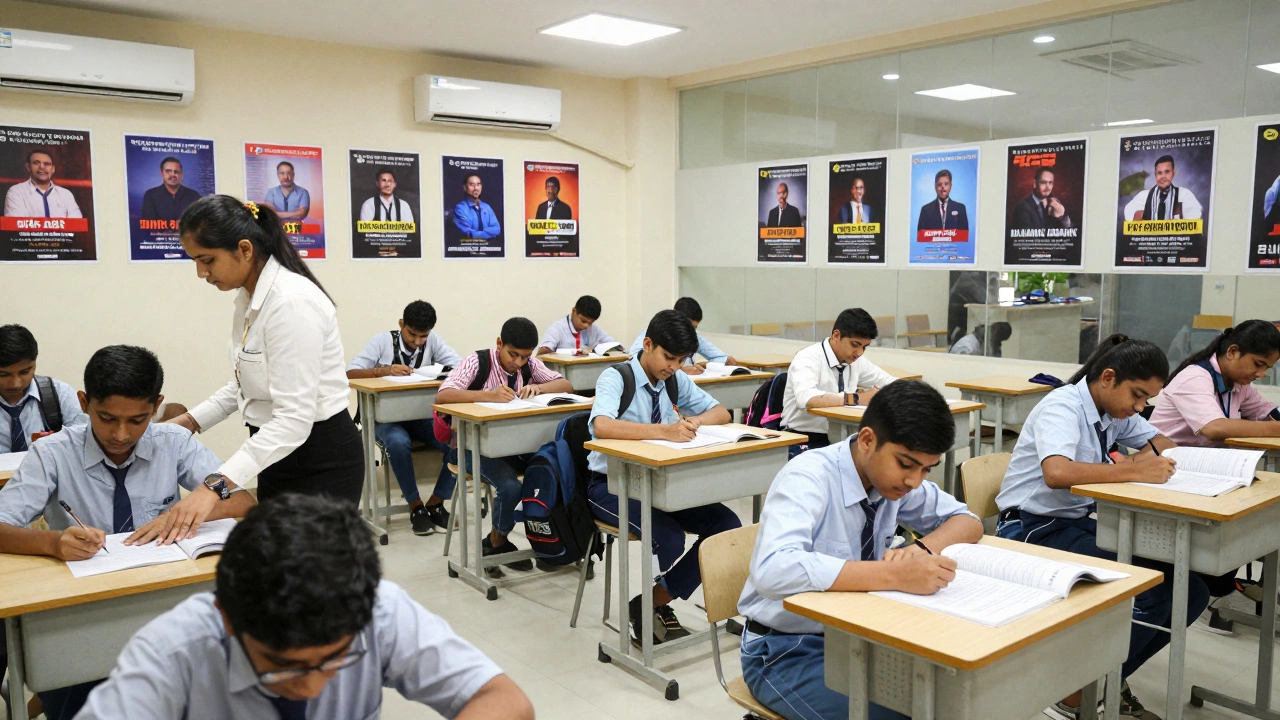
Many high-performing students come from families that invest heavily in coaching. In cities like Hyderabad, Pune, and Bengaluru, coaching centers for CBSE subjects operate like factories. Students attend 6-8 hours of extra classes every week. They take weekly tests, get personalized feedback, and are pushed to compete. This doesn’t make them more intelligent. It makes them more practiced.
Compare that to a child in a small town in Uttar Pradesh or Madhya Pradesh. If their school has one science teacher teaching three grades at once, and the lab hasn’t been used in five years, no amount of natural ability will close that gap. The system fails them before they even get to the exam hall.
What IQ Tests Actually Measure
IQ tests measure a narrow set of skills: pattern recognition, logical reasoning, verbal comprehension, and working memory. They don’t measure creativity, emotional intelligence, problem-solving in real life, or resilience. A student who scores 130 on an IQ test might struggle to manage a household budget. Another who scores 95 might run a successful small business because they know how to negotiate, adapt, and persist.
In India, standardized tests like CBSE board exams are better indicators of educational outcomes than IQ scores. They reflect what students have learned, not what they were born with. A 2023 study by the National Council of Educational Research and Training (NCERT) found that students from urban CBSE schools scored 22% higher in science than rural peers-not because of IQ, but because of exposure to experiments, labs, and digital tools.
States With the Strongest CBSE Performance (2024 Data)
Based on the latest CBSE Class 12 results, here are the top three performing states:
| State | Average Pass Percentage | Science Stream Pass Rate | Mathematics Average Score |
|---|---|---|---|
| Kerala | 99.7% | 98.9% | 78.4/100 |
| Delhi | 99.5% | 98.6% | 77.8/100 |
| Tamil Nadu | 99.3% | 98.2% | 76.9/100 |
Notice something? All three have strong public education systems. Kerala invests in teachers. Delhi has access to private resources. Tamil Nadu balances both. None of them have a monopoly on brains. They have better systems.
The Real Story Behind the Numbers
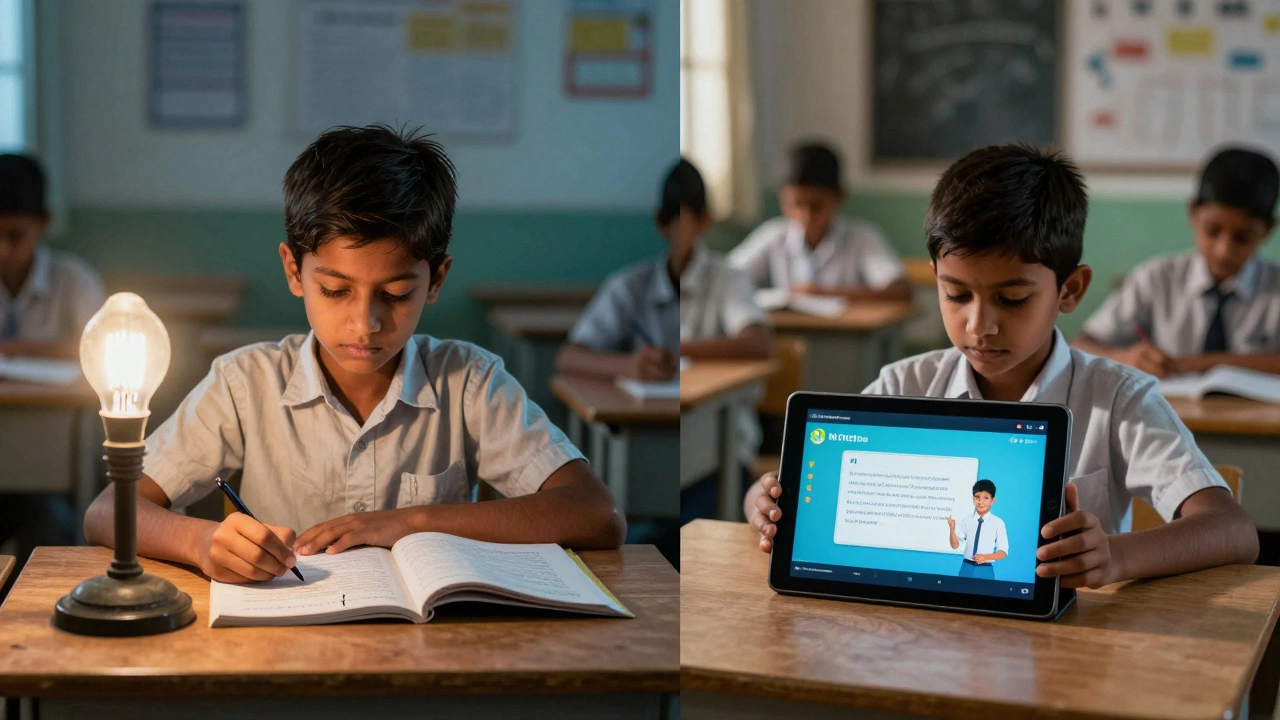
There’s a dangerous myth that intelligence is fixed by geography. That’s not true. It’s shaped by environment. A child in a village in Odisha who reads three books a week, has access to a tablet with NCERT videos, and gets daily feedback from a trained teacher will outperform a child in a metro city who sits through 10 hours of rote memorization with no understanding.
What matters isn’t where you’re born. It’s whether your school has a functioning science lab. Whether your teacher knows how to explain algebra visually. Whether your parents believe education is worth fighting for. These are the real determinants of academic success.
What This Means for Students and Parents
If you’re a parent in a low-performing state, don’t assume your child is behind because they’re less intelligent. They’re behind because the system hasn’t caught up. Look for free online resources: NCERT’s YouTube channel, DIKSHA platform, or Khan Academy India. Many government schools now offer digital lessons through tablets. Use them.
If you’re a student, focus on what you can control. Practice past CBSE papers. Understand concepts, don’t memorize them. Join study groups. Ask questions. Your score on the board exam isn’t a measure of your IQ. It’s a measure of your effort, your access, and your persistence.
Final Thought: IQ Is Not Destiny
The state with the highest CBSE scores isn’t the one with the smartest people. It’s the one that gave its children the best chance to learn. Kerala, Delhi, and Tamil Nadu didn’t win because of biology. They won because of policy, investment, and culture.
If you want to know which state has the highest IQ in India, stop looking at maps. Start looking at classrooms. Look at the teachers. Look at the books. Look at the support systems. That’s where intelligence is built-not in genes, but in daily habits, in access, and in belief.