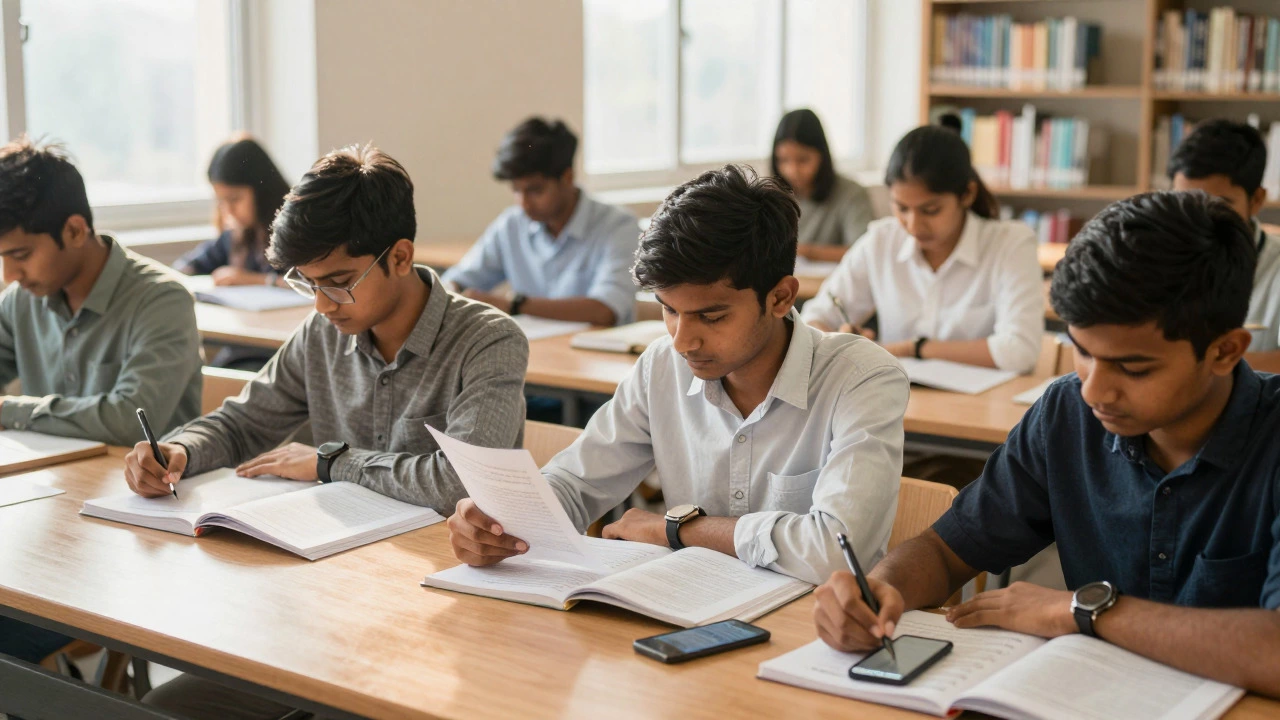
Government Job Match Finder
Step 1: Your Background
Let’s be honest: the phrase "easy government job" is a bit of a myth. If a job offers lifetime security, decent pay, and social status, thousands of people will compete for it. That competition makes it hard. However, "hard" doesn't mean "impossible." It just means you need to pick the right battlefield.
If you are looking for stability without spending five years preparing for an exam that has a 0.1% selection rate, you need to look at specific sectors. The key isn't finding a job with no competition; it's finding a job where your preparation matches the demand. In this guide, we break down which government roles offer the best balance between effort required and reward gained in 2026.
The Reality Check: What Does "Easy" Actually Mean?
Before we list specific jobs, we need to redefine "easy." For most aspirants, an easy government job has three characteristics:
- Lower Competition Ratio: Fewer applicants per seat compared to giants like UPSC or IAS.
- Straightforward Syllabus: No obscure historical dates or complex economic theories. Just general knowledge, basic math, and reasoning.
- Clear Cut-off Trends: Predictable selection patterns so you know exactly what score you need.
If you aim for the Indian Administrative Service (IAS), the premier civil service of India, you are aiming for the hardest mountain. But if you look at paramilitary forces or clerical roles, the climb is much more manageable. The "best" job is the one that fits your educational background and personality type.
Top Contenders for "Best and Easy" Government Jobs
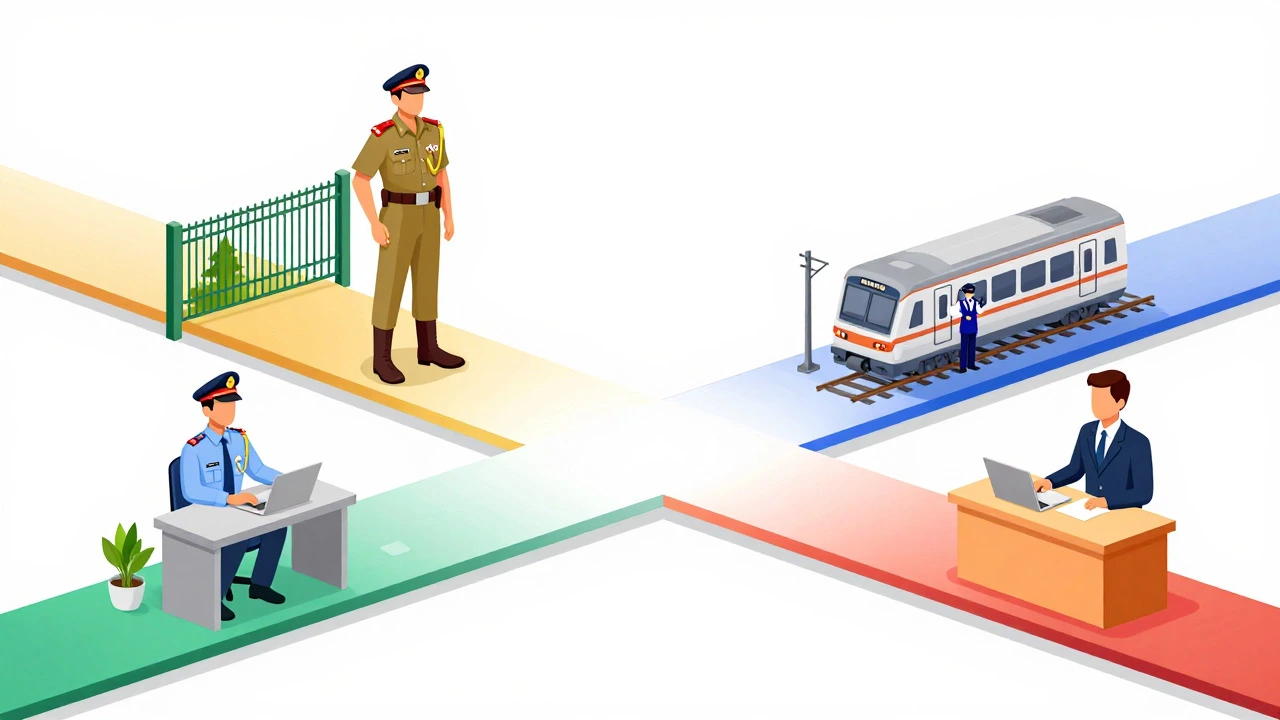
Here are four categories of government jobs that consistently rank high in terms of accessibility and satisfaction. These are not "get rich quick" schemes, but they are realistic goals for dedicated candidates.
1. SSC GD Constable (Paramilitary Forces)
The Staff Selection Commission General Duty (SSC GD), a recruitment exam for constables in Central Armed Police Forces is often cited as one of the easiest entry points into government service. Why? Because the barrier to entry is low.
You only need a 10th-grade pass (Matriculation) to apply. The syllabus covers General Knowledge, Mathematics, Reasoning, and English. There are no advanced topics. The physical standards are strict, but if you are fit and willing to run, this is very achievable. Once selected, you join forces like the BSF, CISF, or ITBP. The salary starts around ₹21,700 per month, but with allowances, it can go higher. It’s tough work, but it’s a guaranteed government job with respect and stability.
2. Railway NTPC and Group D Posts
Railway jobs are the backbone of government employment in India. The National Testing Agency (NTA), an autonomous body responsible for conducting various competitive examinations in India conducts these exams on a massive scale. Because there are so many vacancies-often tens of thousands at once-the chances of selection improve significantly compared to smaller exams.
For non-technical posts (NTPC), you need a 12th-grade pass or a graduation degree. The exam tests General Awareness, Mathematics, and Reasoning. It’s similar to SSC CGL but slightly less intense. For Group D (now called Level 1), you need a 10th-grade pass. The volume of seats means that even if you don’t get the top rank, you might still get a post in a different zone. This is a classic example of "high volume = better odds."
3. State-Level Police Sub-Inspector (SI)
Don’t overlook state police services. While central exams like UPSC CAPF are famous, state SI exams are conducted by individual Public Service Commissions. These exams often have fewer applicants because many students focus solely on national exams.
The syllabus usually includes General Studies, Mental Ability, and sometimes a specialized paper depending on the state. The physical test is rigorous, but the academic part is standard. Once you become a Sub-Inspector, you have a clear promotion path to Inspector and beyond. The authority and social standing are significant, making it a "best" job in terms of career growth.
4. Bank PO/Clerk Exams (IBPS and SBI)
While banking is technically a financial sector role, public sector banks are government-owned. The Institute of Banking Personnel Selection (IBPS), an apex organization established by major public sector banks to recruit officers conducts exams for Probationary Officers (PO) and Clerks.
These exams are highly structured. They test Quantitative Aptitude, Reasoning, English, and General Awareness. Unlike UPSC, there is no vague "essay writing" component. It’s objective. If you are good at math and logic, this is arguably the "easiest" high-paying government job. The starting salary for a PO is often higher than many administrative roles, and the work environment is corporate-like but with government security.
| Job Role | Minimum Education | Key Skill Required | Competition Level | Starting Salary (Approx.) |
|---|---|---|---|---|
| SSC GD Constable | 10th Grade | Physical Fitness & GK | Moderate | ₹21,700 - ₹25,000 |
| Railway NTPC | 12th / Graduation | Math & Reasoning | High | ₹19,900 - ₹35,000 |
| State Police SI | Graduation | General Studies & Physical | Moderate | ₹25,500 - ₹30,000 |
| Bank Clerk (IBPS) | Graduation | Quant & English | Very High | ₹18,000 - ₹20,000 + Allowances |
| Bank PO (SBI/IBPS) | Graduation | Advanced Math & Logic | High | ₹36,000 - ₹41,000 + Allowances |
Why "Easy" Jobs Are Still Competitive
You might notice that even the "easier" jobs have high competition. Here is why: awareness. In 2026, information is everywhere. Every student knows about SSC and Railways. So, how do you win? You don't win by being smarter than everyone else; you win by being more consistent.
The biggest mistake aspirants make is jumping from one exam to another. One month they study for UPSC, the next for SSC, then for Banks. This fragmentation kills success. The syllabus for SSC, Railways, and State Police overlaps significantly in General Knowledge and Reasoning. If you prepare for one, you are partially prepared for the others. Stick to a cluster of related exams.
Strategic Preparation Tips for 2026
To maximize your chances of getting an "easy" government job, follow these practical steps:
- Focus on Mock Tests: Government exams are speed-based. You need to answer 100 questions in 60 minutes. Practice daily mock tests to build stamina. Accuracy matters more than attempt count in negative marking schemes.
- Current Affairs is King: For GK sections, you don’t need to read history books from scratch. Focus on the last 6-12 months of current events. News apps and monthly compilations are sufficient. Static GK (like capitals, currencies, awards) should be revised weekly.
- Master Shortcuts: In Mathematics and Reasoning, time is your enemy. Learn Vedic math tricks and logical shortcuts. Don’t solve problems the long way. Speed wins interviews.
- Check Eligibility Early: Age limits vary. SSC GD allows up to 23 years (with relaxation). Bank exams usually cap at 30 years. Make sure you aren’t wasting time on exams you’re too old for.

The Hidden Cost of "Easy" Jobs
It’s important to manage expectations. An "easy to get" job often comes with harder working conditions. SSC GD involves night shifts and field duty. Railway jobs may require frequent transfers to remote stations. Bank jobs come with strict targets and customer pressure.
Ask yourself: Do you prefer a desk job with moderate pay (like a clerk) or a field job with lower pay but higher adventure (like a constable)? There is no wrong answer, only personal preference. The "best" job is the one you can tolerate doing for 30 years.
Final Thoughts on Choosing Your Path
There is no single "best" government job. There is only the best job for you. If you are strong physically, aim for SSC GD or State SI. If you are good with numbers, target Bank PO. If you want a middle ground, try Railway NTPC.
Start small. Apply for multiple exams simultaneously since their syllabi overlap. Consistency beats intensity. Study two hours every day for a year rather than ten hours for a week. The government job market is crowded, but it is not closed. With the right strategy, you can secure a stable future without burning out.
Is SSC GD really the easiest government job to get?
SSC GD is considered one of the easiest due to its low educational requirement (10th grade) and straightforward syllabus. However, the physical fitness test eliminates many candidates, so it is "easy" academically but demanding physically.
Can I crack a government job with 6 months of preparation?
Yes, for exams like SSC GD, Railway Group D, or Bank Clerk, 6 months of focused preparation is often sufficient if you study 4-6 hours daily. For higher-level posts like Bank PO or SSC CGL, 1-2 years is recommended.
What is the difference between SSC CGL and SSC CHSL?
SSC CGL recruits for Group B and C posts requiring graduation, while SSC CHSL recruits for Group C posts like LDC and Data Entry Operator requiring only 12th-grade education. CHSL is generally considered easier due to simpler mathematics.
Are railway jobs safe for women?
Railway jobs are government positions with strong legal protections. Many posts, such as TTE (Ticket Checking), are specifically designated for women. The work environment is regulated, though travel-heavy roles may have unique challenges.
Do I need coaching to clear these exams?
Coaching is not mandatory. Most successful candidates self-study using online resources, previous year papers, and standard textbooks. Coaching provides structure, but discipline and consistency are more critical factors for success.