Government Job Competition Estimator
Find Your Low-Competition Job Path
Answer these questions to discover government jobs with the least competition based on your background.
Your Low-Competition Matches
* Estimates based on 2024-2026 recruitment patterns across Indian states
When you hear "government job," you probably think of the IAS, SSC CGL, or RBI Grade B - all flooded with lakhs of applicants. But not every government job is a battlefield. Some roles have surprisingly low competition, not because they’re unimportant, but because they’re overlooked, misunderstood, or require niche skills. If you’re tired of fighting for 100 seats with 5 lakh applicants, here are real government jobs in India with the least competition in 2026.
Group D Posts in State PSUs
Most people ignore Group D roles - driver, peon, cleaner, helper - because they think they’re "not real jobs." But in state public sector undertakings (PSUs) like Tamil Nadu Water Supply and Drainage Board (TWAD), Kerala State Industrial Development Corporation (KSIDC), or West Bengal Power Development Corporation, these posts open up every 2-3 years. The application numbers? Often under 5,000. Why? Because candidates assume they’re "unskilled" and not worth applying for. But these are permanent, Class IV government posts with full benefits: pension, medical, leave, and job security. The exam is simple - 10th pass level reasoning, math, and general knowledge. No interview. No tiered process. Just one written test. If you’re 18-25, have a clean record, and can pass a basic physical test, this is one of the easiest doors into government service.
Forest Guard and Wildlife Ranger (State Forest Departments)
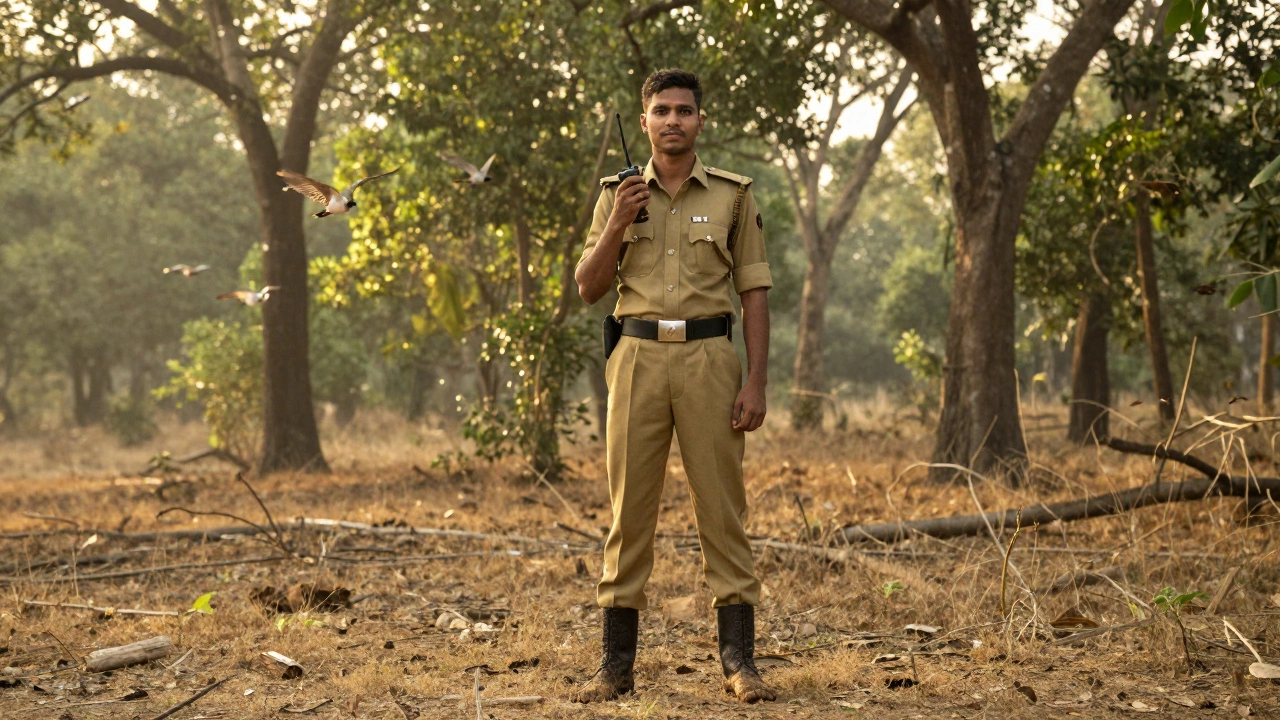
Every year, state forest departments advertise for Forest Guards, Watchers, and Rangers. The number of applicants? Usually under 10,000 for 200-300 vacancies. Compare that to SSC CGL, where 15 lakh people apply for 7,000 posts. Why so few? Because these jobs require physical fitness, night shifts, and postings in remote forests - not city offices. The exam is basic: 10th pass level, with a physical endurance test (1.6 km run in 7 minutes, long jump, height/weight standards). No coaching center teaches this. No YouTube channel has 100k subscribers for it. But if you’re from a rural area, used to walking long distances, or have a background in agriculture or forestry, this is your shot. Plus, you get free accommodation, uniforms, and even housing in forest quarters.
Lower Division Clerk (LDC) in Minor Ministries
You’ve heard of LDCs in the Ministry of Finance or Home Affairs - packed with applicants. But what about LDC posts in smaller ministries like the Ministry of Minority Affairs, Department of Animal Husbandry, or Central Water Commission? These departments rarely make headlines. Their recruitment happens quietly, through state-level exams or direct applications. Vacancies are often 50-100 per cycle. Applications? 3,000-8,000. The exam pattern is simple: typing test (35 WPM in English), basic computer knowledge, and a 10th-level general paper. No interview. No mains. Just one written test. Many candidates don’t even know these departments exist. But if you’re good at typing, can handle office work, and don’t mind working in a quiet office without political pressure - this is a hidden gem.
Junior Engineer (JE) in State Irrigation or Public Health Departments
Everyone chases JE posts in CPWD or PWD. But what about JE roles in state irrigation departments - like the Tamil Nadu Irrigation Department or Uttar Pradesh Irrigation Corporation? These posts have fewer applicants because they require a diploma in civil engineering, not a degree. And many graduates think a diploma isn’t "good enough." But here’s the truth: these departments have a huge backlog of work. They need hands-on technicians, not theorists. The exam is practical: civil engineering basics, surveying, irrigation methods. No English comprehension, no current affairs. Just technical knowledge. And the promotion path? After 5-7 years, you can become an Executive Engineer. Many JE posts in irrigation have 10:1 competition ratios. That’s lower than most private engineering jobs.
Assistant in State Co-operative Societies
Co-operative societies - dairy, credit, agricultural - run by state governments, are hiring assistants every year. These aren’t glamorous. No media coverage. No coaching classes. But they’re stable. The job involves record-keeping, accounting, and field visits to village co-ops. Eligibility? 12th pass + basic computer skills. The exam is simple: arithmetic, reasoning, and local language comprehension. In states like Maharashtra, Karnataka, or Odisha, these posts open up with fewer than 2,000 applicants for 50-100 vacancies. Why? Because people think it’s "not a real government job." But these are full-time, permanent, with pension and promotion to Section Officer level. And you get to work in rural areas - no urban commute, no office politics.
Why These Jobs Are Overlooked
There’s a pattern here. The jobs with least competition aren’t the ones with the highest pay or prestige. They’re the ones that:
- Require physical work or rural posting
- Don’t have coaching centers or YouTube tutorials
- Are labeled "low-status" by society
- Need specific local knowledge (like irrigation methods or forest rules)
- Are advertised only in regional newspapers or district office notice boards
Most aspirants chase Delhi-based, urban, office jobs. But the real opportunity lies in the periphery. If you’re from a village, small town, or have family ties to agriculture, forestry, or local industry - you already have an edge. You don’t need to crack IAS to get job security. You just need to know where to look.
How to Find These Jobs
You won’t find these on Sarkari Naukri or Jagran Josh. Here’s how to track them:
- Check your state’s official website - look for "Department of [X] Recruitment" - not just "State Public Service Commission."
- Visit district collectorates or block development offices. Notice boards there list local openings.
- Subscribe to state employment news bulletins (free PDFs available on state portals).
- Follow Facebook groups for your district - many local job openings are shared there before they go official.
- Ask retired government workers. They know which departments hire quietly every year.
Don’t wait for notifications to go viral. By the time a job trends on social media, it’s already oversubscribed. Start early. Look locally. Apply even if the title sounds "basic."

Myth: Low Competition = Low Pay
False. Group D posts in state PSUs earn ₹22,000-28,000 per month with allowances. Forest Guards get ₹25,000-32,000 with free housing. LDCs in minor ministries earn ₹24,000-30,000. These are not minimum-wage jobs. They’re full government pay scales with regular increments, 30 days leave, and 100% medical coverage for family. The difference isn’t in pay - it’s in perception.
Real Example: A Village Student’s Journey
In 2024, a 22-year-old from Theni, Tamil Nadu, applied for a Forest Watcher post. He had a 10th pass, knew local trees, and could track animal movements. He didn’t study for UPSC. He didn’t join coaching. He read the forest department’s old question papers - available on their website. He cleared the physical test. Got selected. Now he works in the Mudumalai forest. No traffic. No rent. No stress. His monthly salary? ₹31,000. His friends? Still preparing for SSC CGL. He’s already living the job.
Final Advice
Stop chasing the most popular jobs. The least competitive ones are often the most rewarding. They’re quiet. They’re steady. They’re secure. And they’re right under your nose - if you know where to look. Focus on your strengths. If you’re good with your hands, go for irrigation or forest jobs. If you can type fast, look for LDCs in obscure departments. If you’re from a rural background, don’t feel ashamed of Group D. It’s not a fallback. It’s a foothold.
Which government job has the lowest competition in India in 2026?
Group D posts in state PSUs like TWAD or KSIDC, Forest Guards in state forest departments, LDCs in minor ministries like Animal Husbandry, JE in state irrigation departments, and Assistants in co-operative societies have the lowest competition - often under 10,000 applicants for 100-300 vacancies. These roles are overlooked because they require physical work or rural postings, not because they’re unimportant.
Why do so few people apply for these low-competition government jobs?
Most aspirants believe these jobs are "low-status," "not real government jobs," or require moving to remote areas. Coaching centers don’t teach them. YouTube doesn’t promote them. People chase urban, office-based roles like SSC CGL or RBI, even though competition is 100x higher. The real opportunity lies in jobs that don’t make headlines.
Do these low-competition jobs offer good salary and benefits?
Yes. Group D and Forest Guard posts pay ₹22,000-32,000 monthly with full government benefits: pension, medical coverage for family, 30 days leave, and often free housing. These are not minimum-wage jobs - they’re permanent government pay scales with regular increments and job security.
How do I find these jobs if they’re not on popular websites?
Check your state government’s official department websites, visit district collectorates, subscribe to state employment news bulletins, join local Facebook groups, and ask retired government workers. These jobs are advertised through regional newspapers, notice boards, and direct notifications - not viral posts.
Can I prepare for these jobs without coaching?
Absolutely. Most of these exams test basic knowledge - 10th or 12th-level math, reasoning, typing, or local language. You can prepare using free PDFs from state portals, old question papers, and practice tests. No coaching is needed. The key is knowing where to look and what to study - not how much you spend on coaching.
Next Steps
Start today. Open your state government’s website. Find the department of irrigation, forest, or co-operative societies. Look for "Recruitment" or "Vacancy". Download the last year’s notification. Read the syllabus. Collect past papers. Apply the moment the next one opens. You don’t need to be the top scorer. You just need to be one of the few who applied.