Find Your Best-Fit School Board
Answer these 4 questions based on your preferences and goals to see which board aligns best with you.
Your Recommended Path:
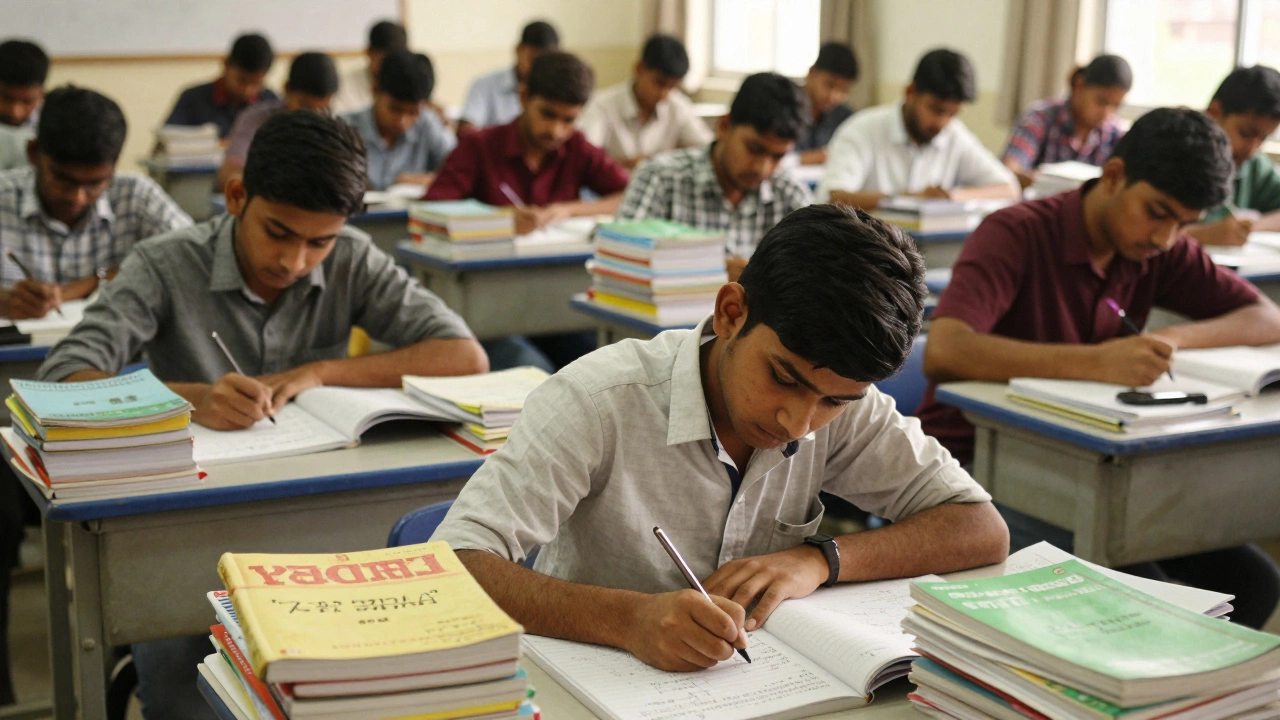
Walk into any coaching center in Kota or a tuition hub in Mumbai, and you will hear the same question asked by anxious parents: "Which board is the toughest?" The answer isn't simple. It depends entirely on what you mean by "tough." Are we talking about the depth of the syllabus, the pressure of the exams, or the sheer volume of reading required? For students aiming for engineering or medicine, the CBSE syllabus often feels like the most intense grind. But for those who value language proficiency and detailed conceptual understanding, the ICSE board throws down a different kind of gauntlet.
The debate over which Indian school board is the hardest has raged for decades. There is no single winner because each board tests different skills. Some boards test your ability to memorize vast amounts of data. Others test your ability to apply logic under time pressure. Understanding these differences is crucial before you choose a path for yourself or your child. Let’s break down the reality behind the reputation of the major boards in India.
The CBSE Grind: Precision Under Pressure
Central Board of Secondary Education (CBSE) is the largest education board in India, known for its standardized curriculum aligned with national competitive exams. When people ask if the CBSE syllabus is tough, they are usually referring to its alignment with high-stakes entrance exams like JEE (Joint Entrance Examination) and NEET (National Eligibility cum Entrance Test).
The difficulty here lies in the nature of the questions. CBSE papers are designed to be precise. In subjects like Mathematics and Physics, there is very little room for error. You cannot guess your way through a calculus problem. The marking scheme is strict; step-by-step solutions are mandatory. If you skip a logical step, you lose marks, even if the final answer is correct. This forces students to develop a disciplined approach to problem-solving.
Furthermore, the pace of the CBSE syllabus is relentless. Teachers often cover the entire textbook in the first half of the academic year to leave ample time for revision and practice problems. This creates a high-pressure environment where consistency is key. A student who falls behind in October might find it nearly impossible to catch up by March. The board does not reward last-minute cramming as effectively as some other boards do.
- Focus: Conceptual clarity and application.
- Exam Style: Direct, objective, and structured.
- Best For: Students targeting IIT-JEE, NEET, or studying abroad via standardized tests.
The ICSE Challenge: Depth and Detail
If CBSE is about precision, Indian Certificate of Secondary Education (ICSE) is a board administered by CISCE that emphasizes comprehensive knowledge, language skills, and detailed study. Many students argue that ICSE is actually tougher because of the sheer volume of content. The syllabus is vast, covering topics in greater depth than their CBSE counterparts.
In English literature, for instance, ICSE students are expected to analyze texts with a level of nuance that goes beyond standard comprehension. They must understand historical context, literary devices, and thematic elements deeply. Similarly, in Science, while the core concepts overlap with CBSE, ICSE often requires more descriptive answers and broader theoretical explanations. You cannot just write formulas; you must explain the 'why' and 'how' in detail.
The internal assessment component also adds a layer of complexity. Projects, practical files, and oral examinations carry significant weight. This means a student cannot simply focus on rote learning for the final written exam. They must maintain consistent performance throughout the year. For students who dislike subjective evaluation, this can feel incredibly stressful and unfair.
- Focus: Holistic development, language proficiency, and detailed theory.
- Exam Style: Descriptive, analytical, and extensive.
- Best For: Students interested in humanities, law, or those who excel in detailed writing and analysis.
State Boards: The Hidden Difficulty of Resources
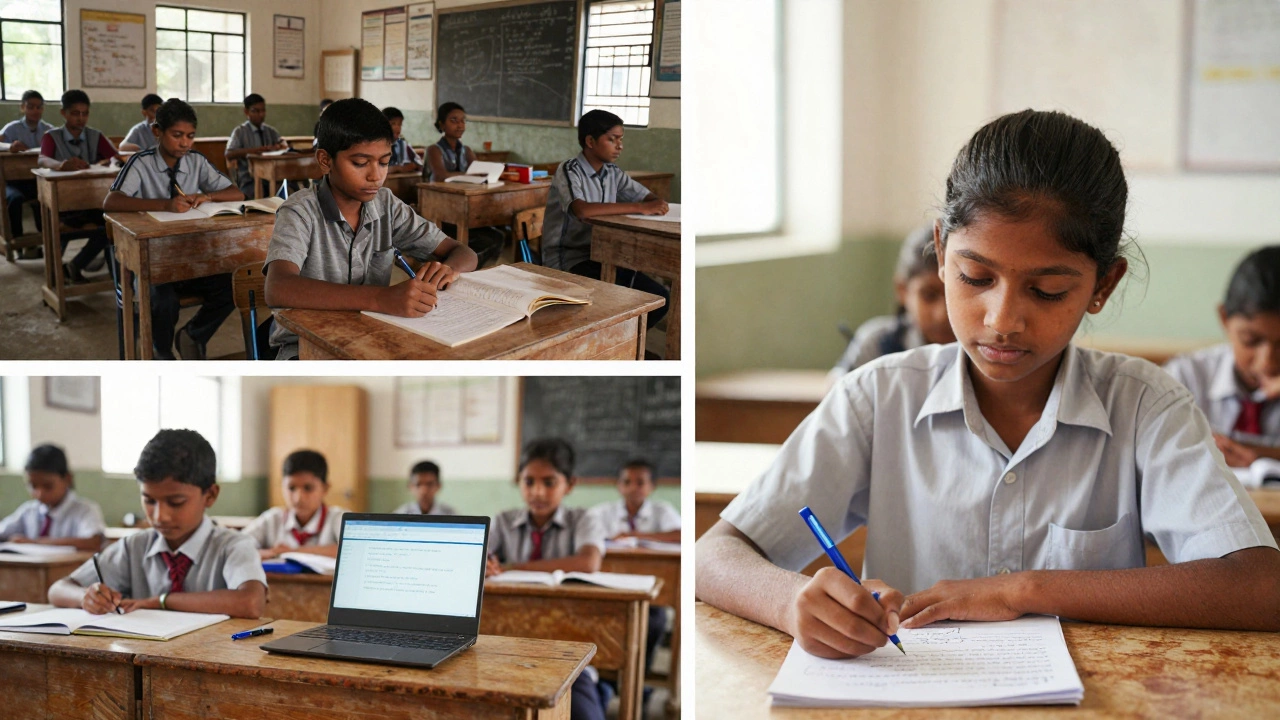
Often overlooked in the "toughest board" debate are the various State Education Boards across India, such as Maharashtra State Board, UP Board, or Tamil Nadu State Board. The perception is that these boards are easier. While the syllabus might be less rigorous in terms of competitive exam alignment, the difficulty lies elsewhere: resource disparity and language barriers.
For a student in a rural area, accessing quality study materials, experienced teachers, and digital resources can be a massive challenge. The "toughness" here is not intellectual but logistical. Additionally, many state boards conduct exams in regional languages. For students who need to switch to English-medium higher education, this transition can be jarring and difficult.
However, this is changing. Many state boards are now aligning their curricula more closely with NCERT (National Council of Educational Research and Training) guidelines to bridge the gap. Yet, the variability in teaching quality across different schools within the same state remains a significant hurdle. A student from a top-tier government school might face a much harder journey than one from a well-resourced private institution.
Comparing the Giants: CBSE vs ICSE vs IB
To truly understand the difficulty, we need to look at specific attributes. The International Baccalaureate (IB) is often cited as the hardest globally, but let's stick to the domestic giants for this comparison. Here is how they stack up against each other in key areas.
| Feature | CBSE | ICSE | State Boards |
|---|---|---|---|
| Syllabus Depth | Moderate to High | Very High | Varies by State |
| Exam Pattern | Standardized, Objective-heavy | Descriptive, Subjective | Mixed, often Vernacular |
| Competitive Exam Alignment | High (JEE/NEET) | Moderate | Low to Moderate |
| Language Focus | Functional English | Advanced English & Literature | Regional Languages + English |
| Internal Assessment Weightage | Lower (mostly practicals) | Higher (projects, internals) | Varies |
Why Perception Matters More Than Reality
Here is the truth: the "toughest" board is the one that mismatches your strengths. If you are a brilliant writer but struggle with rigid formulaic math, ICSE will feel like a nightmare compared to CBSE. Conversely, if you are a quick thinker who hates writing long essays, CBSE’s concise format will save you, while ICSE’s verbose requirements will drain you.
Many students suffer from "board anxiety"-the belief that choosing the wrong board will ruin their future. This is largely a myth. Top universities in India and abroad look at your entrance exam scores (like JEE Advanced, CUET, or SATs) far more than your Class 10 or 12 board percentages. A 95% in CBSE is not inherently "better" than a 90% in ICSE. Admissions committees understand the nuances of each system.
What really determines success is not the board itself, but the support system around the student. Access to good mentors, a healthy study routine, and mental resilience matter infinitely more than whether you are solving NCERT textbooks or Selina publications.
How to Choose the Right Path
So, how do you decide? Don’t pick based on hearsay. Pick based on your career goals and learning style.
- Aim for Engineering/Medicine? Stick with CBSE. The syllabus overlap with JEE and NEET is significant. You will spend less time adjusting to new formats later.
- Interested in Humanities/Law/Journalism? Consider ICSE. The emphasis on literature, history, and detailed analysis builds strong foundational skills for these fields.
- Planning to Study Abroad Early? Look into IB or IGCSE. While not traditional "Indian" boards, they are widely recognized globally and offer a different kind of challenge focused on critical thinking rather than rote memory.
- Local Context Matters? If you are staying in your home state for college, a State Board might be sufficient and less stressful, allowing you to focus on local entrance exams.
Remember, the board is just a vehicle. It delivers the content. How you drive that vehicle depends on your discipline, curiosity, and effort. The toughest board is the one you don’t prepare for. The easiest board is the one that fits your natural way of thinking.
Is CBSE really harder than ICSE?
It depends on your strengths. CBSE is considered harder for students who struggle with precise, application-based problems in Math and Science, especially those preparing for JEE/NEET. ICSE is often perceived as harder due to its vast syllabus, heavy emphasis on descriptive answers, and rigorous English literature requirements. Neither is objectively "harder"; they test different skill sets.
Which board is best for studying abroad?
While CBSE and ICSE are accepted globally, international boards like IB (International Baccalaureate) or IGCSE are often preferred by foreign universities because their curricula are already aligned with global standards. However, a high score in CBSE or ICSE, combined with strong SAT/ACT scores and extracurriculars, is perfectly sufficient for admission to top universities in the US, UK, Canada, and Australia.
Does the board affect my chances in JEE or NEET?
Not directly, but indirectly yes. CBSE syllabus aligns closely with the NCERT books, which are the primary reference material for JEE Main and NEET. Students from CBSE often have a head start because they are already familiar with the question patterns and depth required. Students from other boards may need extra time to adapt to the NCERT-centric approach of these competitive exams.
Are State Boards easier than Central Boards?
Generally, State Boards have a simpler syllabus and less competitive exam pressure compared to CBSE and ICSE. However, "easier" does not mean "better." The lack of rigorous training in competitive exam patterns can put State Board students at a disadvantage when they attempt national-level entrance tests like JEE or NEET, requiring them to put in extra effort during coaching.
Can I switch boards after Class 8?
Yes, switching boards is possible, but it is challenging. The biggest hurdle is the difference in syllabus depth and teaching methodology. For example, moving from a State Board to CBSE in Class 9 might require catching up on advanced Math concepts quickly. It is best to consult with experts and assess the student's adaptability before making such a significant change.