Vocational Training Salary Estimator
Estimate Your Earnings
Find out potential monthly income for vocational careers in India based on your skills and location
Over 72% of India's youth workforce needs vocational training skills to meet industry demands, according to NSDC's 2025 report. But what exactly makes training 'vocational'? Let's break it down.
Vocational training is a type of education focused on teaching specific skills for a particular trade or job. Unlike academic degrees, it emphasizes hands-on experience and industry-specific knowledge. In India, vocational training programs are often certified by government bodies like the National Skill Development Corporation (NSDC) and can lead to certifications such as National Skill Qualification Framework (NSQF) levels.What Exactly is Vocational Training?
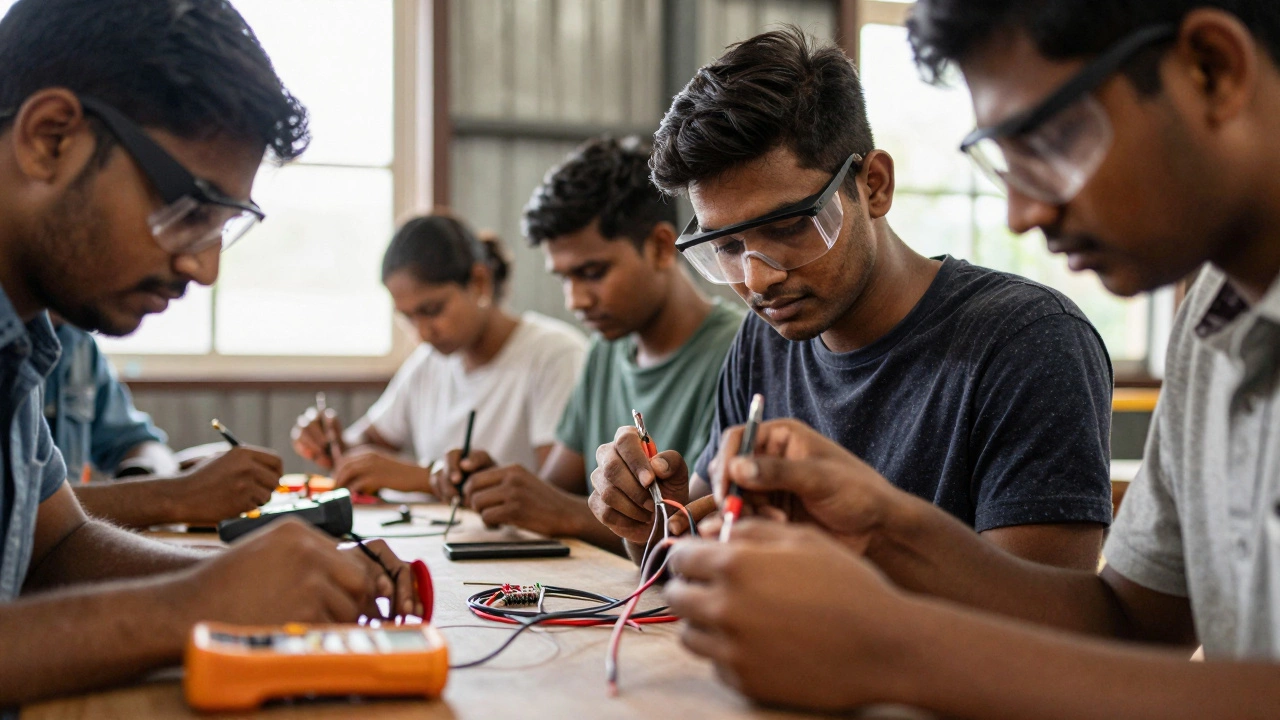
Vocational training is all about preparing you for a specific job or trade. It's practical, hands-on learning that gets you ready to work right away. For example, learning how to fix cars, install electrical systems, or provide healthcare assistance. Unlike traditional college courses that focus on theory and broad knowledge, vocational training zeroes in on the exact skills employers need.
These programs are usually shorter than academic degrees. Many take 6 months to 2 years. They're designed to fill the gap between what schools teach and what industries actually require. In India, vocational training is often linked to government initiatives like the Pradhan Mantri Kaushal Vikas Yojana (PMKVY), which offers free or subsidized courses.
Common Types of Vocational Training in India
India has several well-established vocational training pathways:
- Industrial Training Institutes (ITIs): Government-run institutes offering courses in trades like electrician, welder, fitter, and plumber. ITI courses typically last 1-2 years and lead to a certificate recognized across industries.
- Polytechnic Diplomas: These 3-year programs cover technical fields like civil engineering, mechanical engineering, and computer science. They provide both theoretical knowledge and practical skills.
- PMKVY Short-Term Courses: Under this national scheme, you can get trained in 1-6 month courses for jobs in retail, hospitality, construction, or digital literacy. PMKVY covers training costs and provides certification.
- Apprenticeship Programs: These combine on-the-job training with classroom learning. Companies like Tata Motors and Reliance Industries run apprenticeship schemes where you earn while you learn.
- Healthcare and Nursing Courses: Short-term programs for roles like nursing assistant, lab technician, or pharmacy aide. These are in high demand due to India's growing healthcare sector.
Each of these options targets different industries and skill levels. For instance, ITI courses are perfect for entry-level trades, while polytechnic diplomas prepare you for technical roles with more responsibility.
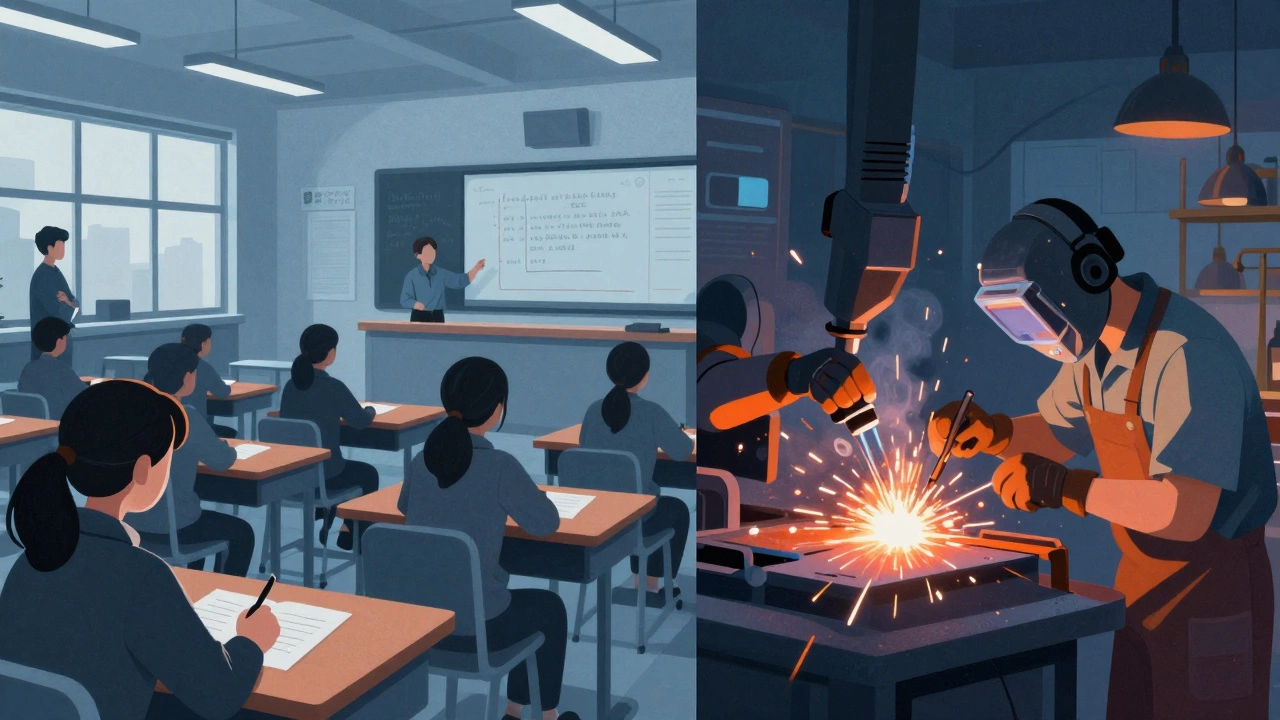
Vocational vs Academic Education: Key Differences
| Aspect | Vocational Training | Academic Education |
|---|---|---|
| Focus | Job-specific skills | Theoretical knowledge |
| Duration | 6 months to 2 years | 3-4 years for a degree |
| Certification | NSQF levels, industry certifications | Diploma or degree |
| Job Readiness | Immediate entry into workforce | Requires additional training |
| Cost | Lower cost, government subsidies | Higher tuition fees |
Why Choose Vocational Training?
Vocational training offers clear advantages:
- Fast job placement: You graduate with skills employers need. In sectors like construction or manufacturing, trained workers are in high demand.
- Lower costs: Many government programs like PMKVY cover training fees. Even private courses are often cheaper than university degrees.
- Real-world experience: Hands-on training means you learn by doing. For example, an electrician course includes actual wiring practice, not just textbook theory.
- Higher earning potential: Skilled trades like plumbing or HVAC can earn more than some degree holders. In Chennai, a certified electrician earns ₹20,000-₹35,000 monthly.
- Government support: India's Skill India Mission provides financial aid, placement assistance, and industry partnerships for vocational trainees.
Real-World Success Stories
In Chennai, Priya completed a 6-month electrician course under PMKVY. She now earns ₹25,000 a month at a local manufacturing plant. Her training included hands-on work with electrical systems and safety protocols. "I didn't have to wait for a degree," she says. "The course got me a job right after completion."
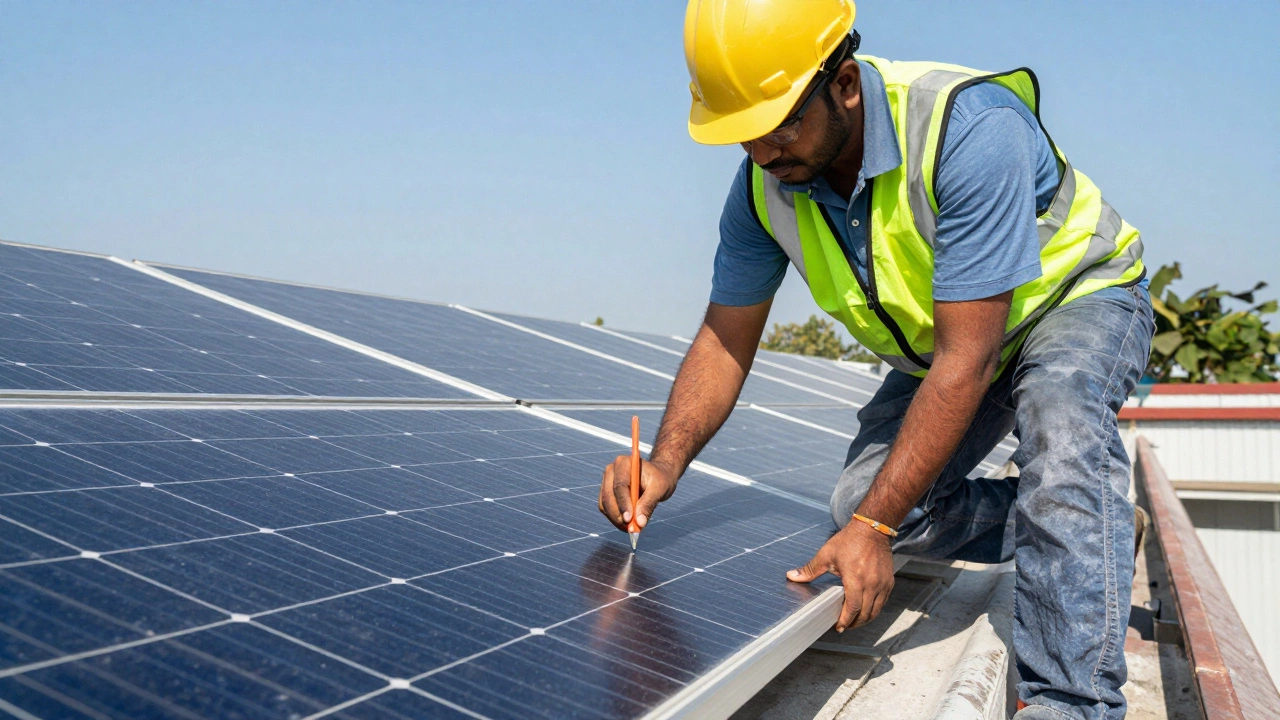
Similarly, Rajesh from Delhi joined an apprenticeship with a renewable energy company. After 1 year of training, he became a solar technician. His starting salary was ₹30,000 per month. "I learned by fixing actual solar panels," he explains. "No classroom theory-just real work."
Common Myths About Vocational Training
Let's clear up some misconceptions:
- Myth: "Vocational training is only for students who failed academically." Truth: Many high-achieving students choose vocational courses for faster career entry. A student with 90% in school might opt for an ITI course to become a mechanic instead of pursuing a general degree.
- Myth: "Vocational jobs are low-paying." Truth: Skilled trades often pay well. For example, a certified HVAC technician in Mumbai earns ₹40,000+ monthly. Demand for specialized skills drives higher salaries.
- Myth: "Vocational training has no future." Truth: With India's push for manufacturing (Make in India) and infrastructure development, skilled workers are essential. The government plans to train 50 million people in vocational skills by 2030.
Future Trends in Vocational Training
Vocational training is evolving fast:
- Digital skills integration: Courses now include AI basics, cybersecurity, and data analysis. For example, a plumbing course might teach smart home system installation.
- Green jobs training: Renewable energy courses for solar panel installation, wind turbine maintenance, and EV repair are booming.
- Hybrid learning: Online theory combined with in-person labs. A 2026 NSDC survey shows 60% of vocational courses now use blended learning models.
- Industry partnerships: Companies like Flipkart and Amazon collaborate with training centers to design courses that match their hiring needs.
According to the Ministry of Skill Development, India will need 10 million skilled workers in emerging fields like robotics and green energy by 2027. Vocational training is the fastest way to fill these roles.
Frequently Asked Questions
Is vocational training only for school dropouts?
No, vocational training isn't just for students who left school early. Many high school graduates and even college students pursue vocational courses to gain job-specific skills. For instance, someone with a bachelor's degree might take a short-term course in digital marketing to switch careers. Vocational programs cater to all education levels.
How long does vocational training take?
Duration varies by course. Short-term programs (like PMKVY courses) can be as brief as 6 weeks to 3 months. Diploma-level courses (such as ITI or polytechnic) usually take 1-2 years. Some specialized fields like nursing or automotive repair may require up to 3 years of training.
Are vocational courses recognized by employers?
Yes, especially when certified by government bodies like NSDC. Courses aligned with NSQF levels (Levels 1-10) are widely accepted. For example, an ITI certificate in welding is recognized by industries nationwide. Many companies partner directly with vocational training centers to hire trained candidates.
Can vocational training lead to higher education?
Absolutely. NSQF allows vertical mobility. For example, completing an ITI course (NSQF Level 4) can lead to a polytechnic diploma (NSQF Level 5), which may then transfer into a degree program. Many universities now accept vocational qualifications for lateral entry into bachelor's degrees.
What are the most in-demand vocational courses in India?
Currently, high-demand courses include electrician, plumbing, HVAC technician, healthcare support roles (like nursing aides), and digital skills (such as data entry, basic coding, and cybersecurity). According to NSDC, sectors like renewable energy, construction, and healthcare will need over 2 million skilled workers by 2027.