
Physics Problem Breakdown Tool
Analyze Your Physics Problem
Enter a physics scenario or select an example to see how to break it down
Problem Analysis
Key Concepts
Forces Involved
Mental Model Approach
Try an Example
"A rotating disc with a spring attached to a mass. Find maximum extension before slipping."
Every year, thousands of students crack IIT JEE. But behind every success story is a subject that made them question everything they knew. For most, it’s not the syllabus length or the time pressure-it’s the way one subject makes you feel like you’re solving puzzles with missing pieces. That subject? Physics.
Why Physics Feels Impossible
Physics in JEE Advanced isn’t just about formulas. It’s about seeing motion in your head before you write it down. You don’t memorize Newton’s laws-you visualize a block sliding on an incline with friction, tension in a pulley system, and rotational torque all happening at once. One question can combine kinematics, energy conservation, and circular motion in a single setup. No hint. No diagram. Just words.
Look at the 2024 JEE Advanced paper. Question 12 from Paper 1 had a rotating disc with a spring attached to a mass. It asked for the maximum extension before slipping. To solve it, you needed to balance centripetal force, spring force, and friction-then account for non-uniform angular acceleration. Most students spent 12 minutes on it and still got it wrong. Why? Because the exam doesn’t test if you know the formula-it tests if you can build the model from scratch.
Mathematics: The Trap of Confidence
Many think math is harder because it’s full of numbers. But here’s the truth: math is the subject you think you’ve mastered until the exam starts. You’ve solved 500 integration problems. You know every identity in trigonometry. Then you see a question that asks you to find the area bounded by a curve defined parametrically, with a modulus function inside a logarithm. No standard method applies. You have to sketch it, break it into parts, and guess the symmetry.
Calculus is the biggest killer. Not because it’s advanced-it’s because it’s sneaky. A 2023 paper had a question on definite integrals where the function was defined piecewise with irrational limits. You had to recognize the symmetry of the graph and use substitution without a hint. Students who relied on pattern recognition crashed. Those who understood the behavior of functions-how they bend, flip, or vanish-survived.
And don’t be fooled by permutations and combinations. The toughest questions aren’t about arranging letters. They’re about counting valid paths in a grid with forbidden moves, or distributing identical objects into distinct boxes with constraints. It’s logic disguised as math.
Chemistry: The Memory Game
Chemistry is where students think they have an edge. Organic reactions? You memorize mechanisms. Inorganic? You learn the periodic table trends. Physical chemistry? You plug numbers into equations. But JEE Advanced doesn’t ask for memorization-it asks for application under pressure.
Organic chemistry questions often give you a 5-step synthesis with one missing intermediate. You’re not told what reagent to use. You have to reverse-engineer the reaction based on functional group changes and stereochemistry. One wrong assumption-like thinking a nucleophile attacks the wrong carbon-and the whole chain collapses.
In inorganic, you get questions on coordination compounds where the ligand is unusual-like a bidentate Schiff base-and you have to predict magnetic properties without being told the oxidation state. You need to recall crystal field splitting for non-standard geometries. No table. No reference. Just your memory.
And physical chemistry? It’s the quiet killer. Thermodynamics questions might ask you to calculate entropy change for a gas expanding into a vacuum with variable temperature. You can’t use ΔS = nR ln(V₂/V₁) because the process isn’t reversible. You have to integrate heat capacity over temperature. And you have 3 minutes.
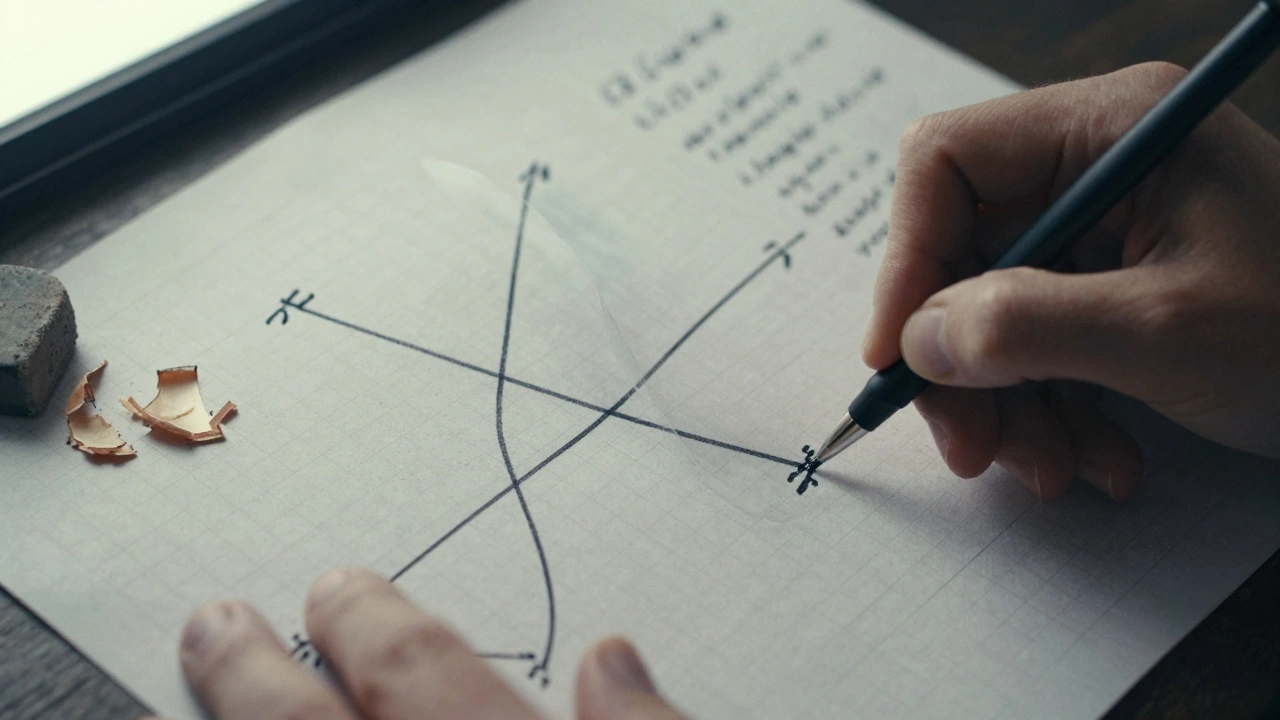
Why Physics Wins as the Hardest
Chemistry can be brute-forced with practice. Math can be tamed with pattern recognition. But physics? It demands intuition. You need to feel how forces interact, how energy flows, how systems behave in real time. There’s no shortcut. No trick. No formula bank that saves you.
Think about it: in math, if you forget a formula, you can derive it. In chemistry, if you forget a reaction, you can reason from functional groups. But in physics? If you don’t understand how torque affects angular momentum in a rotating frame, you’re stuck. No derivation helps. No trick works.
And the questions? They’re designed to break your rhythm. A 2024 question had a pendulum inside an accelerating elevator. You had to find the time period while accounting for pseudo-force, then relate it to the spring constant of a connected system. It wasn’t just hard-it was layered. One mistake in the first step, and the rest is garbage.
What Top Scorers Do Differently
The students who crack JEE Advanced don’t study harder. They study smarter. Here’s what they do:
- They sketch every problem before writing equations. Physics isn’t solved on paper-it’s solved in the mind first.
- They solve 10-15 advanced problems daily, not 50 easy ones. Quality beats quantity.
- They revisit old mistakes weekly. Not to re-solve them, but to ask: Why did I miss this? Was it a conceptual gap? A misread? A rushed assumption?
- They don’t memorize derivations. They rebuild them from first principles every time.
One topper from Delhi told me he spent 45 minutes on a single physics problem in his final prep week. Not because he couldn’t solve it-but because he wanted to understand every edge case. That’s the mindset.
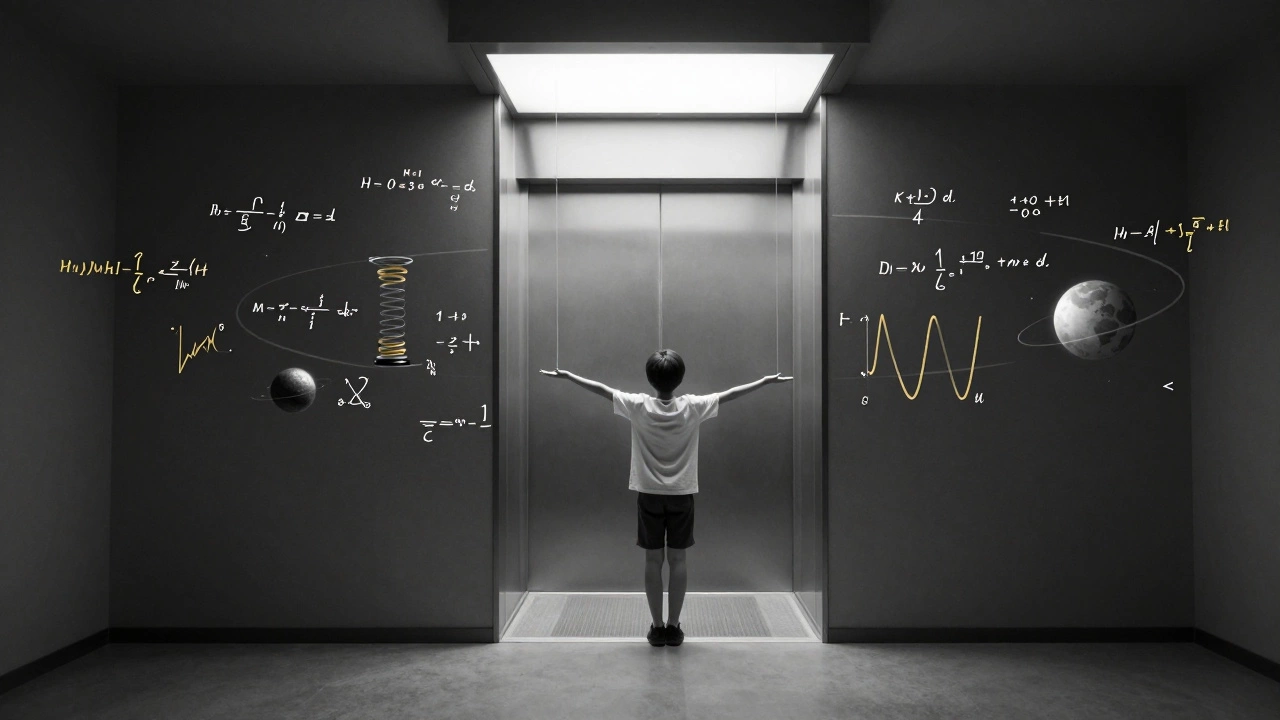
Can You Beat the Hardest Subject?
Yes. But not by cramming. Not by coaching classes. Not by solving past papers blindly.
You beat it by building mental models. Watch a video of a rolling ball down a ramp. Pause it. Ask: Where’s the friction acting? What’s the torque? How does energy split between translation and rotation? Then sketch it. Then solve it. Then do it again with a different angle.
Physics isn’t about being brilliant. It’s about being persistent. It’s about accepting that you’ll get stuck-then getting up and trying again. The subject doesn’t care if you’re from a Kota coaching center or a small town. It only cares if you’ve truly understood it.
Final Thought
There’s no single ‘hardest subject’ in IIT JEE. But if you’re looking for the one that separates the good from the great-it’s physics. Not because it’s the most complex. But because it forces you to think like an engineer, not a student.
Master physics, and the rest follows. Fail to understand it, and even perfect math and chemistry won’t get you in.
Is physics really harder than math in JEE Advanced?
Yes, for most students. Math has clear methods-even if complex. Physics requires you to build the problem from scratch. A math question gives you a function to integrate. A physics question gives you a scenario and asks you to find the function. That shift-from applying formulas to creating models-is what makes physics tougher.
Can chemistry be the hardest subject for some students?
Absolutely. Students with strong analytical skills but weak memory often struggle with chemistry. Organic synthesis questions that require recalling obscure reactions, or inorganic problems involving crystal field theory with unusual ligands, can be brutal. But these are solvable with pattern recognition and repeated practice. Physics can’t be hacked that way.
Why do coaching institutes focus so much on physics?
Because physics is the great equalizer. Students who memorize well can ace chemistry and math. But physics exposes gaps in conceptual understanding. Coaching centers know that if you can crack physics, you’re likely to crack JEE Advanced. That’s why they spend 40% of their time on it.
What’s the best way to improve in JEE physics?
Stop solving problems you already know. Pick 3-5 tough problems each week-ones you got wrong or couldn’t solve. Spend 30 minutes on each. Sketch the system. Label every force. Write down what you know, what you need, and what connects them. If you’re stuck, walk away. Come back the next day. The answer often comes when you stop forcing it.
Is JEE Advanced physics harder than college-level physics?
Not in depth-but yes in pressure. College physics dives deeper into theory. JEE Advanced doesn’t. It tests how fast you can apply basic principles to complex, multi-layered situations. You have 3 minutes per question. No time for derivations. No room for error. That’s the real challenge.