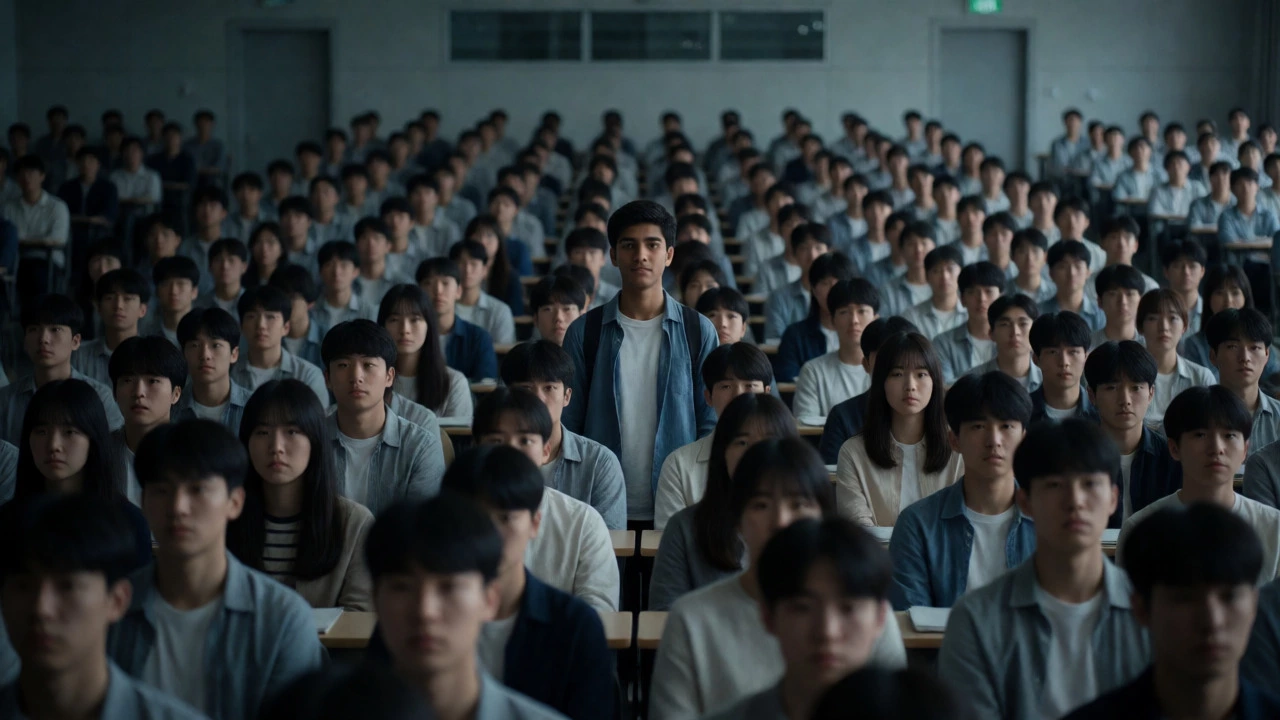
Study Abroad Difficulty Estimator
Select your destination to see a realistic breakdown of the challenges you might face, based on academic rigor, cultural integration, and bureaucratic/financial hurdles.
South Korea
Key Challenge: Hyper-competition and strict social hierarchy. Language barrier is steep for daily life outside campus bubbles.
Japan
Key Challenge: Social isolation and complex housing/bureaucracy without Japanese language skills. Fitting in is harder than passing exams.
Germany
Key Challenge: Lack of structured support. You must self-manage time strictly; failure has long delays. Blocked account requirements are strict.
USA
Key Challenge: Financial debt and visa uncertainty (H-1B lottery). The stress is often about staying legally after graduation rather than just studying.
United Kingdom
Key Challenge: Speed. One-year master's degrees offer no time to ease in. Academic English proficiency must be high immediately.
Who Should Avoid These?
- Avoid Japan if you need immediate social feedback or hate being misunderstood.
- Avoid Germany if you need hand-holding or struggle with procrastination.
- Avoid USA if you cannot secure scholarships/funding due to high debt risk.
- Avoid South Korea if you prioritize individual expression over group cohesion.
You’re staring at a map, finger hovering over Japan or maybe Switzerland. You’ve heard rumors that studying there will break you. But what does "hard" actually mean? Is it the brutal exams? The visa paperwork that feels like a legal trial? Or the social isolation of being the only person from your hometown in a lecture hall of 300 strangers?
There isn’t one single answer because difficulty is subjective. For some, the hardest part is the language barrier in Japan. For others, it’s the sky-high cost of living in Switzerland or the intense academic rigor of South Korea. To help you decide if you’re ready for the challenge, we need to break down exactly what makes these destinations tough and who they are really suited for.
Defining "Hard": It’s Not Just About Grades
Before we rank countries, let’s agree on what makes a place difficult for an international student. It usually comes down to three specific friction points. If you can handle all three, you’ll survive almost anywhere. If you struggle with one, that specific country might be your nightmare.
- Academic Pressure: This is the workload. Some systems, like those in East Asia, treat education as a high-stakes competition where failure has real social consequences. Others, like parts of Europe, focus heavily on independent research and self-discipline.
- Cultural and Language Barriers: Can you order food without pointing? Can you make friends outside your expat bubble? In countries with low English proficiency among locals, loneliness hits harder.
- Bureaucratic and Financial Hurdles: Visa rejection rates, proof of funds requirements, and tuition fees create stress before you even pack your bags. High costs don’t just drain your wallet; they force you to work more hours, leaving less time to study.
The Academic Grinders: South Korea and Japan
If you ask anyone who studied in East Asia, they won’t talk about the scenery first. They’ll talk about the schedule. South Korea is often cited as the hardest due to its deeply ingrained culture of hyper-competition. The term "hagwon" (private academy) isn’t just a school; it’s a lifestyle. University students here often study until late at night, driven by a societal expectation to succeed immediately after graduation.
Why is it hard? The hierarchy is strict. You respect your seniors, you follow rules precisely, and questioning authority in class can sometimes be seen as rude rather than engaged. Plus, the language barrier is steep. While many universities offer English-taught programs, daily life requires Korean. Without it, you’re stuck in a bubble, which defeats the purpose of studying abroad.
| Country | Main Challenge | Language Barrier Level | Visa Difficulty |
|---|---|---|---|
| South Korea | High academic pressure & hierarchy | High | Moderate |
| Japan | Social integration & complex bureaucracy | Very High | Moderate-High |
| Germany | Independent learning & administrative speed | Moderate | Low-Moderate |
| USA | Cost & visa uncertainty | Low | High |
Japan presents a different kind of hardness. It’s not necessarily that the exams are impossible, but that fitting in is incredibly difficult. Japanese society values harmony and subtle communication. As a foreigner, you might feel perpetually "outside." The academic system also relies heavily on entrance exams for graduate studies, which are notoriously competitive. If you don’t speak fluent Japanese, navigating the housing market alone-without a guarantor-is a puzzle most students find exhausting.
The Bureaucratic Maze: Germany and France
Europe offers world-class education at little to no tuition cost, especially in public universities. But there’s a catch: administration. Germany is famous for its efficiency, yet dealing with German bureaucracy as a student can feel like hitting a wall. You need health insurance, residence permits, and tax IDs before you can do much else. And yes, you need to open a blocked account with roughly €11,208 (as of recent standards) to prove you can support yourself.
The academic style in Germany is also a shock for many. There are no attendance checks. No professors chasing you to submit homework. It’s entirely up to you. If you fail an exam, you might have to wait six months to retake it. That lack of safety net is terrifying for students used to structured support systems. Many drop out not because the material was too hard, but because they couldn’t manage their own time.
France adds another layer: the language. Even if your course is in English, living in Paris or Lyon without French is isolating. Administrative processes are often paper-based and slow. Getting a bank account or signing a lease can take weeks. However, once you navigate this, the cultural experience is rich. The difficulty here is patience, not intellect.
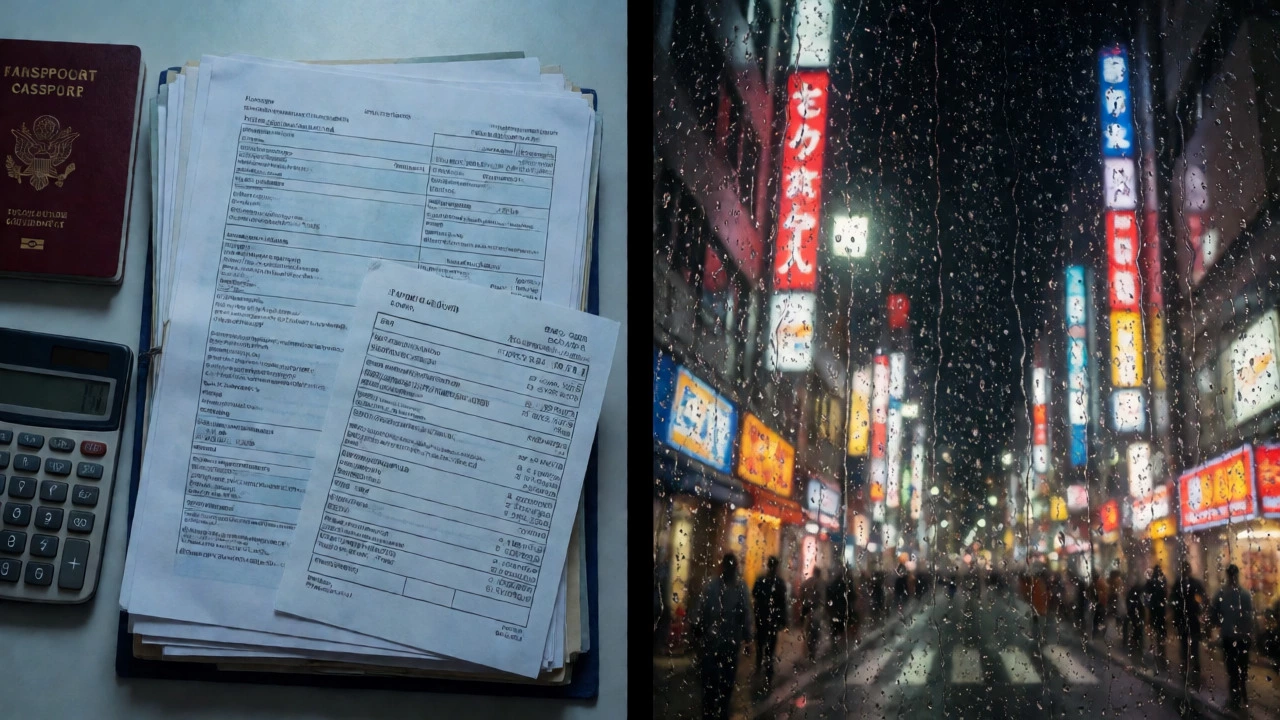
The Financial Trap: USA and UK
Is the USA hard to study in? Academically, top-tier universities like MIT or Stanford are demanding. But the true barrier is financial. Tuition fees can exceed $50,000 per year. Add living costs, and you’re looking at a debt load that shapes your entire post-graduation life. The United States also has a complex visa system. The F-1 visa allows optional practical training (OPT), but securing a job afterward often requires employer sponsorship for an H-1B visa, which is a lottery. The stress of potentially having to leave after one year of work, regardless of how good you are, creates immense anxiety.
The United Kingdom is shorter-one-year master’s degrees-but equally expensive. The academic pace is blistering. You cover in twelve months what takes two years elsewhere. There’s no time to ease in. You arrive, you write essays, you take exams, you leave. If you struggle with writing academic English quickly, the UK system won’t wait for you to catch up.
Who Should Avoid These "Hard" Countries?
Knowing your weaknesses saves you money and heartbreak. Here’s a quick reality check:
- Avoid Japan if you hate being misunderstood or if you need immediate social feedback. It rewards those who observe before speaking.
- Avoid Germany if you need hand-holding. If you procrastinate, German universities will let you sink silently.
- Avoid the USA if you cannot secure scholarships or family funding. The debt-to-income ratio can be crippling if you don’t land a high-paying job immediately.
- Avoid South Korea if you value individual expression over group cohesion. The cultural fit is non-negotiable.

How to Prepare for the Hardest Destinations
You can’t change the difficulty, but you can change your readiness. Start learning the local language six months before departure. Even basic phrases show respect and open doors in Japan and France. Research the housing market early; in cities like Tokyo or London, good apartments vanish in days.
Also, build a support network before you go. Join online forums for international students in your target city. Ask them about the specific pain points of that semester. Knowing that everyone hates the German registration portal makes it less scary when you’re stuck in line. Preparation turns chaos into manageable tasks.
Frequently Asked Questions
Which country has the highest dropout rate for international students?
While data varies, countries with high academic independence and low support structures, such as Germany and Austria, often see higher dropout rates among international students. This is rarely due to lack of intelligence but rather a mismatch between expected support levels and the actual autonomous learning environment.
Is it harder to get a visa for the US or Canada?
The US generally has a stricter and more unpredictable visa process due to security checks and the intent-to-return requirement. Canada tends to have clearer pathways for study permits, though processing times can vary. The US process is often considered more stressful due to the risk of denial without clear reasons.
Can I study in Japan without knowing Japanese?
Yes, many universities offer English-taught programs. However, daily life, part-time jobs, and social integration become significantly harder without Japanese. Most successful long-term students eventually learn the language to navigate bureaucracy and build genuine friendships.
Which European country is easiest for Indian students?
Countries like Ireland and Malta often have smoother visa processes and English-speaking environments. However, Germany remains popular due to low tuition, despite the administrative hurdles. The "easiest" depends on whether you prioritize language comfort (Ireland) or cost savings (Germany).
Does academic difficulty correlate with job prospects?
Not always. A difficult degree from a less-known university might hold less weight than a moderately difficult degree from a prestigious institution. Employers often look at brand recognition and relevant skills more than the sheer intensity of your coursework.