
Walk into any high school hallway in the United States during mid-terms, and you will hear a specific kind of groan. It is not just about homework; it is about survival. Students trade war stories like soldiers, comparing who has the most brutal syllabus or the strictest professor. But if you strip away the teenage drama and look at the data, what actually makes a class the "hardest"? Is it the volume of reading? The complexity of the math? Or the sheer psychological toll of knowing your future depends on a single grade?
The answer isn't simple because "hard" is subjective. For a student who loves words but struggles with numbers, AP English Literature is a course that requires deep analytical thinking and extensive reading comprehension might be a nightmare. For someone else, it’s a breeze. However, when we look at national statistics, pass rates, and curriculum density, a few subjects consistently rise to the top as the most difficult classes in America.
The Statistical Heavyweights: AP Exams
If we want an objective measure of difficulty, we have to look at the Advanced Placement (AP) program run by the College Board. These courses are designed to mimic introductory college-level work. The College Board releases annual data on pass rates, which serves as a reliable barometer for how challenging these subjects are for the average American high schooler.
AP Calculus BC is an advanced mathematics course covering integration, series, and parametric equations often tops the list of dreaded subjects. Why? Because it moves fast. Extremely fast. While AP Calculus AB covers the basics of differential and integral calculus, BC covers all of AB plus additional topics like Taylor series and polar coordinates. In recent years, the pass rate for AP Calculus BC has hovered around 65-70%, which sounds decent until you realize that getting a 5 (the highest score) is significantly harder than in other sciences. The conceptual leap from algebra to calculus is massive, and BC demands fluency, not just understanding.
Then there is AP Physics C: Mechanics is a calculus-based physics course focusing on kinematics, dynamics, and energy. This is where many students hit a wall. Unlike AP Physics 1, which uses algebra, Physics C requires you to solve problems using calculus. You aren't just plugging numbers into formulas; you are deriving them. The abstract nature of concepts like torque, rotational inertia, and conservation of momentum, combined with the mathematical rigor, creates a perfect storm of difficulty. Pass rates here are often lower than in biology or chemistry, signaling that this is one of the toughest hurdles in the high school curriculum.
| Course Name | Primary Challenge | Average Pass Rate (%) | Prerequisites |
|---|---|---|---|
| AP Calculus BC | Speed & Abstract Concepts | ~68% | Pre-Calculus |
| AP Physics C: Mechanics | Calculus Application | ~60% | Concurrent Calculus |
| AP Chemistry | Mental Math & Theory | ~55% | Algebra II / Chemistry |
| AP European History | Volume of Content | ~45% | World History |
The Volume Monster: AP European History
While math and science kill you with complexity, history kills you with volume. AP European History is a survey course covering European events from the Renaissance to the present day is frequently cited by students as the hardest class they ever took. And looking at the stats, it’s easy to see why. The pass rate for AP Euro is notoriously low, often dipping below 50%.
The challenge here isn’t that the concepts are impossible to understand. It’s that there is so much of them. You are expected to memorize dates, treaties, political movements, artistic styles, and economic shifts spanning over 600 years. Then, you must be able to synthesize this information into coherent essays under timed conditions. One wrong turn in your argument about the causes of World War I can tank your entire free-response section. It is a test of endurance and memory management more than pure intellect.
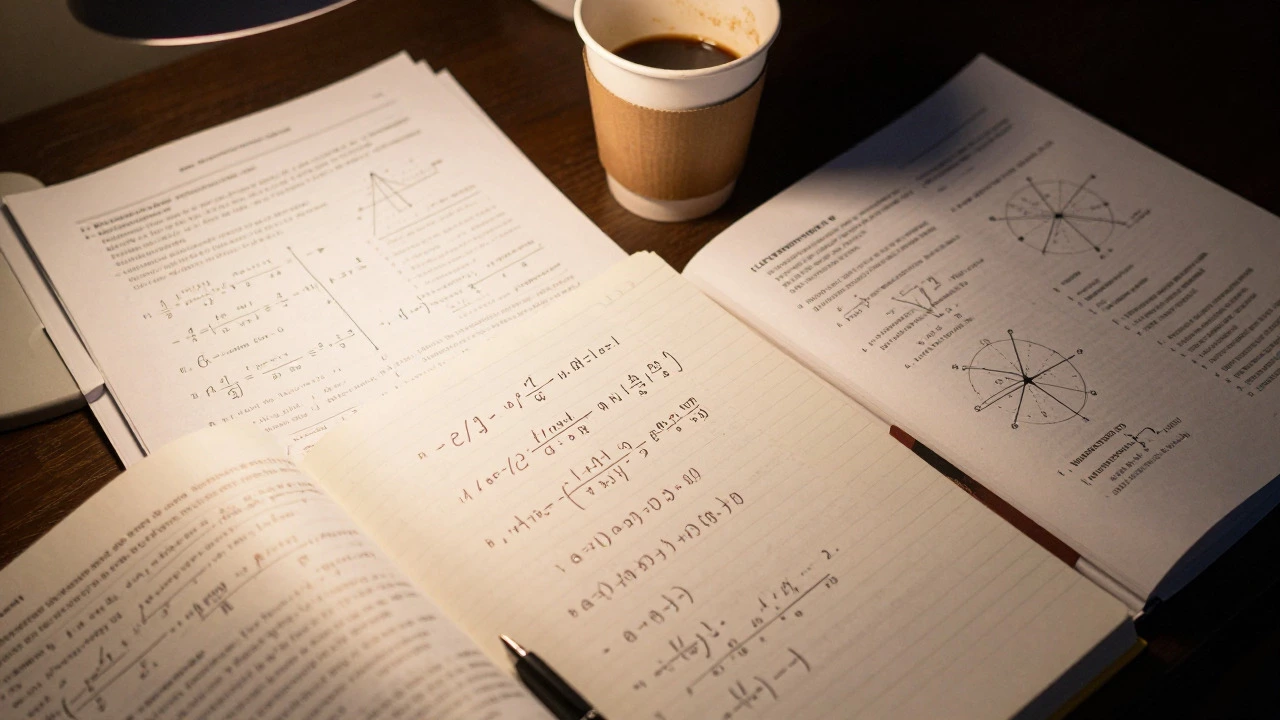
The College-Level Shock: Dual Enrollment
Many high schools now offer dual enrollment programs, allowing students to take actual college courses for credit. This blurs the line between high school and university education. Among these, Organic Chemistry I is a foundational science course studying carbon-based compounds and their reactions stands out as a legendary gatekeeper.
In pre-med tracks, Organic Chemistry is known as the "weed-out" class. It requires a unique type of spatial reasoning that many students haven't developed yet. You aren't just balancing equations; you are visualizing molecules in three dimensions, predicting how electrons will move, and understanding reaction mechanisms that defy common sense. The workload is immense, often requiring 15-20 hours of study per week outside of class. For a high schooler juggling sports, social life, and other academics, this level of commitment is brutal.
Why Does "Hard" Matter?
You might wonder why we obsess over the hardest classes. The truth is, college admissions officers care about context. Taking the hardest classes available at your school shows "academic rigor." It tells them you didn't pick the path of least resistance. However, there is a fine line. If you take five APs and your GPA drops from 4.0 to 3.2, was it worth it? Probably not.
The goal isn't to suffer; it's to grow. The hardest classes teach you resilience. They force you to learn how to study efficiently, how to ask for help, and how to manage stress. These are skills that matter far more in college and careers than knowing the derivative of a trigonometric function.

Navigating the Rigor: Tips for Success
If you are considering taking one of these beastly courses, don't panic. Preparation is key. Here is how to survive and thrive:
- Check Your Foundation: Don't take AP Physics C if you are struggling in Algebra II. Build your base first.
- Start Early: For courses like AP Euro, start reviewing notes the day after you learn them. Cramming doesn't work for volume-heavy subjects.
- Form Study Groups: Explaining a concept to someone else is the best way to ensure you understand it. Plus, it makes the suffering more bearable.
- Talk to Teachers: High school teachers want you to succeed. Ask them for advice on time management and resources.
The Subjectivity of Struggle
Ultimately, the "hardest" class is the one that challenges your weakest areas. If you are a creative writer, AP Calculus BC will feel like torture. If you are a mathematician, AP English Language might seem endless and pointless. Recognizing your own learning style is crucial. Don't pick a hard class just because your friends are. Pick it because it aligns with your interests and goals, even if it scares you a little.
The American education system is designed to push boundaries. The hardest classes are there to separate those who are willing to put in the work from those who aren't. Whether it's the abstract logic of calculus, the historical depth of European studies, or the molecular complexity of organic chemistry, conquering these subjects builds a foundation for lifelong learning.
Is AP Calculus BC harder than AP Physics C?
It depends on your strengths. AP Calculus BC is faster-paced and covers more material, while AP Physics C requires applying calculus to physical systems. Generally, Physics C is considered more conceptually difficult because it combines math with real-world application, but BC has a higher volume of content.
What is the lowest passing AP exam?
Do colleges care if I fail a hard class?
Colleges prefer to see you attempting rigorous coursework. A B in an AP class is often viewed more favorably than an A in a standard-level class. However, multiple failures can hurt your application. Context matters; explain extenuating circumstances if necessary.
Can I take Organic Chemistry in high school?
Yes, through dual enrollment programs or specialized AP Chemistry courses that cover organic topics. However, it is intense. Ensure you have a strong background in general chemistry and algebra before attempting it.
How many AP classes should I take?
There is no magic number. Quality matters more than quantity. Take as many as you can handle without sacrificing your mental health or performance in other areas. Typically, 3-5 APs per year is manageable for motivated students.