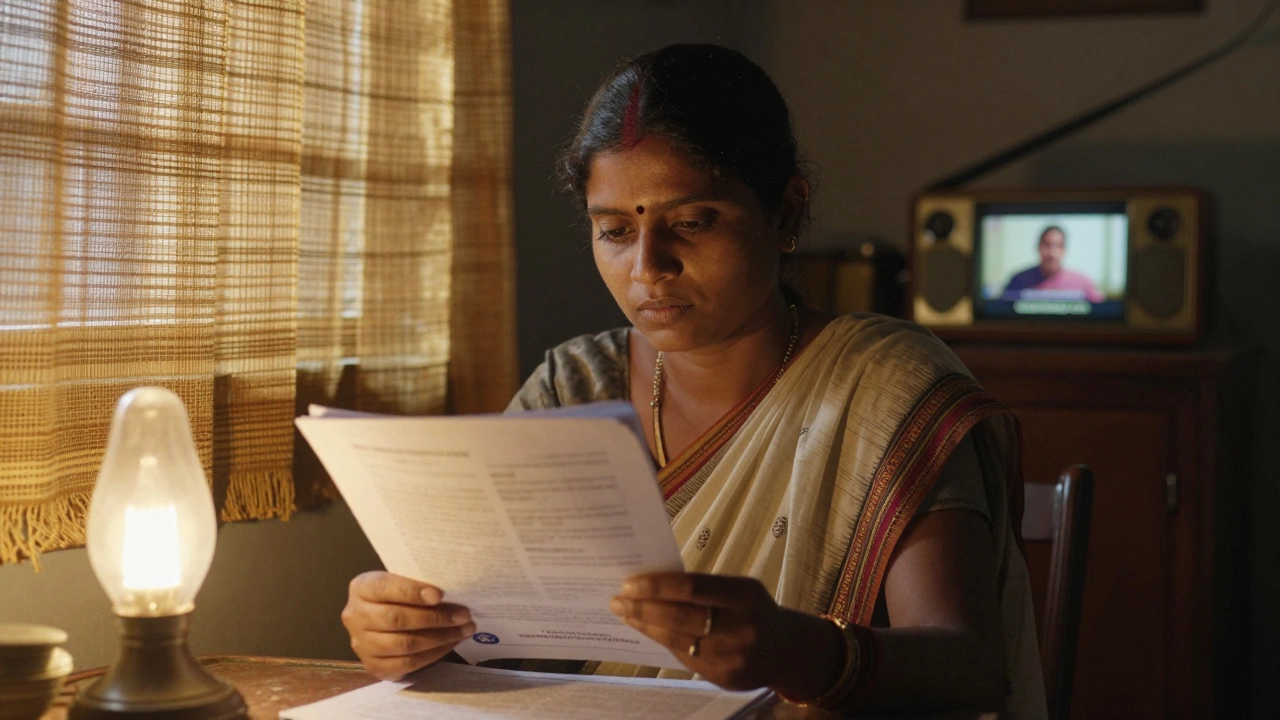
Distance Education Accreditation Checker
Verify if a distance education institution is accredited by the UGC-DEB (Distance Education Bureau) in India. This tool helps you avoid fraudulent programs and ensures your degree will be recognized by employers and government agencies.
Distance education is a system of teaching and learning where students and instructors are physically separated, and instruction is delivered through technology, mail, or other media. It’s not just watching videos or logging into a Zoom class-it’s a structured, accredited way to earn degrees, certifications, or skills without stepping into a traditional classroom. Millions of people worldwide use distance education to balance work, family, and learning-especially in places where access to schools is limited or too expensive.
How Distance Education Started
The roots of distance education go back to the 1840s, when Sir Isaac Pitman, a British educator, began teaching shorthand through postal lessons. Students mailed in their written exercises, and Pitman returned them with corrections. This was the first known system of remote instruction. Fast forward to the 1920s, and radio broadcasts started delivering lessons to rural communities in the U.S. and Canada. By the 1960s, television was being used in countries like India and Australia to reach students in remote villages.
In the 1980s, India’s Indira Gandhi National Open University (IGNOU) became one of the largest distance learning institutions in the world, offering degrees to over 3 million students by 2020. Today, distance education isn’t just for people who can’t attend school-it’s chosen by professionals, parents, soldiers, and even students in cities who want flexible schedules.
What Makes It Different From Online Learning?
Many people use the terms "distance education" and "online learning" interchangeably, but they’re not the same. Online learning is a subset of distance education. Think of it this way: all online learning is distance education, but not all distance education is online.
Distance education includes:
- Mail-based courses with printed materials
- Pre-recorded video lessons sent on DVDs or USB drives
- Radio or TV broadcasts
- Live video classes via Zoom or Google Meet
- Learning apps with offline access
Online learning, on the other hand, requires constant internet access. Distance education can work even with slow or no internet-something that matters in rural India, parts of Africa, or remote regions of Southeast Asia. Many government-run distance programs in India still use printed study packs and weekly radio lessons because they’re more reliable than high-speed internet.
How Distance Education Works Today
Modern distance education follows a clear structure:
- Enrollment - You sign up through an accredited institution (like IGNOU, Sikkim Manipal University, or international ones like the University of the People).
- Materials - You receive textbooks, video lectures, podcasts, or access to a learning portal. Some programs send physical books by post.
- Assignments - You complete and submit work, often through email, online portals, or even postal mail.
- Exams - These are held at designated centers, sometimes in local schools or colleges. Many now use online proctoring with AI monitoring.
- Certification - If you pass, you earn a degree or certificate recognized by employers and universities.
For example, a nurse in rural Bihar who wants to upgrade to a B.Sc. in Nursing can enroll in IGNOU’s distance program. She gets study materials by post, watches recorded lectures on her phone during breaks, submits assignments via WhatsApp, and takes exams at the nearest government college. After three years, she gets the same degree as someone who studied on campus.
Who Uses Distance Education?
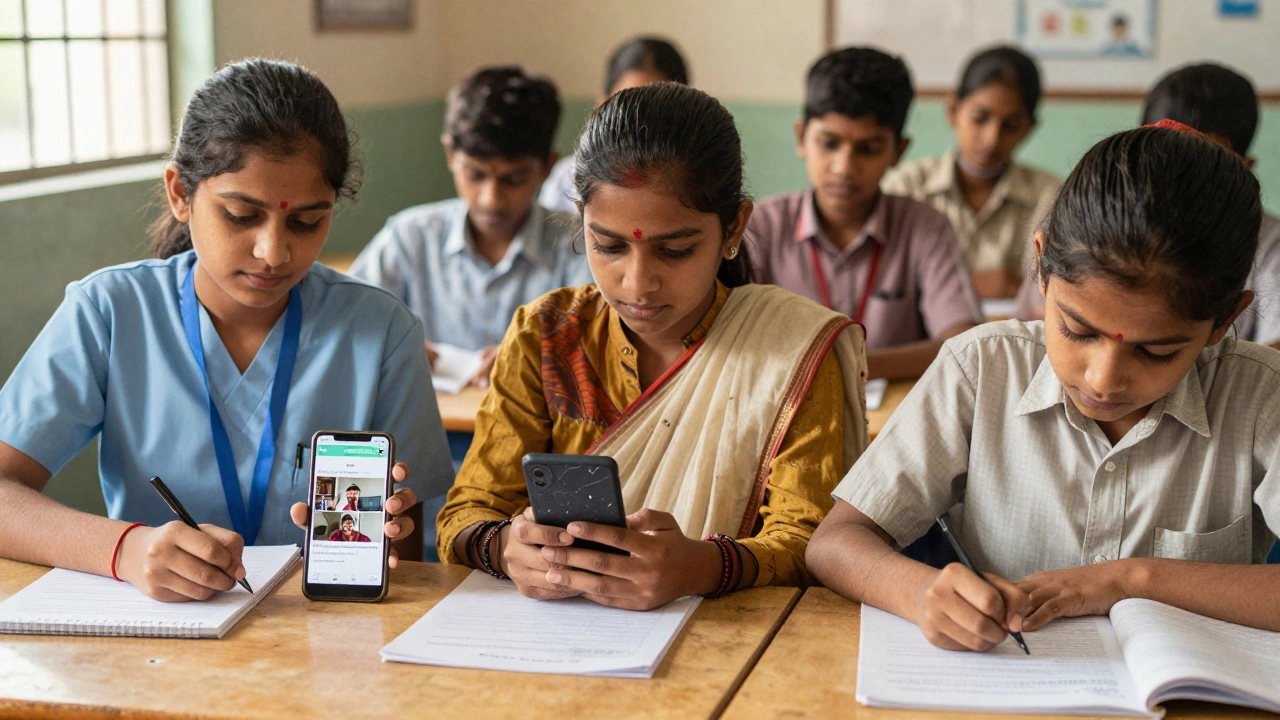
It’s not just for people in faraway villages. Here’s who benefits most:
- Working adults - A shopkeeper in Jaipur studying for a B.Com. while running his store.
- Parents - A mother in Hyderabad taking a diploma in early childhood education while caring for her kids.
- People with disabilities - A student in Chennai with limited mobility earning a BA through recorded lectures and home exams.
- Government employees - A clerk in Assam upgrading to an MBA through a state-sponsored distance program.
- International students - A student in Nepal or Bangladesh getting a degree from an Indian university without moving.
In 2025, over 12 million students in India alone were enrolled in distance education programs, according to the University Grants Commission (UGC). That’s more than double the number from 2015. The biggest growth has been in vocational courses, teacher training, and short-term certifications.
Accreditation Matters
Not all distance education programs are equal. Some are scams. Always check if the institution is approved by the UGC-DEB (Distance Education Bureau) in India, or equivalent bodies like the Distance Education Accrediting Commission (DEAC) in the U.S.
Here’s how to tell if a program is legit:
- Look for the UGC-DEB logo on the website
- Search the institution on the UGC’s official list of recognized universities
- Check if degrees are accepted by government jobs and private employers
- Avoid programs that promise degrees in 6 months with no exams
For example, a "degree" from an unaccredited online "university" might look fancy on LinkedIn, but employers and government agencies won’t recognize it. In 2024, the UGC shut down 23 fraudulent distance education providers.
Pros and Cons of Distance Education
Like any system, it has strengths and weaknesses.
| Pros | Cons |
|---|---|
| Flexible schedule-learn anytime | Limited face-to-face interaction |
| Lower cost than traditional colleges | Requires strong self-discipline |
| Accessible to people with disabilities or mobility issues | Not all employers still trust distance degrees |
| Can be done from anywhere, even without internet | Exams may require travel to test centers |
| Wide range of courses-from coding to yoga therapy | Less campus life, networking, or extracurriculars |
What’s Next for Distance Education?
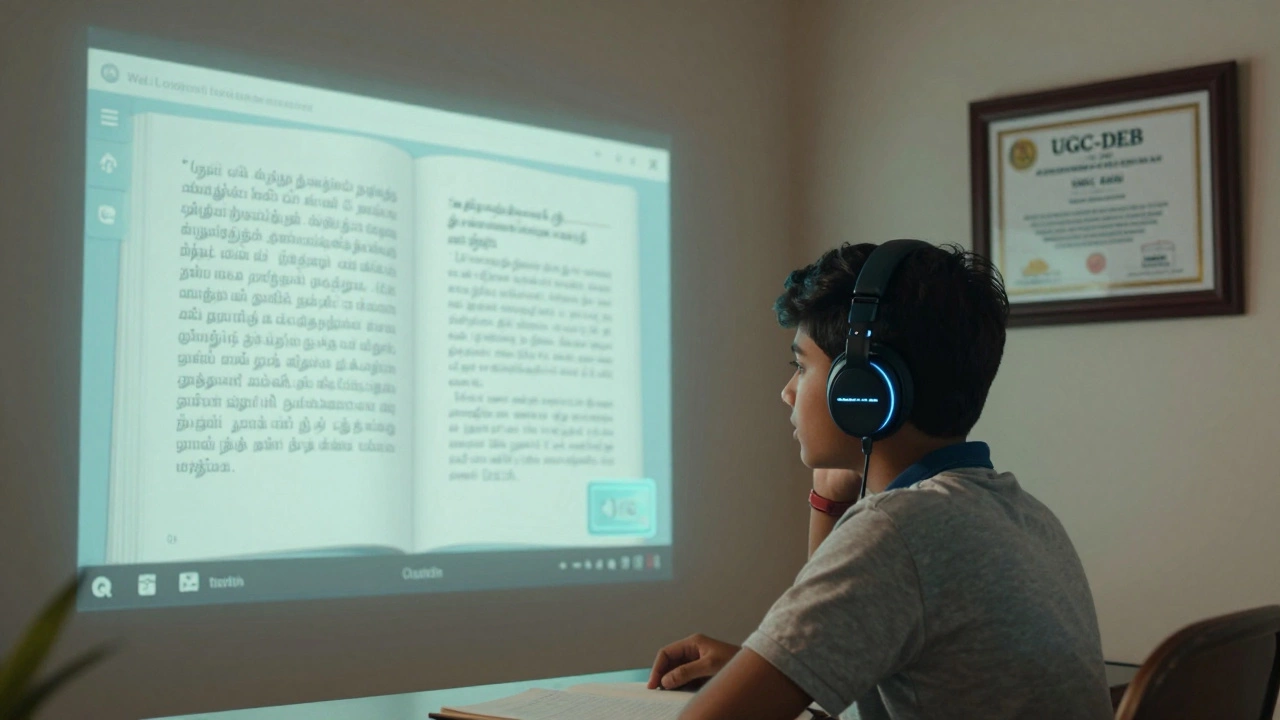
By 2026, distance education is evolving fast. AI tutors are being tested in Indian government programs to give personalized feedback on assignments. Mobile apps now let students scan textbook pages and get voice explanations in regional languages like Tamil, Telugu, or Marathi.
Hybrid models are growing too-students might do most of their learning remotely but attend 2-3 on-campus workshops per semester. Some universities now offer "micro-credentials"-tiny certificates in just 4 weeks on topics like digital marketing or basic accounting-that can be stacked into full degrees later.
The biggest shift? Distance education is no longer seen as a "second choice." It’s becoming the first choice for millions who need to learn without sacrificing their jobs, families, or financial stability.
What is the definition of distance education?
Distance education is a formal learning system where students and teachers are physically separated, and instruction is delivered through media such as printed materials, radio, TV, video, or online platforms. It includes structured courses, assignments, exams, and accredited certification, and does not require daily attendance at a physical campus.
Is distance education the same as online learning?
No. Online learning is a type of distance education that requires internet access. Distance education includes offline methods too-like mailed books, recorded DVDs, or radio lessons. So, while all online learning is distance education, not all distance education is online.
Are distance education degrees valid in India?
Yes-if the institution is approved by the UGC-DEB (Distance Education Bureau). Degrees from UGC-recognized universities like IGNOU, Sikkim Manipal, or Annamalai are legally valid for jobs, higher studies, and government exams. Always verify the university’s status on the UGC website before enrolling.
Can I do distance education while working full-time?
Absolutely. Distance education is designed for working professionals. Most programs allow you to study at your own pace, submit assignments online or by mail, and take exams on weekends or holidays. Many government employees, nurses, and shopkeepers in India successfully complete degrees this way.
How do I find a legitimate distance education program in India?
Go to the official UGC website and search for the university in the list of recognized institutions under the Distance Education Bureau. Avoid private institutes that promise "100% pass guarantee" or degrees in less than 2 years. Legitimate programs have clear syllabi, exams, and faculty details. If it sounds too easy, it probably isn’t real.
Final Thoughts
Distance education isn’t about replacing classrooms-it’s about expanding access. For someone in a small town with no college nearby, it’s a lifeline. For a single parent in Mumbai, it’s a way to change careers. For a soldier stationed in Ladakh, it’s how they keep learning. It’s not perfect, but it’s real, it’s growing, and it’s changing lives every day.