Education Path Matcher
Answer these 5 questions to find the best educational model for your lifestyle and goals.
Traditional Education
- Structured schedule
- Campus networking
- Hands-on facilities
Distance Education
- Flexible timing
- Lower costs
- Study from anywhere
Your Recommended Path
Description goes here.
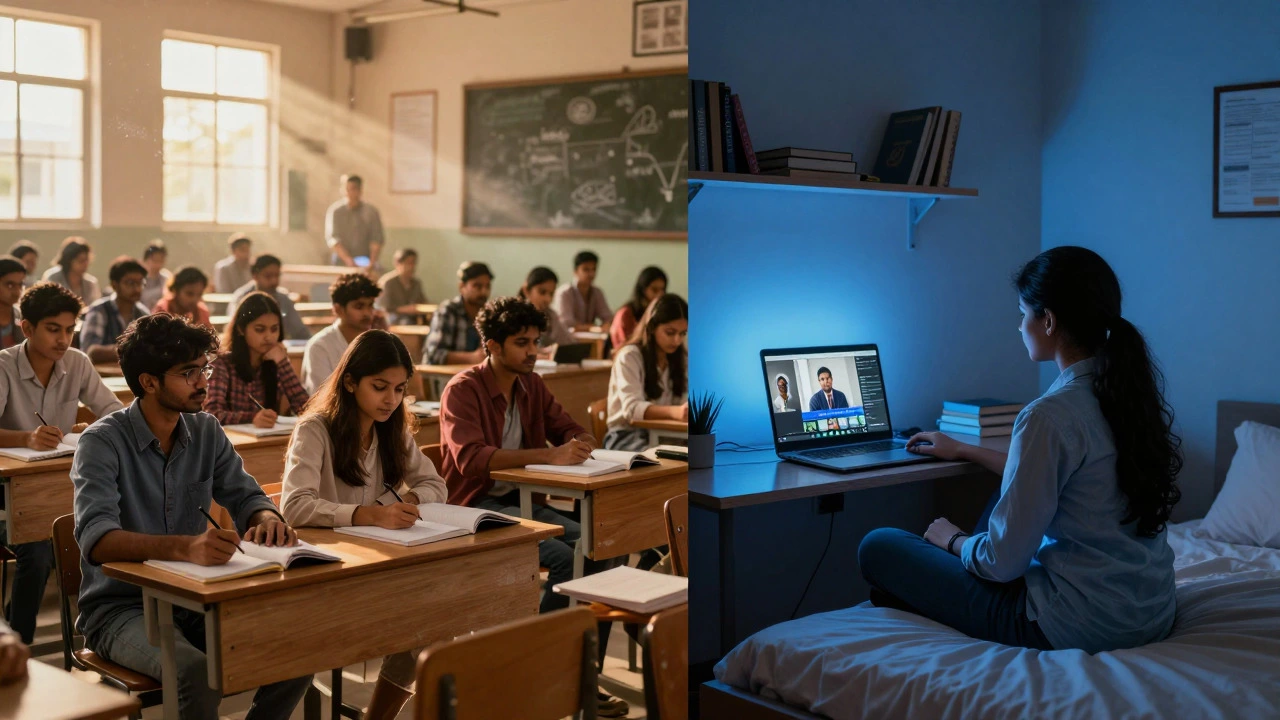
Imagine sitting in a lecture hall at Anna University is a prominent public technical university in Chennai, India, surrounded by hundreds of students taking notes. Now imagine logging into a Zoom class from your bedroom in a quiet suburb, with only your laptop screen between you and the professor. Both scenarios involve learning, but the experience, structure, and outcomes can feel worlds apart.
This is the core tension of modern schooling: traditional education versus distance education. For decades, the campus model was the gold standard. Today, digital platforms have disrupted that monopoly. But which one actually works for you? The answer isn't just about convenience; it's about how you learn, what career you want, and where you live.
The Core Difference: Physical Presence vs Digital Access
At its simplest, Traditional education is an instructional method where students and teachers meet face-to-face in a physical location like a school or university. It relies on synchronous interaction-everyone is in the same room, at the same time. Think of blackboards, handouts, and immediate feedback from a professor walking down the aisle.
In contrast, Distance education is a mode of study where students learn remotely using technology, often asynchronously, without being physically present on campus. This includes everything from mailed correspondence courses (the old way) to live webinars and self-paced video modules (the new way). The key here is flexibility. You are not bound by a bell schedule or a commute.
Let’s look at how these two models stack up against each other in real-world terms.
| Feature | Traditional Education | Distance Education |
|---|---|---|
| Location | Fixed campus/classroom | Anywhere with internet access |
| Schedule | Rigid, fixed timetable | Flexible, often self-paced |
| Interaction | Face-to-face, immediate | Virtual, delayed (forums/email) |
| Cost | Higher (tuition + living expenses) | Lower (no relocation/housing costs) |
| Pace | Set by the institution | Often adjustable by the student |
Why Traditional Education Still Holds Value
Despite the rise of apps and platforms like Coursera is an online learning platform offering MOOCs from top universities, many students still prefer the campus route. Why? Because human connection matters.
In a traditional setting, you build relationships organically. You grab coffee after class, join a debate club, or get mentored by a professor during office hours. These interactions create a network that can last a lifetime. According to data from the All India Council for Technical Education (AICTE) is the statutory body under Ministry of Education responsible for planning and ensuring coordinated development of technical education in India, institutions with strong campus facilities often report higher placement rates due to on-campus recruitment drives.
Furthermore, traditional education provides structure. If you struggle with self-discipline, having a fixed schedule forces you to show up. You don’t have to decide whether to study today; you already know you’re going to class at 9 AM. This external accountability helps many students complete their degrees faster than they might in a self-directed environment.
There’s also the practical aspect of labs and workshops. Engineering students need access to heavy machinery. Medical students need cadavers and hospitals. While virtual simulations are improving, nothing replaces hands-on practice in a controlled, supervised environment.
The Rise of Distance Learning: Freedom and Flexibility
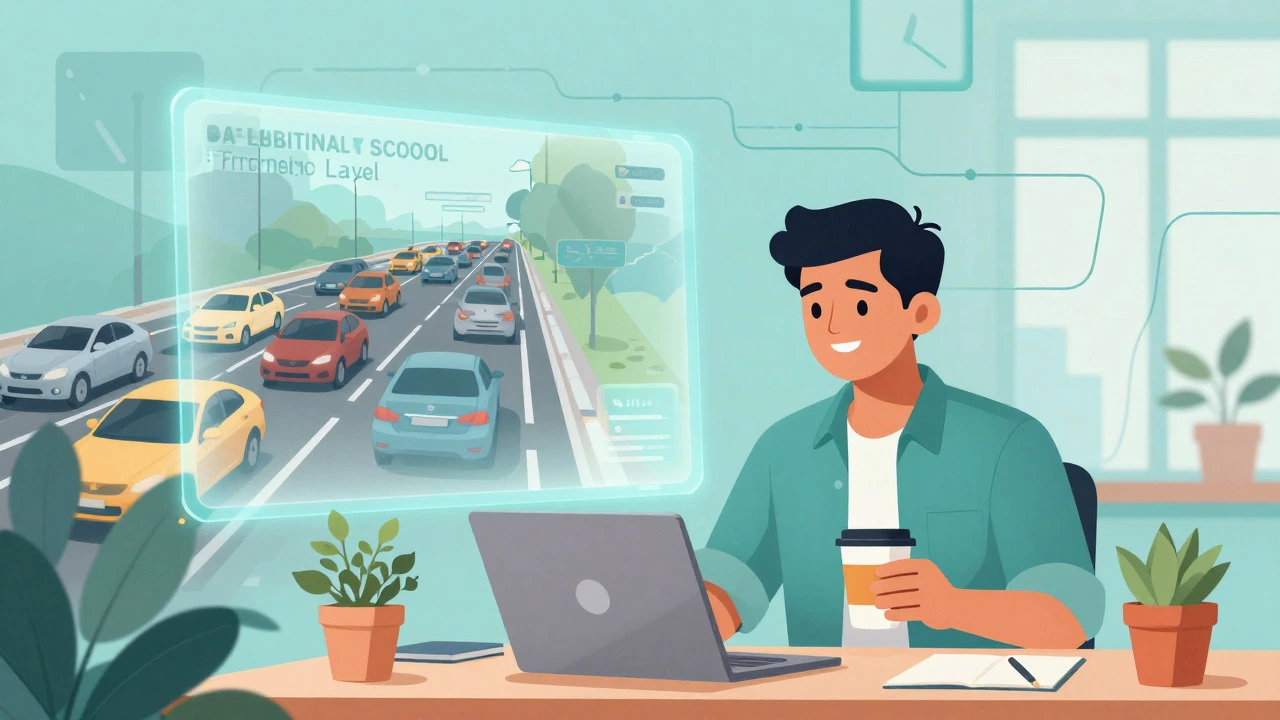
Now, let’s talk about why millions are switching to remote options. The biggest driver is flexibility. In Chennai is the capital city of Tamil Nadu, known for its educational institutions and IT industry, traffic congestion can turn a 30-minute commute into a two-hour ordeal. Distance education eliminates this drain on time and energy.
For working professionals, this is a game-changer. You can work full-time during the day and attend lectures at night. Parents can balance childcare with coursework. Students in rural areas, who previously had to migrate to cities for quality education, can now access courses from premier institutes without leaving home.
Cost is another major factor. Traditional education involves hidden expenses: hostel fees, food, travel, and books. Distance programs typically strip away these overheads. A degree from a reputable open university might cost a fraction of what a private college charges, while offering similar curriculum standards.
Additionally, distance education fosters specific skills. You learn to manage your time, communicate effectively via email and forums, and navigate digital tools. These are exactly the skills employers value in today’s hybrid work environments.
Academic Recognition and Credibility
A common concern among Indian students is whether a distance degree holds the same weight as a regular one. Historically, there was stigma attached to “open” degrees. However, the landscape has shifted significantly.
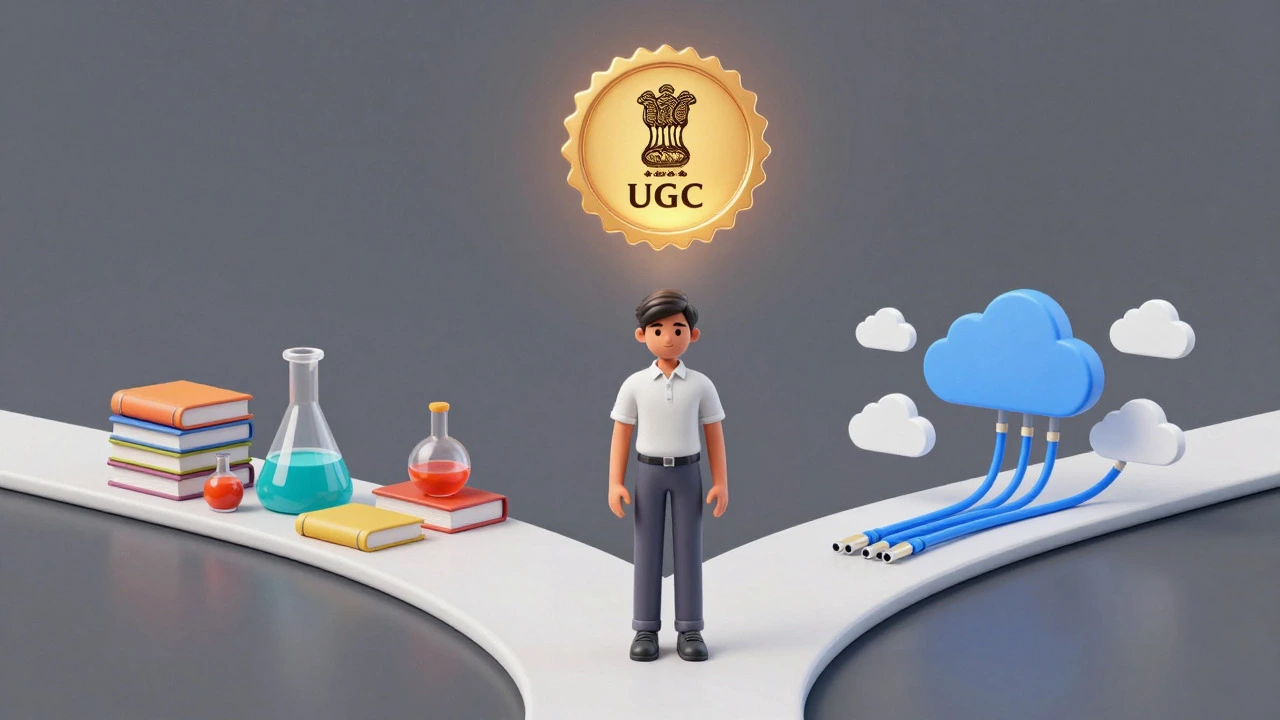
The University Grants Commission (UGC) is the primary regulatory body for higher education in India, ensuring standards and recognition of universities has established clear guidelines for Open and Distance Learning (ODL) is a framework recognized by UGC for valid remote education programs in India. As long as the institution is UGC-recognized, the degree is legally equivalent for government jobs, further studies, and most private sector roles.
However, nuances exist. Some highly competitive corporate roles or research positions may still prefer candidates from traditional campuses, citing networking opportunities or rigorous peer review. It’s crucial to check specific job descriptions or admission criteria before choosing a path. For example, while an MBA from a distance program is valid, certain top-tier management consultancies might prioritize graduates from flagship residential programs.
Who Should Choose Which Path?
Choosing between traditional and distance education depends on your personal circumstances and goals. Here’s a quick guide to help you decide:
- Choose Traditional Education if:
- You thrive in social, collaborative environments.
- You need hands-on training (e.g., engineering, medicine, arts).
- You lack self-discipline and need external structure.
- You want to build a local professional network immediately.
- Choose Distance Education if:
- You are working full-time or have family responsibilities.
- You live far from quality educational institutions.
- You are budget-conscious and want to minimize living costs.
- You are self-motivated and good at time management.
Hybrid Models: The Best of Both Worlds?
Interestingly, the line between these two models is blurring. Many universities now offer blended learning, combining online lectures with occasional on-campus workshops. This approach aims to provide the flexibility of distance learning with the interpersonal benefits of traditional classrooms.
As technology advances, we might see more immersive experiences through virtual reality (VR) labs, allowing remote students to conduct experiments virtually. Until then, both models coexist, serving different needs within the broader ecosystem of higher education.
Is a distance education degree respected in India?
Yes, provided the institution is recognized by the University Grants Commission (UGC) or the relevant statutory body like AICTE. UGC-recognized distance degrees are valid for government jobs, higher studies, and private sector employment. However, some elite private firms may still prefer traditional campus graduates for networking reasons.
Which is cheaper: traditional or distance education?
Distance education is generally much cheaper. You save on hostel accommodation, food, transportation, and often pay lower tuition fees. Traditional education requires significant investment in living expenses, especially if you relocate to a metro city for studies.
Can I get a job with a distance learning degree?
Absolutely. Many working professionals use distance degrees to upskill and advance their careers. Employers care more about your skills, experience, and the credibility of the issuing university. Just ensure your degree is from a UGC-recognized institute to avoid issues with verification.
What are the main challenges of distance education?
The biggest challenges are self-discipline and isolation. Without a fixed schedule, procrastination can derail your progress. Additionally, lack of face-to-face interaction can make it harder to build a support network. You must actively engage in online forums and seek out virtual study groups to overcome this.
Is traditional education better for networking?
Generally, yes. Campus life offers organic opportunities to meet peers, professors, and industry recruiters through events, clubs, and casual interactions. Distance learners must be proactive in building networks via LinkedIn, alumni associations, and virtual conferences to achieve similar results.