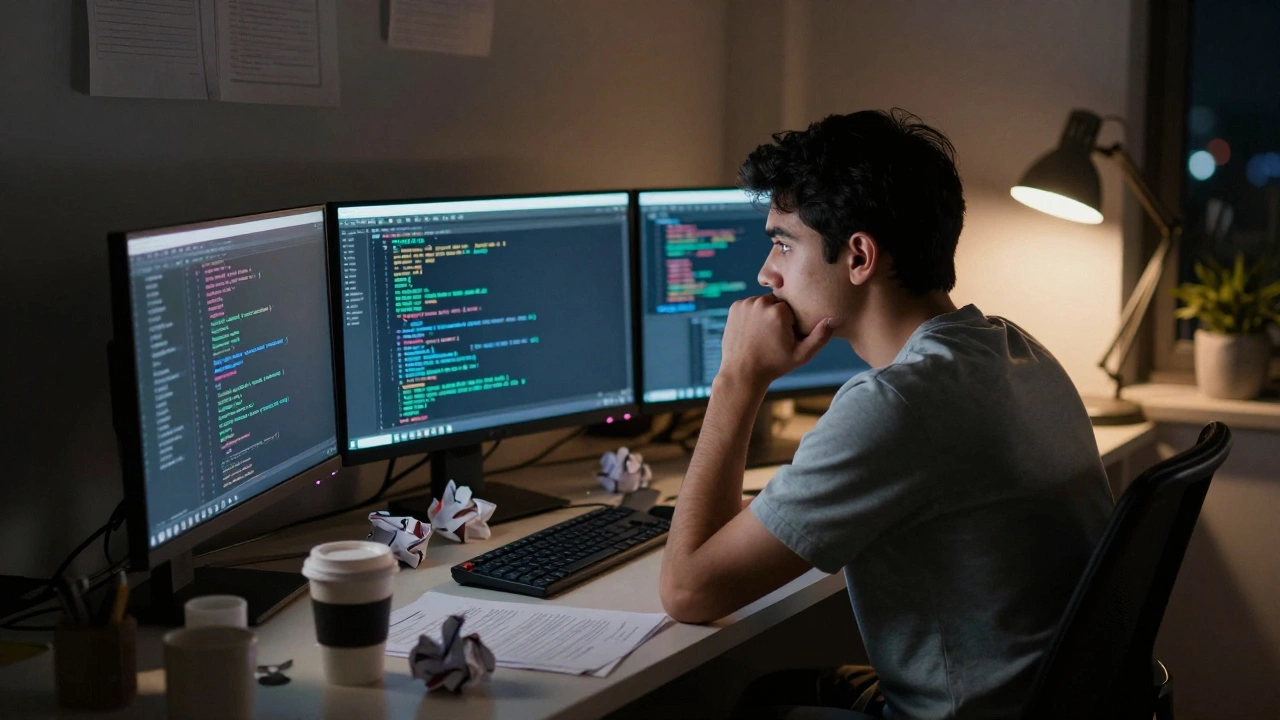
Coding Stress Factor Calculator
How Stressful Is Your Coding Job?
Assess your workplace conditions based on key stress factors from industry research. This calculator is based on insights from India's developer community.
Many people think coding is a high-stress job because of all the tech hype-late nights, bug hunts, and endless meetings. But is that really true? If you’ve ever sat through a coding class wondering if this path is worth the burnout, you’re not alone. The truth? Coding isn’t inherently stressful. The stress comes from how it’s done, not what it is.
What actually causes stress in coding jobs?
Not all coders feel the same pressure. Some work in calm environments with clear goals. Others are stuck in chaos: shifting requirements, tight deadlines, and teams that don’t communicate. The biggest stressors aren’t the code itself-they’re the systems around it.
Take a junior developer in Bangalore working on a legacy system with zero documentation. They’re stuck fixing a 12-year-old PHP script that no one understands. That’s stressful. Now picture someone in Pune building a new app with a modern stack, clear specs, and weekly check-ins. That’s not stressful-it’s satisfying.
Research from Stack Overflow’s 2025 Developer Survey shows that 68% of developers who reported high stress cited poor team communication and unclear project goals as the main causes-not the act of writing code. The code? It’s usually the easiest part.
How coding classes prepare (or don’t prepare) you
Coding classes often teach syntax, algorithms, and frameworks. But rarely do they teach how to handle a manager who changes the scope every Friday. Or how to say "no" when your workload is already full. Or how to ask for help without feeling like a failure.
That’s the gap. Most bootcamps and online courses focus on technical skills. They show you how to build a website. But they don’t show you how to survive the office politics, the midnight panic before a launch, or the feeling that you’re never good enough.
One student from Chennai told me: "I learned React in six weeks. But no one told me how to deal with a senior dev who criticizes your code in front of everyone. That’s what broke me for a while."
Real-world coding isn’t about solving puzzles on LeetCode. It’s about managing expectations, adapting to change, and staying calm when things fall apart.
Stress levels vary by job type
Not all coding jobs are the same. The stress you feel depends heavily on your role, industry, and company culture.
- Startup coders often work 60-hour weeks. They wear multiple hats-design, testing, deployment. Stress is high, but so is the reward. Many thrive on the pace.
- Corporate developers deal with bureaucracy, slow releases, and endless meetings. The stress here is more about feeling powerless than about technical difficulty.
- Freelancers stress about finding the next client, not about bugs. Their anxiety is financial, not technical.
- DevOps engineers live with the weight of system uptime. One mistake can crash a website for millions. That pressure is real.
- Junior developers often stress about being "found out"-imposter syndrome is common. But this fades with experience and mentorship.
There’s no single answer. Stress isn’t built into coding-it’s built into the environment.

What makes coding relaxing instead of stressful?
Some developers say coding is their therapy. Why? Because it’s a space where you have control. You write the rules. You fix what’s broken. You see the result of your work immediately.
When you have:
- Clear goals and deadlines
- Supportive teammates
- Time to learn and make mistakes
- Recognition for your work
-then coding becomes deeply satisfying. I’ve talked to developers in Hyderabad who’ve been coding for 15 years. They don’t talk about stress. They talk about the joy of building something that people actually use.
The key is not avoiding stress entirely. It’s creating conditions where stress doesn’t become burnout.
How to reduce stress if you’re starting out
If you’re in a coding class or just starting your first job, here’s what actually helps:
- Find a mentor-not someone who teaches you syntax, but someone who shows you how to handle pressure.
- Set boundaries-learn to say "I can’t take this now" without guilt.
- Focus on progress, not perfection-your first 100 lines of code will be messy. That’s normal.
- Take breaks-coding isn’t a marathon. Your brain needs rest. Walk outside. Listen to music. Don’t stare at the screen for 8 hours straight.
- Join a community-whether it’s a local meetup in Chennai or a Discord group. You’re not alone in feeling overwhelmed.
One of my students, a 22-year-old from Coimbatore, started crying after her first code review. She thought she was terrible. But her mentor sat with her for an hour, pointing out what she did right-and what she could improve. That changed everything.

Is coding worth it if it’s stressful?
Yes-but only if you’re in the right environment. Coding isn’t a path to avoid stress. It’s a path to build things. And building things can be deeply rewarding.
The average salary for a software developer in India is ₹7.2 lakh per year. But money isn’t why people stay. They stay because they like solving problems. They like seeing their code run on someone’s phone. They like knowing they made something that didn’t exist before.
Stress doesn’t make coding bad. Bad management, poor communication, and lack of support do.
What no one tells you about coding careers
Most people think coding is all about logic and math. It’s not. It’s about patience, persistence, and people skills.
The best coders aren’t the ones who know every framework. They’re the ones who stay calm under pressure, ask good questions, and help others learn. Those skills aren’t taught in coding bootcamps. They’re learned over time-in real teams, with real problems.
If you’re considering coding as a career, don’t ask: "Is it stressful?" Ask: "Will I work somewhere that values me?" That’s the real question.
Because if you’re in a place that respects your time, listens to your concerns, and lets you grow-you won’t feel the stress. You’ll feel proud.