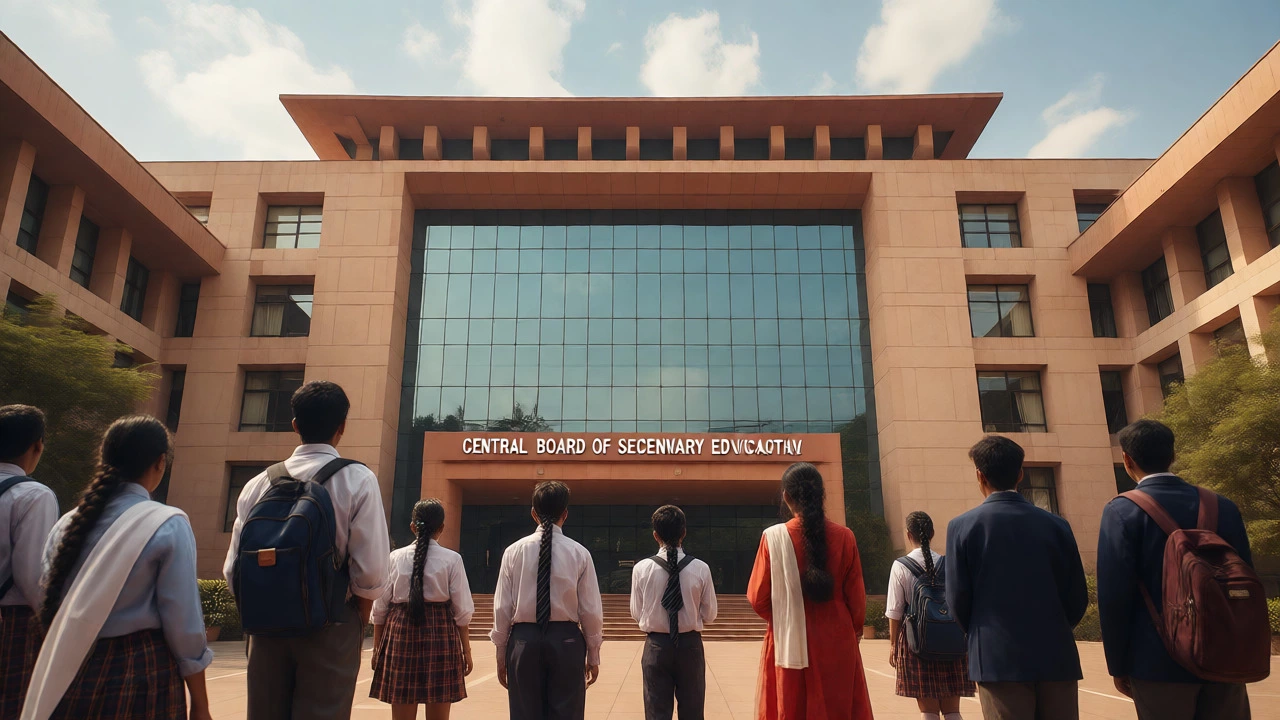
CBSE Myth-Buster & Comparison Tool
Is CBSE really just a "Delhi Board"? Use this interactive guide to uncover the truth and see how national vs. state curricula differ for your child's education.
Select a board above to view key characteristics regarding governance, textbooks, and mobility.
You’ve probably heard parents or teachers throw around the term "Delhi Board" when talking about CBSE. It’s a common shorthand, especially in North India, but it’s technically wrong and can lead to some serious confusion if you’re choosing a school for your child or planning an exam strategy. The short answer is no: CBSE is not just a Delhi board. It is a national-level examination and education body that operates across the entire country and even internationally.
So why does this misconception persist? And more importantly, what does it actually mean for students who live in Chennai, Mumbai, or Kolkata? If you are trying to figure out whether a CBSE school aligns with your local state requirements, or if you are worried about how a "national" curriculum fits into your specific regional context, you need to understand the structural difference between central and state boards. This isn’t just about geography; it’s about syllabus depth, teaching methodology, and future career pathways.
The Origin Story: Why People Call It the Delhi Board
To clear up the confusion, we have to look at history. The Central Board of Secondary Education was established in 1952. Its headquarters are indeed located in New Delhi. Because the administrative heart of the board sits in the capital, people started referring to it as the "Delhi Board." Over time, this nickname stuck, particularly among older generations and in regions where the local state board was very prominent.
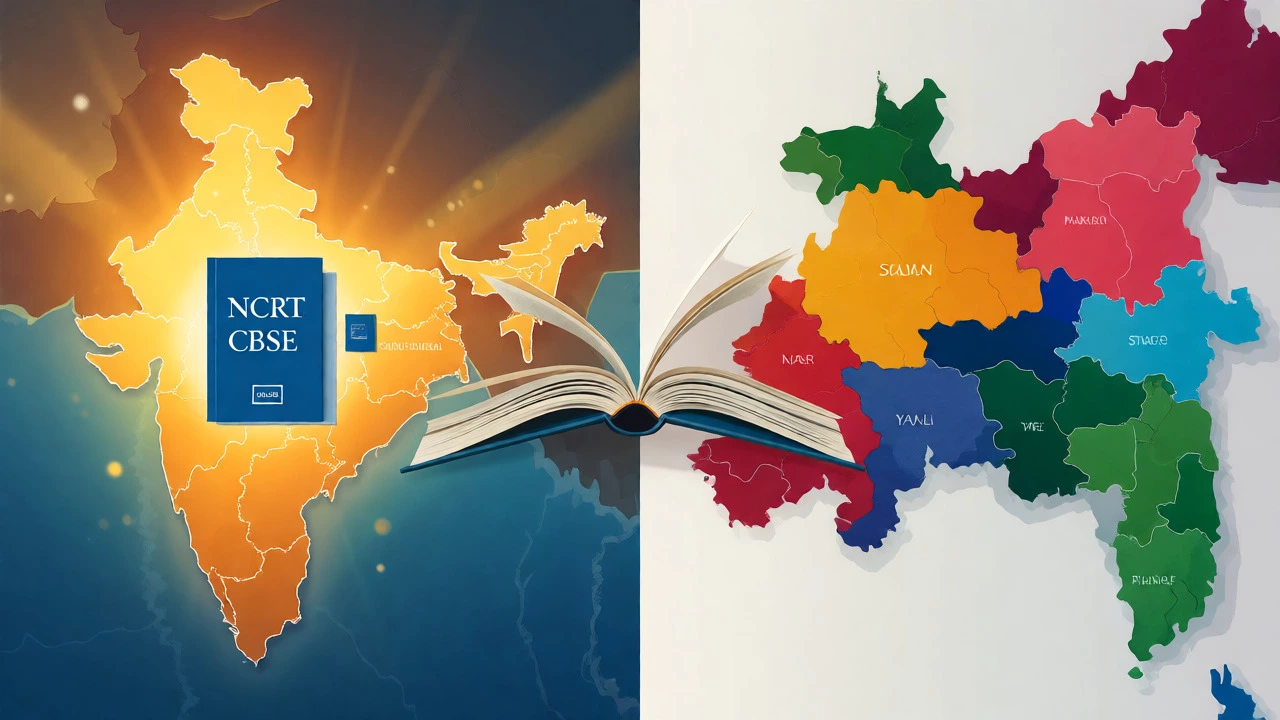
However, calling it a "board" in the same sense as the Tamil Nadu State Board or the Maharashtra State Board is misleading. State boards are governed by their respective state governments. They tailor their syllabus to include local language literature, regional history, and state-specific civic issues. CBSE, on the other hand, is affiliated with the Ministry of Education, Government of India. It doesn’t belong to Delhi; it belongs to the nation. This distinction matters because it dictates who controls the curriculum, who sets the question papers, and how the results are standardized.
Think of it this way: If you buy a smartphone from Apple, you don’t call it the "California Phone" just because Apple is headquartered there. You call it an iPhone because it’s a global product standard. Similarly, CBSE is a national standard for secondary education, not a municipal or state-specific entity.
National Reach vs. Local Roots
The biggest advantage of CBSE being a national board rather than a local one is consistency. Imagine moving from a school in Kerala to a school in Punjab due to a job transfer. If both schools follow the Central Board of Secondary Education curriculum, the core subjects like Physics, Chemistry, Mathematics, and English remain largely identical. The textbooks (often published by NCERT) are the same. The evaluation pattern is the same.
In contrast, if you move from a Tamil Nadu State Board school to a Karnataka State Board school, you might face significant gaps. One state might teach a chapter on local ecology in Grade 8, while the other focuses on industrial growth. For families who relocate frequently-common in defense services, government postings, and corporate jobs-this national uniformity is a lifesaver. It ensures that a student’s academic progress isn’t derailed by changing zip codes.
But does this national approach ignore local relevance? Not entirely. CBSE mandates that students study a second language, which often includes regional languages. However, the depth of regional history and culture covered in CBSE is generally less intensive than in state boards. A student studying under CBSE in Chennai will learn about Indian history broadly, but they won’t dive as deep into the Chola dynasty or Dravidian architecture as a student in the Tamil Nadu State Board would. This is a trade-off: breadth and national mobility versus local cultural depth.
Syllabus Structure: What Makes CBSE Different?
If you are wondering whether the content itself feels "Delhi-centric," the answer is mostly no. The curriculum is designed to be pan-Indian. It emphasizes concepts over rote memorization of local facts. For example, in Social Studies, a CBSE textbook might discuss the concept of federalism using examples from multiple states, whereas a state board book might focus heavily on the state’s own governance structure.
Here is a quick comparison to help you visualize the differences:
| Feature | CBSE (National) | State Boards (Regional) |
|---|---|---|
| Governance | Ministry of Education, Govt of India | State Department of Education |
| Textbooks | Primarily NCERT (National Council of Educational Research and Training) | State Textbook Corporations |
| Language Focus | English + Second Language (often Hindi or Regional) | Strong emphasis on Mother Tongue + English/Hindi |
| Exam Pattern | Competency-based, analytical questions | Often fact-heavy, memory-based questions |
| Mobility | High (Standardized nationwide) | Low (Curriculum varies by state) |
The use of NCERT books is a key identifier. These books are written by national experts and are considered the gold standard for competitive exams like JEE and NEET in India. Even many state board students use NCERT books alongside their local texts because the conceptual clarity is superior. This reinforces the idea that CBSE is aligned with national academic standards, not just local ones.
Why Does the "Delhi Board" Label Still Stick?
Cultural inertia is powerful. In cities like Delhi, Noida, and Gurugram, the majority of private schools are CBSE-affiliated. When everyone around you is going to a "CBSE school," and the board office is in Delhi, the label becomes natural. Additionally, during exam season, news coverage often originates from Delhi, further cementing the association.
Another factor is the perception of elitism or urban bias. Some people assume that because CBSE is popular in metro cities and international schools, it must be tied to the capital’s educational philosophy. While it’s true that CBSE has a higher presence in urban areas compared to rural belts (where state boards dominate), its reach extends to remote towns and villages across India. There are CBSE-affiliated schools in small towns in Odisha, Assam, and Rajasthan, proving its national footprint.
It’s also worth noting that CBSE manages exams for Kendriya Vidyalayas (Central Schools) and Navodaya Vidyalayas (Jawahar Navodaya Vidyalayas). These institutions are spread across every district in India, further diluting any notion that the board is confined to Delhi.
Practical Implications for Students and Parents
So, why should you care if it’s called the Delhi Board or not? Because it affects your preparation strategy. If you believe CBSE is just another state board, you might underestimate the importance of NCERT textbooks. Many students make the mistake of relying on local guides or coaching material that is tailored for state board patterns. But CBSE exams test application and critical thinking. Solving previous years' CBSE papers is essential, and these are available nationally.
Furthermore, if you plan to take entrance exams like JEE Main or NEET UG, a CBSE background gives you a slight head start. Since these exams are based on NCERT syllabi, and CBSE follows NCERT closely, the alignment is seamless. State board students often have to bridge the gap between their state syllabus and the NCERT requirements, which can be stressful.
On the flip side, if your child struggles with English, a CBSE school might be challenging. Most CBSE schools teach primarily in English, whereas state boards often offer strong instruction in the regional language. If fluency in the mother tongue is a priority for your family, check if the CBSE school offers robust support in the local language. Just because it’s a national board doesn’t mean it ignores local languages, but the implementation varies from school to school.
Global Recognition and Future Proofing
One final point to consider: international recognition. Because CBSE is a national board, it is widely recognized by foreign universities. Admissions officers in the US, UK, Canada, and Australia understand the CBSE grading system. They know that a 90% in CBSE Class 12 is a rigorous achievement. State board percentages can vary wildly-one state might grade leniently, another strictly-making comparisons difficult for foreign admissions committees. CBSE provides a standardized benchmark, which is crucial for students planning to study abroad.
This global perspective further cements that CBSE is not a local entity. It is designed to prepare students for a national and international stage. Whether you are sitting in a classroom in Chennai or Chandigarh, you are part of the same academic ecosystem.
Frequently Asked Questions
Is CBSE only for students living in Delhi?
No, absolutely not. CBSE stands for Central Board of Secondary Education, and it is a national board. It has thousands of affiliated schools across all states and union territories in India, as well as several international schools outside India. The name "Delhi Board" is a misnomer derived from the location of its headquarters.
What is the difference between CBSE and State Boards?
The main difference lies in governance and curriculum scope. CBSE is controlled by the central government and uses a standardized national curriculum (NCERT), focusing on concepts and mobility. State Boards are controlled by individual state governments, emphasizing local language, culture, and history, which can vary significantly from state to state.
Are CBSE exams harder than State Board exams?
This is subjective, but generally, CBSE exams are considered more analytical and competency-based, requiring deeper understanding. State Board exams often rely more on rote learning and direct recall from textbooks. CBSE questions may appear trickier because they test application, while State Board questions might seem straightforward but require precise memorization.
Can I switch from a State Board to CBSE easily?
Switching is possible but requires effort. The core subjects (Math, Science) are similar, but you may need to adjust to the English-medium instruction style and the analytical nature of CBSE assessments. You will also need to adapt to the NCERT textbooks. Starting the transition early, such as before Grade 9 or 10, is recommended to handle the syllabus load effectively.
Do CBSE schools teach local history and culture?
Yes, but to a lesser extent than State Boards. CBSE mandates the study of a second language, which can be a regional language. However, the Social Studies curriculum focuses on national integration and broad historical trends. Specific local details are often left to supplementary reading or extracurricular activities rather than being central to the exam syllabus.