Language Learning Strategy Generator
Stop studying, start rewiring. Get a personalized daily routine based on the neuroplasticity principles in this article.
Technique Name
Description goes here.
Tip text goes here.
You probably think you’re too old to learn a new language. Maybe you tried French in school and failed, or you’ve been staring at Duolingo streaks for months with nothing to show for it. Here’s the truth: your brain isn’t broken; it’s just lazy. It wants to save energy by sticking to what it knows. But neuroplasticity is real. Your brain can physically change its structure based on how you use it. You don’t need a photographic memory or a genetic gift. You need to stop treating language like a subject to be studied and start treating it like a skill to be practiced.
This isn’t about memorizing more vocabulary lists. It’s about changing how you process sound, meaning, and speech. If you want to actually speak a second language fluently, you have to rewire the neural pathways that currently block you. Let’s look at how to do that without burning out.
The Myth of the Critical Period
We’ve all heard it: if you didn’t learn a language before puberty, you’re doomed to have an accent forever. This comes from the "Critical Period Hypothesis," which suggests there’s a biological window for language acquisition. While it’s true that children absorb phonemes (sounds) faster than adults, the idea that adults are incapable of fluency is outdated. Research shows that adult brains are actually better at understanding grammar rules and complex sentence structures because we already have a framework for logic and syntax.
The problem isn’t age; it’s method. Children learn through massive input and low-stakes interaction. Adults try to learn through high-stakes translation and rigid rules. To rewire your brain, you need to mimic the child’s environment but use your adult advantages. Stop translating every word into your native tongue. Start associating words directly with images, feelings, or actions. When you see a "table," don’t think of the Hindi word mez. Think of the object itself. This direct association builds stronger, faster neural connections.
Input Before Output: The Silent Phase
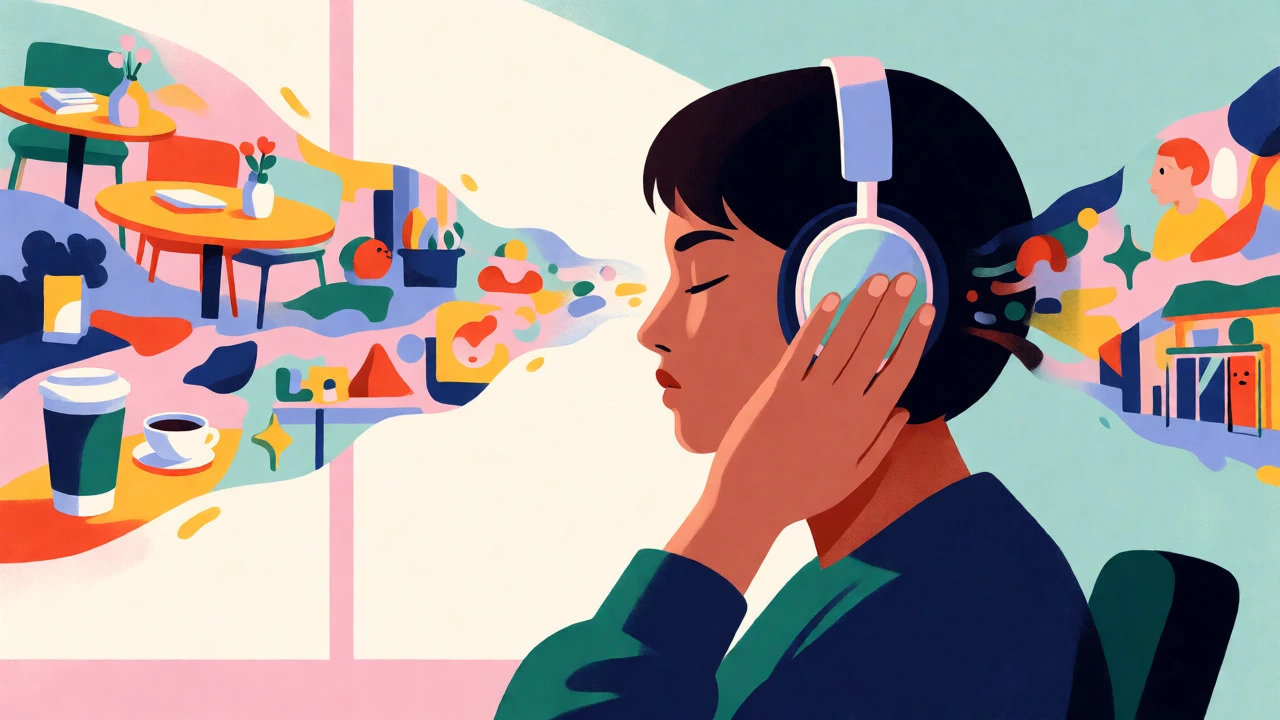
Most learners make the mistake of trying to speak too soon. They open their mouths before their ears are tuned. This creates anxiety and fossilizes bad habits. Instead, embrace the "Silent Phase." For the first few weeks, focus entirely on listening. Not passive listening while you cook, but active, focused listening.
Your brain needs to recognize patterns. It needs to hear where one word ends and another begins. In English, for example, words often blend together. "What are you doing?" sounds like "Whatchadoin?" If you’re looking for distinct words, you’ll miss them. By flooding your brain with comprehensible input-audio that is slightly above your current level but still understandable-you train your auditory cortex to parse the language naturally.
- Podcast Immersion: Listen to podcasts designed for learners, not natives. Try "6 Minute English" by BBC Learning English for structured, slow-paced content.
- Shadowing Technique: Once you can understand the audio, repeat it immediately after the speaker. Mimic their rhythm, tone, and speed. This engages motor neurons related to speech production.
- Visual Context: Watch movies or YouTube videos with subtitles in the target language, not your native one. This forces your brain to connect written text with spoken sound and visual context simultaneously.
Spaced Repetition: Hacking Memory
Why do you forget words two days after learning them? Because your brain deletes information it deems irrelevant. To keep it, you must prove it’s important. Enter Spaced Repetition Systems (SRS). Tools like Anki or Memrise use algorithms to show you flashcards right before you’re likely to forget them.
This works because of the "Forgetting Curve," identified by psychologist Hermann Ebbinghaus. Without review, you lose about 50% of new information within an hour and 90% within a week. SRS interrupts this decay. Instead of studying for five hours once a week, study for fifteen minutes every day. Consistency beats intensity when it comes to neuroplasticity. Small, frequent doses of language exposure create denser synaptic connections than marathon cramming sessions.
| Feature | Traditional Method | Neuro-Optimized Method |
|---|---|---|
| Focus | Grammar rules & Translation | Comprehensible Input & Association |
| Memory Strategy | Rote Memorization | Spaced Repetition (SRS) |
| Speaking Practice | Early & Forced | Delayed & Pattern-based |
| Error Handling | Immediate Correction | Self-Correction via Feedback |
| Context | Isolated Words | Sentence Mining |
Sentence Mining: Learn Chunks, Not Words
Stop learning isolated vocabulary. Knowing the word "run" doesn’t help you say "I’m running late." Language isn’t built from single bricks; it’s built from pre-fabricated modules called chunks or collocations. Native speakers don’t construct sentences word-by-word; they retrieve ready-made phrases.
To rewire your brain for fluency, practice "sentence mining." When you encounter a useful phrase, write down the entire sentence, not just the new word. Add it to your SRS deck. Over time, you’ll internalize grammatical structures without consciously studying grammar tables. You’ll feel what sounds "right" because your brain has stored thousands of correct examples.
For example, instead of learning "appointment," learn "I’d like to make an appointment." Now you know the verb, the article, the preposition, and the noun in their natural habitat. This reduces cognitive load during conversation because you’re retrieving a whole block of meaning rather than assembling it piece by piece.
Emotional Connection and Active Recall
The amygdala, the part of your brain responsible for emotion, plays a huge role in memory. We remember things that scare us, excite us, or make us laugh. Dry textbook exercises rarely trigger this response. To boost retention, attach emotions to your learning.
Write a diary entry in your target language about something that happened to you today. Did you get angry at traffic? Write it down. Did you enjoy a coffee? Describe it. Using personal experiences makes the language relevant to your life. Furthermore, engage in active recall. Don’t just read a story; close the book and try to summarize it out loud. Struggling to retrieve the information strengthens the neural pathway far more than passively reviewing it.

Overcoming the Fear of Mistakes
Fear is the biggest enemy of neuroplasticity. When you’re anxious, your brain releases cortisol, which inhibits the hippocampus-the area needed for forming new memories. If you’re terrified of sounding stupid, you won’t take risks, and without risk, there’s no growth.
Adopt a "growth mindset." View mistakes as data points, not failures. Every error tells you exactly where your mental model differs from reality. Seek feedback, but don’t let it paralyze you. Talk to yourself in the mirror. Record your voice. Compare it to native speakers. This self-correction loop is safe and effective. Eventually, move to talking with humans. Apps like HelloTalk or Tandem connect you with native speakers who want to learn your language, creating a mutual exchange where both parties are forgiving of errors.
Creating an Immersive Environment at Home
You don’t need to move to London or New York to immerse yourself. You can curate your digital and physical environment to force your brain to switch languages. Change your phone’s language settings. Follow Instagram accounts that post only in your target language. Label household items with sticky notes in the new language.
Think in the target language throughout the day. Narrate your actions silently. "I am opening the fridge. I am taking out the milk." At first, this will feel exhausting and slow. That’s normal. Your brain is building new highways where dirt paths used to be. Keep going. Within a few weeks, these thoughts will become automatic, freeing up mental bandwidth for more complex conversations.
Practical Steps to Start Today
Ready to rewire? Here’s a simple daily routine:
- Morning (10 mins): Review your SRS flashcards. Focus on sentences, not words.
- Commute (20 mins): Listen to a podcast or audiobook in the target language. No multitasking.
- Lunch Break (10 mins): Read a news article or social media post. Highlight three new phrases.
- Evening (15 mins): Shadowing practice. Repeat after a native speaker for ten minutes.
- Before Bed (5 mins): Journal three sentences about your day in the target language.
This totals less than an hour a day, but because it’s distributed across different contexts and activities, it hits multiple areas of the brain. It combines auditory processing, visual recognition, motor skills, and emotional reflection.
How long does it take to rewire my brain for a new language?
It depends on consistency, not just duration. Most people notice improved comprehension within 4-8 weeks of daily immersion. Significant conversational ability usually takes 6-12 months of consistent practice. The key is daily exposure rather than occasional intense study.
Do I need to hire a tutor to rewire my brain?
Not necessarily. Tutors are helpful for correcting pronunciation and providing conversation practice, but they aren’t required for initial rewiring. Self-study methods like shadowing, SRS, and immersive reading can build a strong foundation. A tutor becomes valuable once you have basic competence and need nuanced feedback.
Can adults really achieve native-like accents?
Yes, though it requires deliberate phonetic training. Adults can master the sounds of a new language by practicing minimal pairs (words that differ by one sound) and mimicking intonation patterns. While a perfect accent might take years, being clearly understood and sounding natural is achievable within a year of focused listening and speaking practice.
What is the most common mistake in language learning?
Translating everything in your head. This slows down processing and leads to unnatural phrasing. Instead, aim for direct association between the foreign word and its concept/image. Avoid using bilingual dictionaries for definitions; use monolingual ones or visual aids whenever possible.
Does music help in learning a language?
Music is excellent for memorizing vocabulary and improving pronunciation due to rhythm and melody. However, song lyrics often contain poetic or slang usage that may not apply to everyday conversation. Use music as a supplement for engagement and memory, but rely on spoken dialogue for practical communication skills.