English Progress Estimator
Estimate how long it takes to learn basic English with consistent daily practice. Based on article advice: 15-20 minutes daily can help you hold simple conversations in 3-6 months.
Based on article advice: Consistency beats intensity. 15-20 minutes daily is better than 2 hours once a week.
Learning basic English doesn’t need to cost a dime. Millions of people around the world - including students in Chennai, factory workers in Tamil Nadu, and young professionals in small towns - are already doing it. You don’t need expensive tutors or fancy apps. What you need is consistent practice, the right tools, and a clear plan. Here’s how to build real English skills without spending a rupee.
Start with listening - every day
Your brain learns language best through sound, not textbooks. Start by listening to simple English every single day. Try BBC Learning English is a free YouTube channel and website that offers short videos on everyday topics like ordering food, asking for directions, or talking about your job. Each video is under five minutes, uses clear speech, and shows subtitles. Listen to one video in the morning while you’re having tea, then replay it later. Don’t try to understand every word. Just get used to the rhythm.
Another great option is VOA Learning English is a U.S.-based service that speaks slowly and uses only common words. Their stories cover news, culture, and daily life - all in simple English. Many listeners in India use this to prepare for interviews or travel. You can download their audio files and listen while walking, commuting, or doing chores.
Speak out loud - even if you’re alone
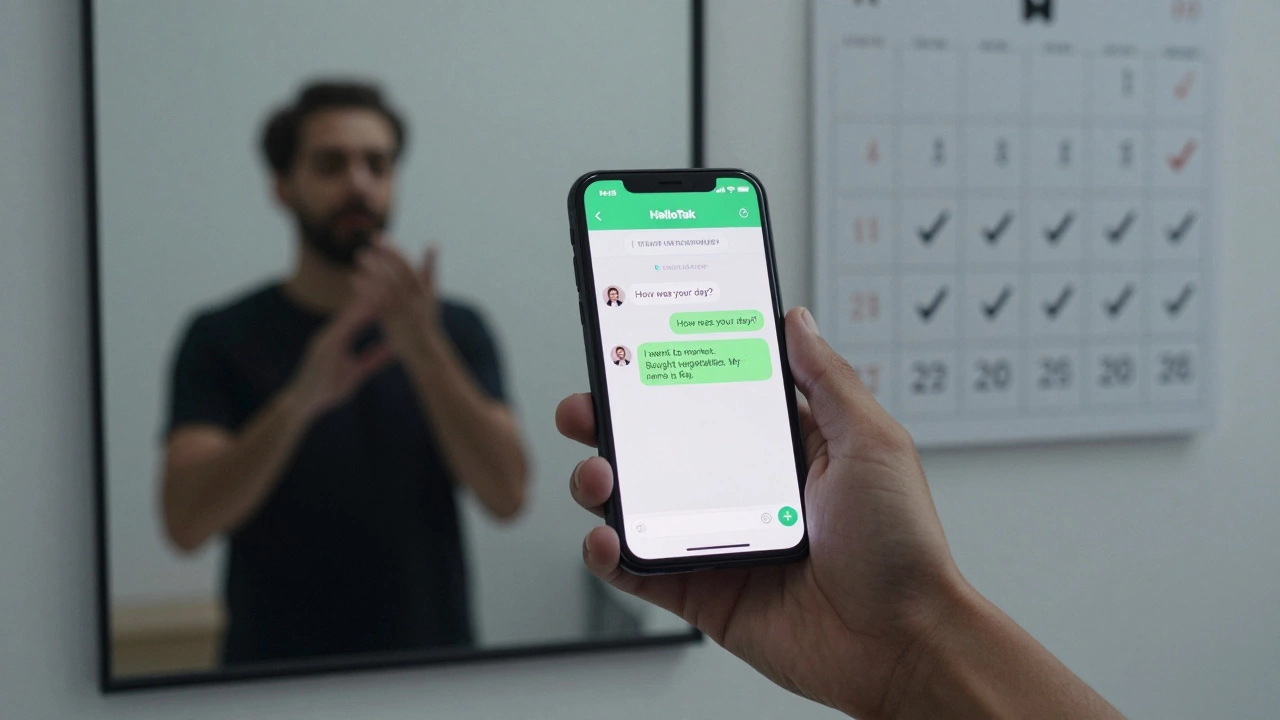
If you only read and listen, you’ll never speak confidently. The secret? Talk to yourself. Stand in front of a mirror and say things like: "I am going to the market." "My name is Raj. I work as a mechanic." "Today is Tuesday, February 20, 2026." It sounds silly, but it works. Your mouth and tongue need practice, just like your ears.
Try repeating after videos. Play a 30-second clip from BBC Learning English. Pause it. Say the same sentence out loud. Do it five times. Record yourself with your phone. Play it back. You’ll hear where you stumble - and fix it next time. This method is used by teachers in public schools across India who don’t have English-speaking students.
Use free apps that actually work
Not all apps are created equal. Skip the ones with endless ads and paid upgrades. Focus on these three free tools:
- Duolingo is a gamified app that teaches vocabulary and grammar in short daily lessons. It’s designed for beginners and works offline.
- Memrise is a platform that uses real-life videos of native speakers. You learn phrases like "How much is this?" or "Can you help me?" from people talking in streets, shops, and airports.
- HelloTalk is a language exchange app. You chat with native English speakers who want to learn Hindi or Tamil. You correct each other. No cost. No pressure.
Use one app for 10 minutes a day. That’s all. Consistency beats intensity. If you do this for 30 days straight, you’ll notice you understand more in conversations.
Read simple things - not textbooks
You don’t need to read Shakespeare. Start with children’s books, short news stories, or simple blogs. Graded Readers are books written for language learners. They use only 500, 1000, or 2000 basic words. Titles like "The Lion and the Mouse" or "My First Day at School" are perfect. You can find free PDFs online from publishers like Oxford University Press.
Also try News in Levels is a website that shows the same news story in three difficulty levels. Level 1 uses only 1000 common words. You can read about earthquakes, elections, or sports - all in simple English. Read one story a day. Don’t look up every word. Guess from context. That’s how native speakers learn too.
Practice with real people - for free
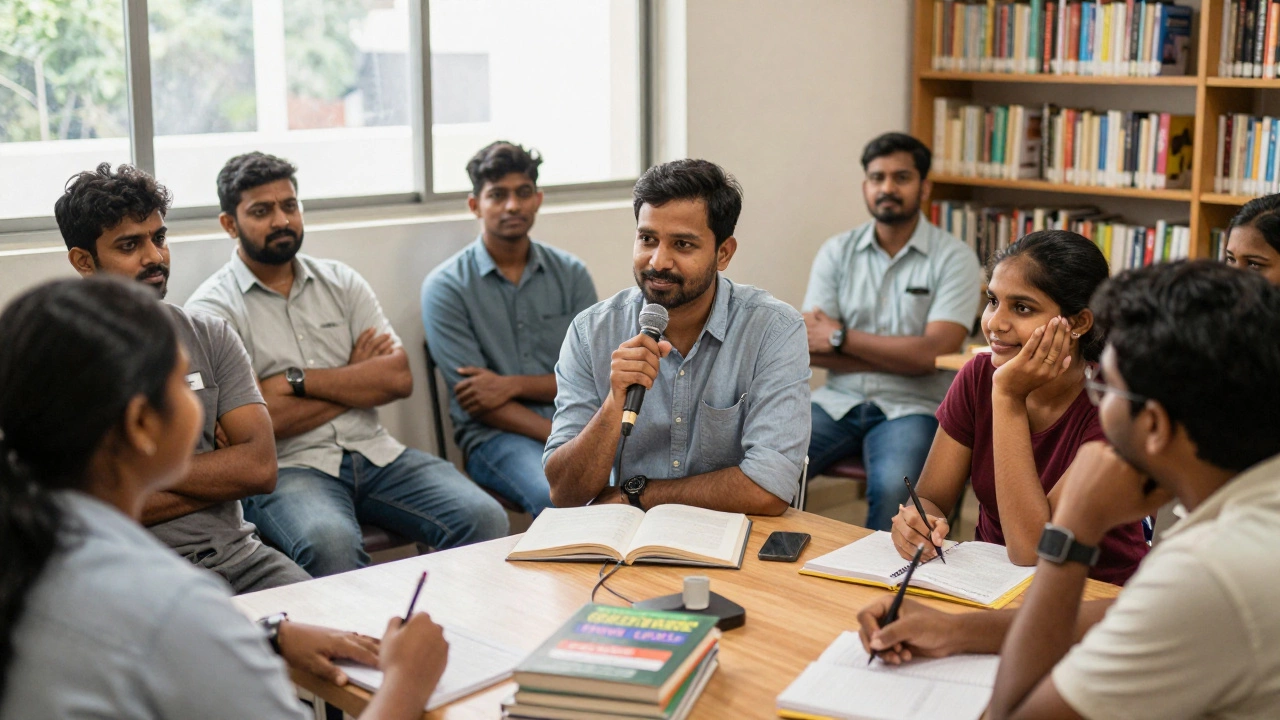
Online communities are full of people willing to help. Join Facebook groups like "English Speaking Practice for Indians" or "Free English Conversation Club." These aren’t paid courses. They’re groups where people meet twice a week on Zoom to chat for 30 minutes. No homework. No tests. Just talk.
Look for local libraries in your city. Many offer free English conversation circles. In Chennai, places like the British Council Library (even if you don’t join) often have public events. Ask at your neighborhood community center. You’d be surprised how many volunteers are looking for someone to practice with.
Track your progress - not perfection
Don’t wait until you’re "ready." Start using English now. Keep a simple journal. Every Sunday, write down:
- One new word you learned.
- One sentence you said out loud.
- One thing you understood in a video or conversation.
After a month, flip back. You’ll see how far you’ve come. Most people think they’re not improving because they compare themselves to native speakers. But you’re not trying to be one. You’re trying to ask for directions, order a meal, or explain your job. That’s achievable - and you’re already doing it.
What to avoid
Stop wasting time on these:
- Memorizing long grammar rules. You don’t need to know the difference between present perfect and past simple to say, "I went to the market yesterday."
- Buying expensive courses. Free resources are just as effective if you stick with them.
- Waiting for "perfect" pronunciation. Clarity matters more than accent. If someone understands you, you’re already succeeding.
Language isn’t about being right. It’s about being understood. And you can do that with basic words, simple sentences, and daily practice.
Real example: Meena’s story
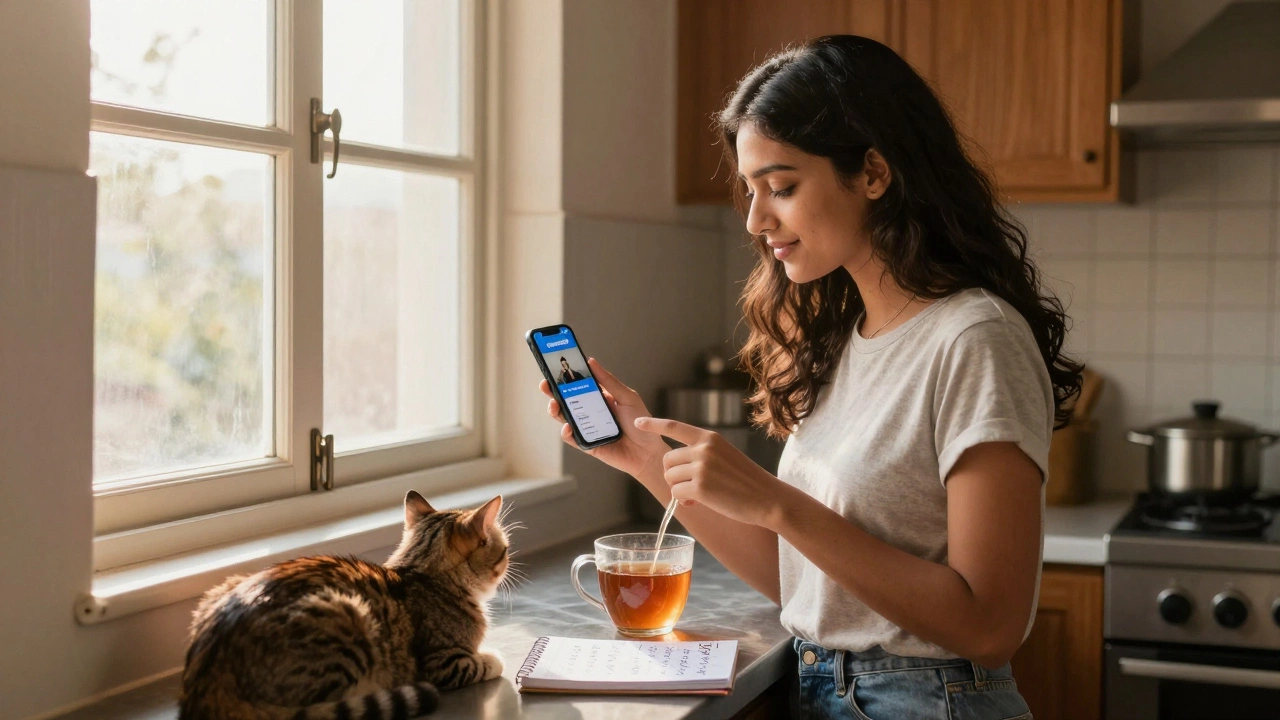
Meena, 28, from Coimbatore, worked in a call center but couldn’t speak English. She had no money for classes. She started with BBC Learning English on her phone. She listened while cooking. She repeated phrases to her cat. She joined a free Zoom group every Tuesday. After six months, she was promoted to handle international calls. She didn’t learn grammar. She learned to speak.
Can I really learn English for free without a tutor?
Yes. Thousands of people learn English without tutors using free apps, YouTube channels, and online communities. The key is daily practice - listening, speaking, and reading - not expensive lessons. You don’t need a teacher to speak. You need repetition, feedback, and courage to try.
How long does it take to learn basic English?
With 15-20 minutes a day, most people can hold a simple conversation in 3-6 months. That means asking for help, talking about your day, understanding common questions like "Where are you from?" or "What do you do?" Progress depends on consistency, not speed. If you practice every day, even for short periods, you’ll see results faster than someone who studies for hours once a week.
Which free resource is best for speaking practice?
HelloTalk and Facebook language exchange groups are the best for real speaking practice. You talk to real people who want to learn your language. It’s not a class - it’s a conversation. You’ll make mistakes, but you’ll also learn how people actually speak - not how textbooks say they should.
Do I need to learn grammar to speak English?
No, not at first. Focus on listening and repeating phrases. You’ll naturally pick up grammar patterns by hearing them used correctly. For example, if you hear "I have eaten" and "I went" enough times, you’ll start using them without memorizing rules. Grammar study helps later - but speaking comes first.
What if I feel shy speaking English?
Start by speaking to yourself. Record your voice. Talk to your pet. Practice with a mirror. Then join a low-pressure group where no one is judging. Most people in free English groups are nervous too. Everyone starts somewhere. Your first sentence doesn’t have to be perfect. It just has to be said.
Learning English isn’t about talent. It’s about showing up. Five minutes a day. One video. One sentence spoken out loud. One new word. That’s enough. You don’t need money. You don’t need permission. You just need to begin - today.