
Side Hustle Skill Validator
Click on the tasks you do effortlessly or are frequently asked to help with.
Validation Score
Recommended Product Format
Suggested Pricing Strategy
You probably have more marketable skills than you think. Most people overlook the everyday tasks they do effortlessly because those tasks feel too normal to be worth money. But in the world of online courses and digital side hustles, that "normal" expertise is exactly what someone else is searching for.
The key isn't finding a magical talent you don't possess. It's auditing what you already know and packaging it into a format others will pay to learn. Whether you are looking to create a full curriculum or just offer quick consulting calls, identifying your assets is the first step toward generating extra income.
Audit Your Daily Work and Hobbies
Start by looking at your current job, not just the official title. What specific problems do you solve every day? If you work in accounting, maybe you excel at organizing messy Excel sheets for small businesses. That specific ability-cleaning data-is a sellable skill. You don't need to teach "Accounting 101." You can teach "How to Automate Your Monthly Expense Reports in 30 Minutes."
Look outside work too. Do you spend hours helping friends choose wedding venues? That’s event planning coordination. Do you constantly debug your neighbors' Wi-Fi issues? That’s basic IT support. These micro-skills are often easier to monetize than broad academic subjects because they solve immediate, painful problems for people who aren't experts themselves.
- Identify repetitive tasks: What do you do automatically that others struggle with?
- Note frequent questions: What do friends or colleagues ask you for help with?
- Track time sinks: What hobby consumes your free time? Passion usually indicates deep knowledge.
Validate Demand Before You Build
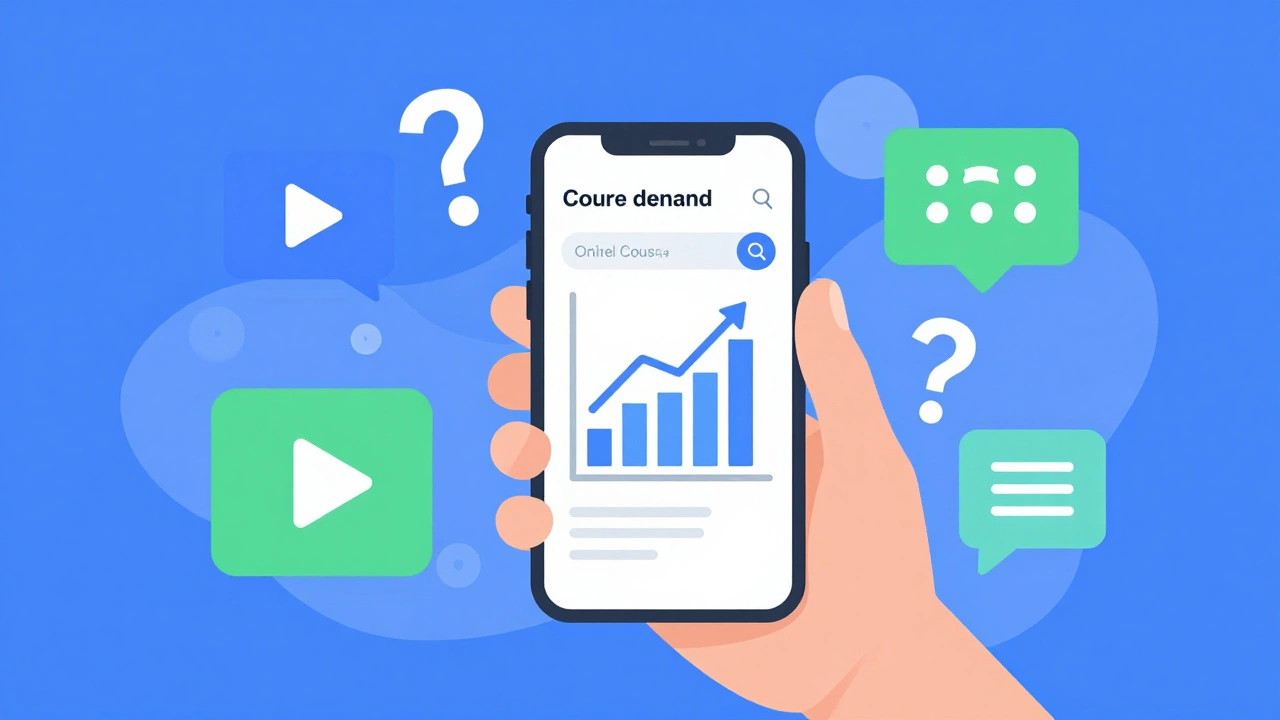
Having a skill is only half the battle. You need to ensure people are willing to pay for it. This is where many aspiring creators fail-they build a course on something they love but nobody searches for. Use simple tools to check demand without spending money.
Type your potential topic into search engines and look at the "People also ask" section. Are there specific questions popping up? Check platforms like Udemy or Skillshare. Do existing courses have thousands of students? High enrollment numbers indicate a hungry audience. However, don't be discouraged if competition exists; it proves the market works. Look for gaps in their content. Maybe their videos are outdated, or they lack practical worksheets.
| Check Point | Action | Green Light Signal |
|---|---|---|
| Search Volume | Use Google Trends or Keyword Planner | Steady or rising interest over 12 months |
| Competition | Analyze top 5 competitors | They exist but have low ratings or outdated info |
| Pain Point | Read Reddit threads or forums | Users actively complaining about lack of resources |
| Willingness to Pay | Check Amazon books or paid newsletters | Similar topics generate revenue |
Package Knowledge as Digital Products
Once you've identified a skill with demand, decide how to deliver it. You don't always need to record hour-long video lectures. In fact, shorter, more focused formats often sell better for beginners.
E-books are a great starting point. They require less production effort than video courses and allow you to refine your teaching style through writing. If you're good at design, create templates for Canva or Notion. If you're technical, write code snippets or plugins. The goal is to create a digital product that solves one specific problem quickly.
For example, instead of a generic "Photography Masterclass," offer a "Lightroom Preset Pack for Food Bloggers." It’s narrower, easier to produce, and targets a specific group of buyers who want an instant result.
Leverage Existing Platforms
Building your own website from scratch is expensive and time-consuming. For most side hustlers, leveraging established marketplaces is the smarter move. Platforms handle payment processing, hosting, and often drive initial traffic.
Teachable and Thinkific are popular choices for hosting self-paced courses. They offer free tiers that let you test your idea before investing in marketing. If you prefer a community-driven approach, consider creating a private Discord server or using Patreon to offer ongoing advice rather than a one-time course. This recurring model can provide more stable income than a single sale.
Overcome Imposter Syndrome
A major barrier is the belief that you must be the world's leading expert to teach something. This is false. You only need to be one step ahead of your target student. If you recently learned how to use Python for data analysis, you are perfectly positioned to teach beginners who are currently stuck on step one. Your recent experience means you understand their confusion intimately, which makes your teaching more empathetic and effective than that of a seasoned professor who forgot what it feels like to be a novice.
Focus on the transformation you offer, not your credentials. Students buy results, not resumes. If you can help them save time, make money, or reduce stress, your background matters less than your ability to guide them.
Start Small and Iterate
Don't aim for perfection in your first launch. Create a minimum viable product (MVP). Record three core lessons, write a simple PDF guide, or offer five coaching slots. Share it with a small audience-friends, social media followers, or niche communities. Gather feedback aggressively. Did they find the instructions clear? Was the pricing fair? Use this data to improve your offering before scaling up with ads or broader marketing campaigns.
The beauty of online education is that you can update your content anytime. Unlike physical goods, your inventory doesn't expire. A course created today can still generate sales two years from now if you keep it relevant. Start with what you have, use what you know, and let your audience shape your next steps.
What are the easiest skills to monetize online?
Skills that solve immediate pain points are easiest to monetize. Examples include graphic design for social media, copywriting for email newsletters, basic video editing for TikTok/Reels, and spreadsheet automation for small businesses. These skills have high demand and relatively low barriers to entry.
Do I need a large following to sell an online course?
No. While a large audience helps, many successful creators start with zero followers. You can drive traffic through SEO, partnerships with other creators, or targeted ads. Focus on building an email list early, as this gives you direct access to interested buyers regardless of social media algorithms.
How much should I charge for my first course?
For a beginner, price between $29 and $97. This range is low enough to reduce buyer hesitation but high enough to signal value. Avoid pricing under $10, as it often attracts uncommitted students and devalues your expertise. As you gather testimonials and refine your content, you can raise prices.
Is it better to create a video course or an e-book?
It depends on your skill and comfort level. E-books are faster to produce and cheaper to update, making them ideal for text-based skills like writing or coding. Video courses command higher prices and are better for visual skills like design, cooking, or fitness. Consider starting with an e-book to validate demand before investing in video production.
How do I protect my course content from piracy?
While no method is 100% foolproof, using platforms like Teachable or Thinkific provides DRM (Digital Rights Management) features such as watermarking and disabling downloads. Additionally, focus on providing unique value through community access, live Q&A sessions, and personalized feedback, which cannot be pirated.