
Self-Taught Developer Hired Score Calculator
Profile Assessment
Not Ready Yet
Complete the checklist to see your standing.
Action Plan:
Start by deploying your first project. Employers need proof of skill over theory.
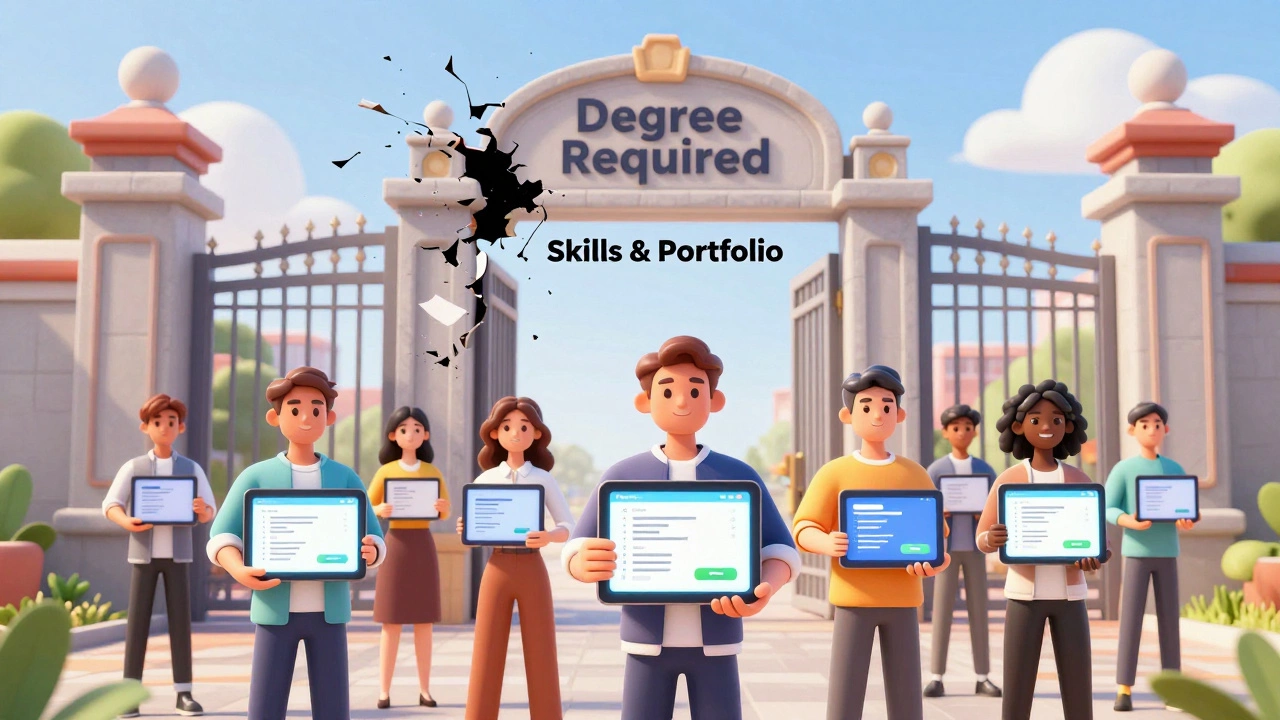
You’ve spent nights debugging code, weekends building apps, and months mastering frameworks on your own. You don’t have a Computer Science degree from a prestigious university. So, the big question looms: do self-taught coders get hired? The short answer is yes. But the real answer is much more nuanced. In 2026, the tech industry has shifted dramatically. The days when a degree was the only gatekeeper are gone, but they haven’t been replaced by an open door. They’ve been replaced by a rigorous filter based on proof of skill.
Companies aren’t ignoring self-taught developers; they’re just looking for them differently. If you walk into an interview with nothing but enthusiasm and a list of tutorials you’ve watched, you’ll likely bounce off the wall. But if you walk in with a GitHub profile that looks like a professional’s, a deployed application with real users, and the ability to explain complex technical decisions, you become a serious candidate. Let’s break down how this works today, what employers actually want, and how you can position yourself to land that first job.
The Shift in Tech Hiring: Skills Over Pedigree
To understand why self-taught coders are getting hired, we need to look at what changed in the industry. Ten years ago, hiring managers relied heavily on degrees as a proxy for intelligence and discipline. Today, the market is flooded with graduates who know theory but struggle with practical implementation. Meanwhile, self-taught developers often demonstrate higher motivation and better problem-solving skills because they chose to learn coding despite no formal requirement to do so.
Big Tech companies, including Google, Apple, and IBM, have publicly dropped degree requirements for many software engineering roles. This signals a broader trend across mid-sized startups and enterprise firms. The focus has moved from "where did you study" to "what can you build." This shift benefits self-taught coders significantly, provided they can prove their competence through tangible evidence rather than academic credentials.
However, this doesn’t mean the barrier to entry is lower. It means the barrier is different. Instead of checking a diploma, recruiters now check your code quality, your collaboration history, and your ability to learn new technologies quickly. For a self-taught developer, this is both an opportunity and a challenge. You have the freedom to choose your path, but you also bear the full responsibility for proving its validity.
What Employers Actually Look For in Self-Taught Candidates
If you’re applying for a role as a Junior Developer or Entry-Level Software Engineer, hiring managers are scanning for specific signals. They aren’t expecting you to know everything, but they do expect you to know how to work like a professional. Here are the key attributes that separate hired self-taught coders from those who remain unemployed:
- Production-Ready Code: Your projects shouldn’t just run locally. They should be deployed, tested, and accessible via a URL. Employers want to see that you understand hosting, environment variables, and basic security practices.
- Version Control Proficiency: Git isn’t optional. If your GitHub repository has messy commit messages like "fixed stuff" or "final final version," it raises red flags. Clean commit histories show you understand collaboration workflows.
- Problem-Solving Process: Can you explain *why* you chose React over Vue? Why did you use PostgreSQL instead of MongoDB? Interviewers care less about the right answer and more about your reasoning process.
- Communication Skills: Coding is a team sport. Self-taught developers sometimes struggle here because they’ve worked in isolation. Demonstrating clear communication in pull request comments or documentation goes a long way.
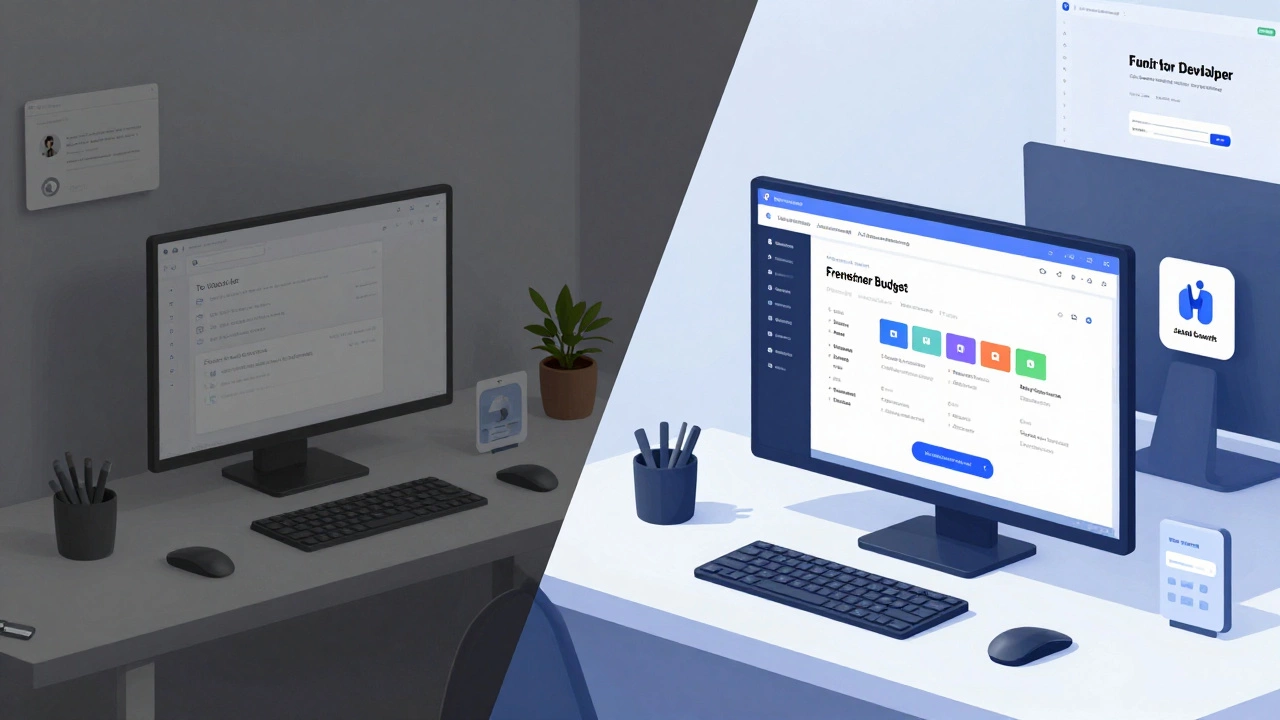
One common mistake self-taught coders make is building tutorial clones. Everyone has built a To-Do app or a weather dashboard following a YouTube video. These projects don’t differentiate you. Instead, build something that solves a personal problem or serves a niche community. A budget tracker tailored for freelancers in Chennai, for example, shows initiative, domain understanding, and technical execution.
Building a Portfolio That Gets You Noticed
Your portfolio is your resume in the modern tech world. It needs to tell a story about who you are as a developer. Don’t just link to GitHub repositories; create a dedicated website that showcases your best work. Include case studies for each major project, detailing the problem, your solution, the tech stack used, and the challenges you faced.
| Feature | Tutorial Clone | Original Project |
|---|---|---|
| Uniqueness | Low (seen thousands of times) | High (stands out) |
| Complexity | Predictable structure | Unforeseen challenges solved |
| Interview Talking Points | Limited to tutorial steps | Deep insights into design choices |
| Employer Perception | Follower | Innovator |
Consider contributing to open-source projects. This is one of the most powerful ways for self-taught developers to gain credibility. When you contribute to a well-known library or framework, you’re essentially getting endorsed by the maintainers of that project. Even small contributions, like fixing documentation typos or resolving minor bugs, show that you can read other people’s code, follow contribution guidelines, and collaborate in a large codebase.
Additionally, document your learning journey. Start a blog or write technical articles on platforms like Medium or Dev.to. Writing about what you’ve learned forces you to deepen your understanding and demonstrates your ability to communicate technical concepts. Many hiring managers actively search for candidates who share knowledge, as it indicates passion and expertise.
Navigating the Job Market: Where to Find Opportunities
Traditional job boards like LinkedIn or Indeed can be overwhelming for self-taught developers, especially when filters automatically exclude non-degree holders. While these platforms still hold value, you need to diversify your search strategy. Focus on companies that explicitly state they are "degree-agnostic" or prioritize skills-based hiring.
Startups are often more willing to hire self-taught talent than large corporations. They move fast and need people who can hit the ground running, regardless of background. Platforms like AngelList (now Wellfound) are excellent for finding startup opportunities where culture fit and practical skills outweigh formal education.
Networking remains crucial. Attend local meetups, hackathons, and tech conferences. In cities like Bangalore, Pune, and Chennai, there’s a vibrant tech community eager to connect with passionate developers. Building relationships with senior engineers can lead to referrals, which are statistically the most effective way to land a job. A referral bypasses the initial resume screen, giving your skills the chance to shine in an interview setting.
Freelancing is another viable path. Platforms like Upwork or Toptal allow you to build a client base and earn income while gaining experience. Treat freelance gigs as paid internships. Deliver high-quality work, ask for testimonials, and use these experiences to bolster your portfolio. Over time, consistent freelance success can transition into full-time employment offers.
Common Pitfalls to Avoid
Even with a strong portfolio, self-taught developers can stumble during the hiring process. Awareness of these pitfalls can save you months of frustration. One major issue is underestimating computer science fundamentals. While you may not need a degree, you do need to understand data structures, algorithms, and system design basics. Many technical interviews include coding challenges that test these core concepts. Neglecting them will cause you to fail even if your portfolio is impressive.
Another pitfall is lacking depth in any area. It’s tempting to jump between JavaScript frameworks every few weeks. However, employers prefer candidates who have deep expertise in one stack before branching out. Master HTML, CSS, and JavaScript thoroughly before moving to React or Angular. Show progression in your learning, not just breadth.
Imposter syndrome is also prevalent among self-taught coders. You might feel inadequate compared to CS graduates. Remember, confidence comes from competence. Focus on continuous improvement rather than comparison. Prepare for interviews by practicing behavioral questions and technical problems regularly. Mock interviews with peers can help reduce anxiety and improve performance.
Long-Term Career Growth for Self-Taught Developers
Getting hired is just the beginning. Once you’re in the industry, your career trajectory depends on your ability to adapt and grow. Self-taught developers often excel in rapid learning environments, which is a valuable trait in tech. Continue investing in your education through online courses, certifications, and mentorship programs.
Consider obtaining industry-recognized certifications if they align with your career goals. Certifications from cloud providers like AWS or Azure can validate your skills in specific domains. These credentials complement your practical experience and make you more attractive to employers seeking specialized expertise.
Mentorship plays a critical role in long-term success. Seek out mentors who can guide you through career decisions, technical challenges, and industry nuances. Conversely, once you’ve gained experience, consider mentoring others. Teaching reinforces your own knowledge and builds your reputation within the community.
Finally, stay updated with industry trends. Technology evolves rapidly, and staying relevant requires continuous learning. Follow tech blogs, participate in online forums, and engage with the developer community. Your ability to adapt to new tools and methodologies will determine your longevity and success in the field.
Can I get a job as a programmer without a degree?
Yes, absolutely. Many tech companies, including major ones like Google and Microsoft, have removed degree requirements for many roles. What matters more is your ability to demonstrate practical skills through a strong portfolio, GitHub activity, and successful performance in technical interviews.
How long does it take to become employable as a self-taught coder?
The timeline varies widely depending on dedication and prior experience. Generally, it takes 6 to 18 months of consistent, focused learning and project building to reach a level where you can compete for entry-level positions. Part-time learners may take longer, while those studying full-time might secure jobs faster.
Is a bootcamp better than self-teaching for getting hired?
Bootcamps offer structured curricula, networking opportunities, and career support services, which can accelerate the job search process. However, self-teaching allows for greater flexibility and customization. Both paths can lead to employment, but self-taught developers must proactively build networks and portfolios to compensate for the lack of institutional backing.
What programming languages should I learn first?
For web development, start with HTML, CSS, and JavaScript. These form the foundation of front-end development. If you're interested in back-end development, Python or Node.js are excellent choices due to their versatility and large communities. Choose based on your interests and the type of applications you want to build.
Do companies discriminate against self-taught developers?
While some traditional companies may still favor degrees, the tech industry as a whole is becoming increasingly meritocratic. Discrimination exists in isolated cases, but most hiring managers prioritize demonstrable skills and cultural fit. Building a robust portfolio and network helps mitigate any potential bias.