Education Cost & Model Comparison Tool
Estimate the financial impact of choosing a physical campus versus an online platform. This tool accounts for tuition, living expenses, and technology requirements.
| Feature | Classroom Learning | eLearning |
|---|---|---|
| Location | Physical campus/classroom | Remote/Any device |
| Schedule | Fixed, synchronous | Flexible, often asynchronous |
| Interaction | Face-to-face, immediate feedback | Digital forums, video calls, chat |
| Cost Structure | Tuition + Commute + Housing | Subscription/Per-course fee only |
| Content Format | Textbooks, lectures, whiteboards | Videos, interactive modules, simulations |
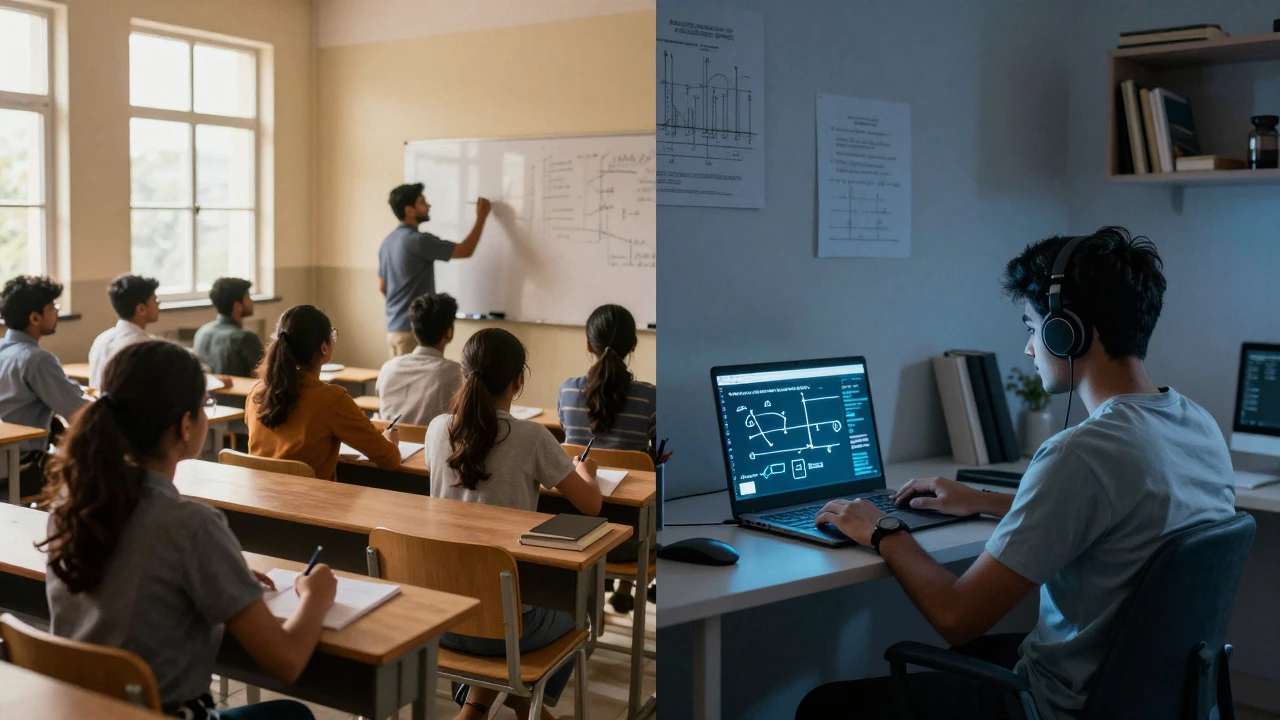
Imagine two students studying the same complex concept in physics. One sits in a traditional lecture hall, scribbling notes while the professor writes on a whiteboard. The other logs into an eLearning platform is a digital system that delivers educational content via the internet, allowing learners to access courses, assessments, and resources remotely., watching a simulation of the concept in real-time and pausing it to review difficult parts. Which one learns faster? The answer isn't simple. It depends on the subject, the learner's style, and the goals of the education.
The debate between traditional classroom learning is an instructional method where teachers and students interact face-to-face in a physical setting, typically following a fixed schedule and curriculum. and digital education has intensified over the last decade. With remote work becoming normal and technology advancing rapidly, many institutions are shifting toward hybrid models. But before you decide which path suits you best, you need to understand the fundamental differences in structure, engagement, cost, and outcomes.
Core Structural Differences
The most obvious difference is location and time. Classroom learning is bound by geography and the clock. You must be physically present at a specific address during set hours. If you miss a class, you often have to catch up through peers or recorded lectures if available. This rigidity can be a strength for discipline but a weakness for flexibility.
In contrast, eLearning breaks these constraints. Learners can access materials from anywhere with an internet connection. While some courses follow a cohort model with deadlines, many are self-paced. This means a student in New York can study at 2 AM, while another in Tokyo studies at noon. The LMS (Learning Management System) is software used to plan, implement, and assess the process of learning, such as Moodle, Canvas, or Blackboard. acts as the central hub for this interaction, storing content, tracking progress, and facilitating communication.
| Feature | Classroom Learning | eLearning |
|---|---|---|
| Location | Physical campus/classroom | Remote/Any device |
| Schedule | Fixed, synchronous | Flexible, often asynchronous |
| Interaction | Face-to-face, immediate feedback | Digital forums, video calls, chat |
| Cost Structure | Tuition + Commute + Housing | Subscription/Per-course fee only |
| Content Format | Textbooks, lectures, whiteboards | Videos, interactive modules, simulations |
Engagement and Social Dynamics
One of the strongest arguments for traditional schooling is social presence. In a physical room, non-verbal cues matter. A teacher can see who is confused by their facial expression and adjust the pace instantly. Peer collaboration happens organically; students huddle together after class to discuss assignments. This builds soft skills like teamwork, public speaking, and networking in ways that are hard to replicate digitally.
ELearning relies on different mechanisms for engagement. Without physical proximity, attention spans can wander more easily. To combat this, modern platforms use gamification, interactive quizzes, and discussion boards. However, isolation is a real risk. Studies show that dropout rates in fully online programs can be higher than in residential ones, primarily due to a lack of accountability and community feeling. Successful eLearning experiences often include live webinars or small group projects to mimic the social aspect of classrooms.
Cost and Accessibility
Financial barriers are a major factor in choosing an education path. Traditional education involves direct costs like tuition and indirect costs like rent, food, and transportation. For a full-time degree, these expenses can accumulate significantly over four years.
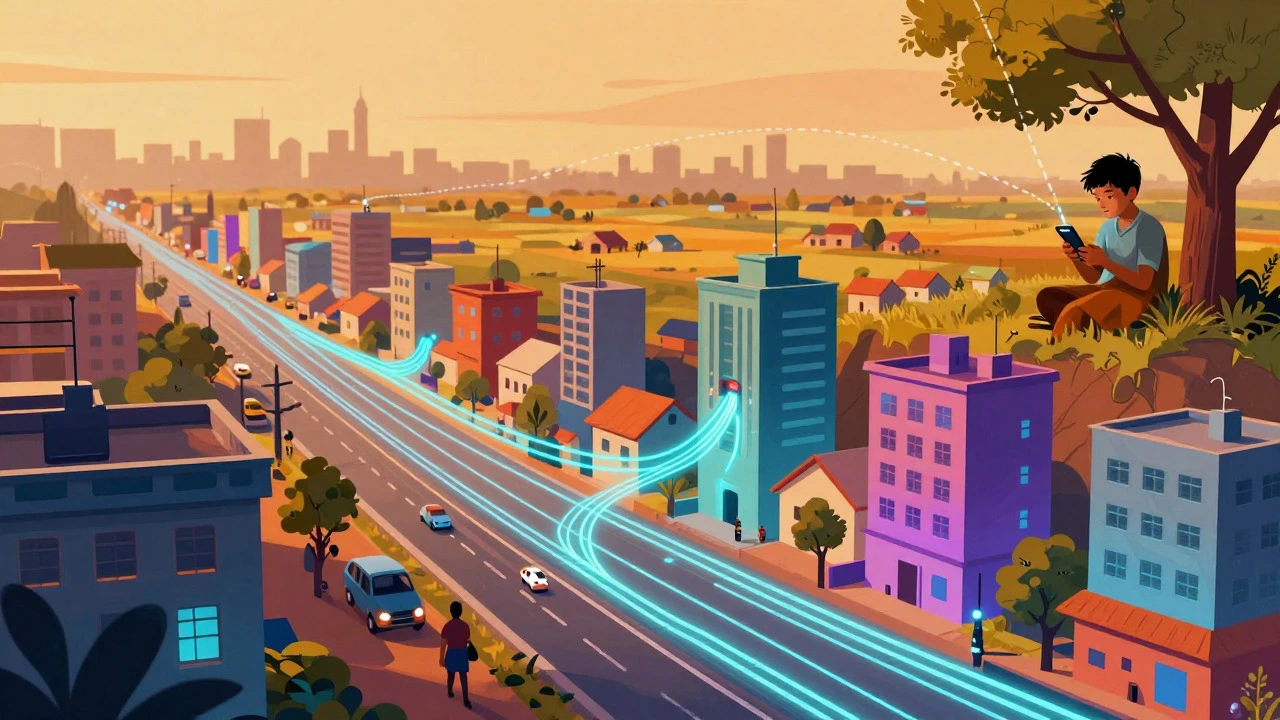
eLearning generally offers lower upfront costs. You don't need to relocate or pay for daily commuting. Many platforms offer subscription models or free tiers, making high-quality education accessible to people in rural areas or those with limited budgets. However, there is a hidden cost: technology. You need a reliable internet connection and a capable device. For learners in regions with poor infrastructure, this "digital divide" can make eLearning less accessible than a local physical school.

Assessment and Feedback Loops
How do we know if learning has happened? In a classroom, assessment is often immediate. A teacher asks a question, and the silence or wrong answer signals a gap in understanding right away. Exams are proctored, reducing cheating concerns.
In eLearning, feedback loops can be slower unless designed well. Automated grading provides instant results for multiple-choice questions, but subjective essays might wait days for instructor review. Cheating is a persistent concern in online exams, leading many institutions to use proctoring software or project-based assessments instead of timed tests. The key here is transparency: both methods require clear rubrics so learners know exactly what is expected.
Which Model Fits Your Goals?
There is no single "better" option. The right choice depends on your specific situation.
- Choose Classroom Learning if: You thrive on face-to-face interaction, need structured schedules to stay disciplined, are studying hands-on subjects (like lab sciences or performing arts), or want to build a local professional network.
- Choose eLearning if: You are a working professional needing flexibility, live far from educational hubs, prefer self-paced study, or are looking for specialized micro-credentials that aren't available locally.
- Consider Hybrid Models if: You want the social benefits of in-person meetings but the convenience of digital content delivery. Many universities now offer blended learning where lectures are online, but labs or seminars are in person.
As technology evolves, the line between these two worlds continues to blur. Virtual reality labs, AI tutors, and collaborative cloud tools are bringing the interactivity of the classroom into the digital space. The future of education isn't about choosing one side; it's about using the right tool for the right job.
Is eLearning as effective as classroom learning?
Effectiveness depends on the subject and learner. For theoretical knowledge, eLearning is often equally effective and sometimes superior due to repetition and pacing. For practical skills requiring physical guidance, classroom learning remains dominant. Research indicates that when design quality is high, online learning can match or exceed traditional methods in retention rates.
What are the main disadvantages of eLearning?
The primary downsides include potential isolation, higher dropout rates due to lack of external accountability, and the requirement for reliable internet and digital literacy. Additionally, some employers may still perceive online degrees differently than traditional ones, though this bias is decreasing.
Can I combine classroom and eLearning?
Yes, this is known as blended or hybrid learning. It combines the social and hands-on aspects of physical classes with the flexibility of digital resources. This model is increasingly popular in higher education and corporate training because it leverages the strengths of both approaches.
How much does eLearning cost compared to traditional degrees?
eLearning is typically 50-70% cheaper than traditional degrees when factoring in living and commuting expenses. Online certificates can range from $50 to $500 per course, while full online degrees may cost $10,000 to $30,000, significantly less than the total cost of attendance for on-campus programs.
Do employers accept eLearning credentials?
Most employers accept credentials from accredited institutions regardless of delivery mode. They focus more on the skills demonstrated and the reputation of the provider. Micro-credentials and certifications from reputable platforms are increasingly valued for specific technical skills.