MBA Eligibility Checker for Non-Business Graduates
Check Your MBA Admission Chances
Based on your profile, this tool estimates your likelihood of admission to top MBA programs. Remember: Top schools value diverse backgrounds and strong applications over business degrees.
Your MBA Admission Likelihood
Personalized Recommendations
You didn’t study business in college. Maybe you were an engineer, a biologist, a history major, or even an artist. Now you want an MBA. And you’re wondering: Can I get an MBA without a business degree? The short answer? Yes. Absolutely. But it’s not just about eligibility-it’s about how you make yourself stand out.
Business schools don’t require a business undergrad
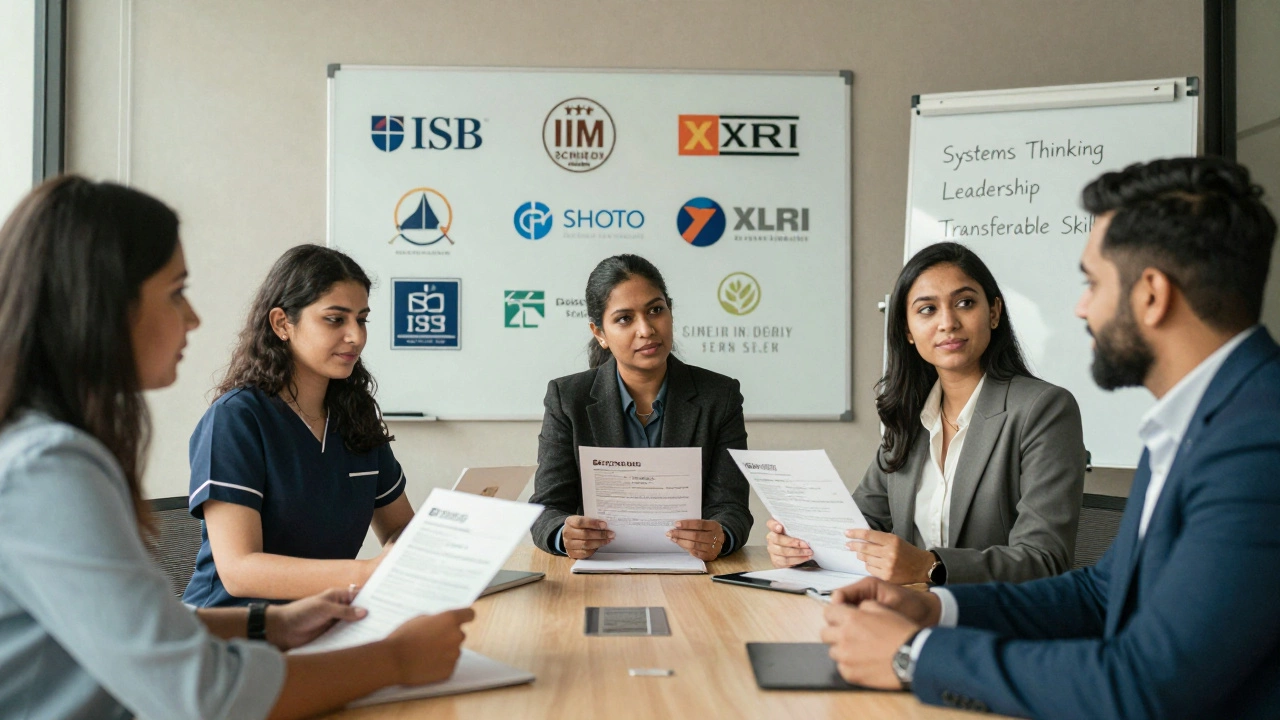
Most top MBA programs in the U.S., Europe, and India don’t ask for a business background. Harvard Business School, INSEAD, ISB, and XLRI don’t list business as a prerequisite. In fact, they actively seek students from diverse fields. At ISB, over 40% of the Class of 2025 came from non-business backgrounds-engineers, doctors, teachers, and even former military officers.The reason? Business schools want people who think differently. A software engineer brings problem-solving logic. A journalist brings storytelling skills. A nurse brings emotional intelligence. These aren’t just nice-to-haves-they’re critical in modern leadership.
What they do look for instead
If not a business degree, then what? Here’s what admissions committees actually weigh:- Work experience - Most full-time MBA programs want 3-5 years of professional work. It doesn’t matter if you were in IT, healthcare, or retail. What matters is that you’ve taken responsibility, led projects, or solved real problems.
- GMAT or GRE scores - These tests measure quantitative and verbal reasoning. If you’re from a non-business background, a strong score can reassure admissions teams you can handle finance and analytics courses.
- Clear goals - Why an MBA? Why now? If you say, “I want to switch to consulting,” or “I want to start a sustainable food business,” that’s good. Vague answers like “I want to advance my career” won’t cut it.
- Recommendations - Your manager or client who saw you lead a team or deliver results under pressure? That’s your best reference.
- Essays and interviews - This is where you tell your story. How did your background prepare you for leadership? What unique perspective do you bring?
What you might struggle with-and how to fix it
Let’s be honest. If you’ve never taken an accounting class, you might feel lost in your first finance course. That’s normal. Here’s how top non-business students handle it:- Take online prep courses - Before applying, finish free or low-cost courses in accounting, economics, or statistics. Platforms like Coursera, edX, and Khan Academy offer courses from Wharton, MIT, and IIMs. Completing even one can show initiative.
- Highlight transferable skills - Did you manage a budget for a college event? That’s financial planning. Did you lead a volunteer team? That’s organizational leadership. Frame your experience in business terms.
- Join business clubs or case competitions - Many universities have student-run consulting clubs or startup pitch events. Participating shows you’re serious about business, even if you didn’t study it.
Real examples: Who made it work
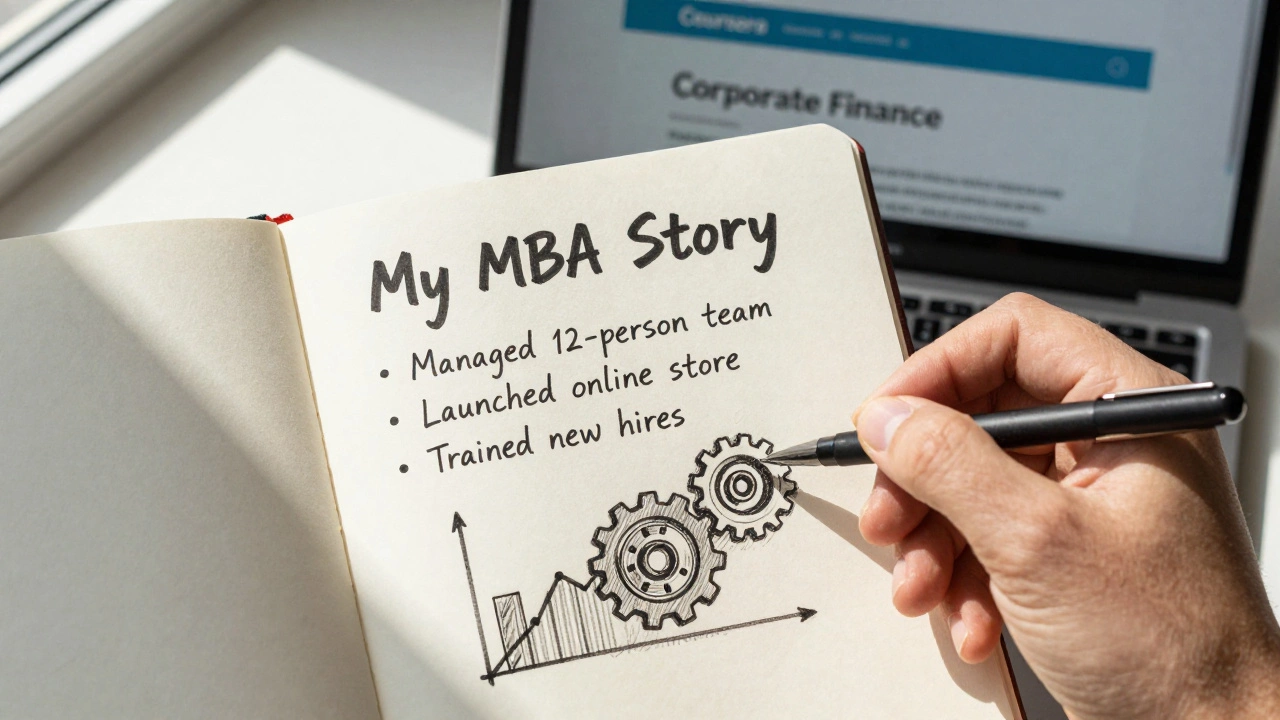
In 2023, a mechanical engineer from Chennai got into IIM Ahmedabad. He didn’t have a single business course on his transcript. But he’d:- Managed a team of 12 during his internship at a manufacturing plant
- Launched a small online store selling custom tools, hitting ₹12 lakh in revenue in 18 months
- Volunteered to train new hires in process safety
His MBA essay focused on how engineering taught him systems thinking-and how he wanted to build scalable social enterprises. He didn’t pretend to be a business major. He owned his background.
Another student, a former English literature graduate from Delhi, got into XLRI. She worked in nonprofit communications. Her MBA goal? To build a media startup that amplifies rural voices. She took a MOOC in business modeling and used her writing skills to craft compelling essays. She didn’t need a business degree. She needed clarity.
What about scholarships and placements?
Non-business students aren’t at a disadvantage when it comes to funding or jobs. In fact, many scholarships specifically target candidates from underrepresented fields. At ISB, 30% of merit scholarships in 2024 went to students with non-business undergrad degrees.Employers love diversity too. Consulting firms, tech companies, and startups actively recruit engineers, scientists, and creatives for roles in product management, operations, and strategy. Your unique background becomes your edge-not a weakness.

What you should avoid
Don’t try to fake a business background. Don’t say you “always loved finance” if you’ve never opened a spreadsheet. Admissions officers hear that line too often. They can spot insincerity.Also, don’t wait until you’re 35 to apply. Most programs prefer candidates under 30. The earlier you act, the more time you have to build your profile.
Step-by-step: Your roadmap
If you’re serious about an MBA without a business degree, here’s what to do:- Take a free online course in business fundamentals (e.g., “Introduction to Corporate Finance” on Coursera).
- Start tracking your professional achievements-numbers, impact, leadership moments.
- Take the GMAT or GRE. Aim for a score above the program’s average (e.g., 700+ for top Indian schools).
- Ask for recommendations from people who’ve seen you lead, not just supervise.
- Write essays that answer: “Why me? Why now? Why this school?”
- Apply early. Deadlines matter more than you think.
Final thought: Your background is your advantage
Business schools aren’t looking for clones. They want thinkers who challenge the status quo. Your lack of a business degree isn’t a gap-it’s a different starting point. The world doesn’t need more business grads who think like business grads. It needs people who see problems from outside the box.If you’ve ever fixed a broken process, managed a tight deadline, or convinced a skeptical team to follow your idea-you already have what MBA programs are looking for. You just need to show it.
Can I get into a top MBA program without any business coursework?
Yes. Top programs like ISB, IIMs, and XLRI regularly admit students with engineering, science, arts, and humanities backgrounds. What matters is your work experience, GMAT/GRE score, clarity of goals, and how well you articulate your unique perspective in essays and interviews.
Do I need to take business classes before applying?
Not required, but highly recommended. Completing a short course in accounting, economics, or statistics (like those on Coursera or edX) shows initiative and helps you handle MBA coursework. It also gives you talking points in interviews.
Is the GMAT harder for non-business students?
The GMAT tests reasoning, not business knowledge. The quantitative section includes algebra, geometry, and data interpretation-not accounting or finance formulas. Many engineers score higher than business majors because they’re comfortable with numbers. Focus on practice, not background.
Can I switch careers after an MBA without a business background?
Absolutely. In fact, MBA programs are designed for career switches. Around 60% of students at Indian MBA schools change industries. Engineers become consultants. Teachers become product managers. Doctors enter healthcare startups. Your MBA gives you the framework; your background gives you the edge.
Are there scholarships for non-business students?
Yes. Many schools offer merit-based scholarships specifically for candidates from underrepresented academic backgrounds. ISB, for example, awarded 30% of its merit scholarships in 2024 to students without business degrees. Highlight your unique journey in your application to qualify.