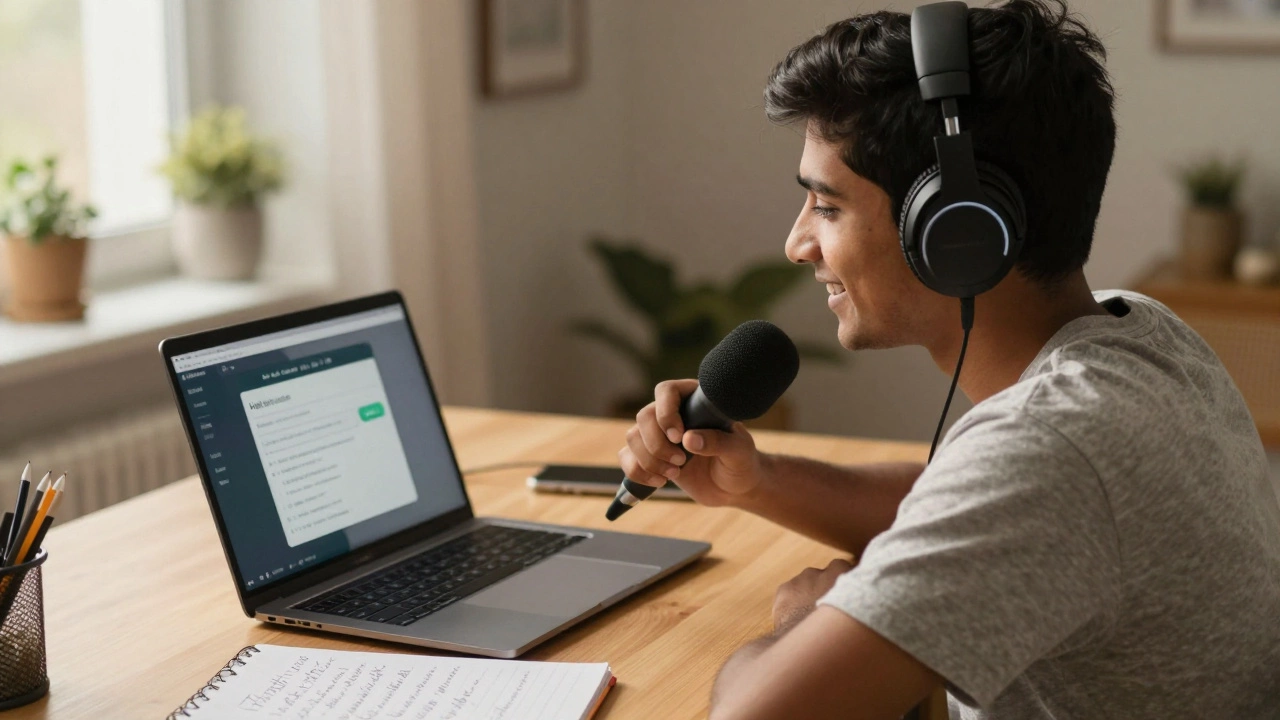
Want to speak English confidently but don’t know where to start? You’re not alone. Millions of people around the world - especially in countries like India - struggle with speaking English even after years of studying grammar and vocabulary. The problem isn’t lack of knowledge. It’s lack of practice. You can memorize every rule in a textbook, but if you never actually speak, you’ll stay stuck. The good news? There are real, free, and effective websites that let you practice speaking English every day - no classroom needed.
Why Speaking Is Different From Reading or Writing
Most English learners spend years memorizing vocabulary lists, doing grammar drills, and writing essays. But when it comes to real conversations - like ordering coffee, asking for directions, or talking to a colleague - they freeze. Why? Because speaking isn’t about knowing words. It’s about using them fast, naturally, and without overthinking.
Think of it like learning to ride a bike. You can read every book about balance, pedals, and steering, but you won’t learn until you get on the bike and fall a few times. Speaking English works the same way. You need to hear it, mimic it, make mistakes, and try again - over and over.
That’s why apps and websites that focus on live interaction beat traditional courses. They give you real-time feedback, native speakers to talk to, and situations that force you to respond - not just recall.
Italki: Learn From Real People
Italki is one of the most popular platforms for speaking English - and for good reason. It connects you with professional teachers and community tutors from around the world. Unlike big-name apps that use AI, Italki gives you real humans. You can book a 25-minute lesson for as low as $5. Some tutors are certified teachers. Others are native speakers who just want to share their language.
You pick your tutor based on their accent, teaching style, and price. Want to sound like a British person? Find a tutor from London. Prefer American English? Choose someone from New York or Texas. You can even ask to focus on specific situations - job interviews, hotel check-ins, or casual chats with friends.
One user from Bangalore told me she went from barely speaking to holding 20-minute conversations in just 12 weeks. She practiced twice a week, always recording herself afterward. She listened, noticed her mistakes, and tried again. That’s the secret: consistency beats perfection.
Speaky: Practice With Native Speakers for Free
If you’re on a tight budget, Speaky is a game-changer. It’s a free language exchange platform where you teach someone your language (like Hindi or Tamil) in exchange for them helping you practice English. No money changes hands. Just time and effort.
The app matches you with people based on location, interests, and skill level. You can chat via text, voice, or video. The voice feature is especially useful - it lets you hear how words are really pronounced, not just how they look in a textbook.
One Chennai-based student started using Speaky to practice with a student from Canada. They met twice a week: 30 minutes in English, 30 minutes in Tamil. Within three months, his confidence jumped. He started speaking up in class. He even gave a short presentation in English at his college - something he never thought possible before.
Key tip: Don’t just chat about weather or hobbies. Ask questions. Talk about movies, politics, or your favorite food. The more you push beyond small talk, the faster you improve.

HelloTalk: Language Exchange With Built-In Tools
HelloTalk is like Speaky, but with smarter tools. It’s a messaging app designed for language learners. You can send voice messages, get instant corrections from native speakers, and even use the built-in translator to understand tricky phrases.
What makes HelloTalk stand out is its “Correction” feature. When someone writes something in English, you can tap on a word or sentence, and it highlights errors. The native speaker then shows you the correct version - often with an explanation. This turns every conversation into a mini-lesson.
It also has a “Trends” section where users post daily prompts. One day it might be: “What’s your favorite way to relax?” Another day: “Describe your dream job.” These prompts help you build vocabulary around real-life topics - not textbook phrases.
Users in Hyderabad report that HelloTalk helped them go from “I’m shy to speak” to “I can now host Zoom calls in English.” The key? Regular interaction. Even 10 minutes a day adds up.
YouTube Channels That Actually Help You Speak
YouTube isn’t just for videos. It’s a goldmine for listening and speaking practice. But not all channels work. You need ones that focus on real conversation, not grammar lectures.
Channels like “Learn English with Emma” and “English Addict with Mr Steve” are perfect. They don’t just talk about English - they speak it. Slowly. Clearly. With real examples. You can pause, repeat, and mimic their sentences. Try shadowing: play a 10-second clip, then speak right after the speaker. Copy their rhythm, tone, and pauses.
One user from Pune started watching 10 minutes of “English Addict” every morning before work. After six months, his accent improved, and he stopped translating sentences in his head. He just started thinking in English. That’s the moment when fluency clicks.
Pro tip: Watch with subtitles on first. Then watch again without them. Then try to summarize what you heard out loud. That’s three layers of practice in one video.
FluentU: Learn English Through Real Videos
FluentU takes real-world videos - movie trailers, news clips, ads, vlogs - and turns them into interactive lessons. Each video has clickable subtitles. Tap any word to see its definition, pronunciation, and example sentences. You can even replay sections to practice listening.
It’s not just about understanding. It’s about mimicking. FluentU has a “Speak” feature where you record yourself repeating phrases from the video. The system gives you instant feedback on your pronunciation. It tells you if you stressed the right syllable or if your intonation sounded off.
Users who stick with FluentU for 30 days report better listening skills and more natural speech patterns. One teacher from Delhi said her students went from robotic English to sounding like they’d lived in an English-speaking country.

What Not to Do
Many people make the same mistake: they rely on apps that only test grammar or vocabulary. Duolingo, Memrise, and Quizlet are great for building words - but they won’t help you speak. You won’t get real conversation. You won’t hear natural flow. You won’t learn how to react.
Also avoid waiting for “perfect” time. You don’t need to be fluent to start speaking. You just need to start. Even if you sound awkward. Even if you make mistakes. That’s how you learn.
How to Build a Daily Speaking Routine
You don’t need hours. You need consistency. Here’s a simple plan:
- Day 1-7: Pick one platform - Italki, Speaky, or HelloTalk. Book one 15-minute session per week.
- Day 8-30: Add 10 minutes of shadowing from YouTube every morning. Repeat after native speakers.
- Day 31-60: Start recording yourself talking for 2 minutes on random topics. Listen back. Notice where you pause or repeat.
- Day 61+: Try speaking with strangers online. Join a free English discussion group on Reddit or Discord.
Track your progress. Notice when you understand jokes. When you don’t need to translate in your head. When someone says, “You sound really natural.” That’s when you know you’re getting there.
Final Thought: Fluency Is a Habit, Not a Goal
There’s no magic website. No app that turns you fluent overnight. But if you use the right tools - and use them regularly - you will improve. The key is to treat speaking like brushing your teeth. Not something you do when you feel like it. Something you do because it’s part of your day.
Start small. Speak once a day. Even if it’s just to yourself. Say out loud: “I’m going to the market.” “I like tea more than coffee.” “My favorite movie is Inception.”
It sounds silly. But that’s how fluency begins.
Can I improve my English speaking skills for free?
Yes, absolutely. Websites like Speaky and HelloTalk offer free language exchange with native speakers. YouTube channels like "English Addict with Mr Steve" and "Learn English with Emma" provide free listening and speaking practice. You can also use FluentU’s free trial to access real videos with interactive features. The key is consistent practice - not how much you pay.
Which website is best for beginners in English speaking?
For beginners, HelloTalk is ideal because it gives you gentle, supportive feedback from native speakers. You can start with text chats and slowly move to voice messages. YouTube channels with slow, clear speech - like "Learn English with Emma" - are also perfect. They break down sentences and repeat key phrases. Avoid jumping into live tutoring right away unless you’re ready to make mistakes.
How long does it take to become fluent in spoken English?
There’s no fixed timeline, but most people notice major improvement in 3 to 6 months with daily practice. If you speak for at least 15 minutes a day, five days a week, you’ll start thinking in English instead of translating. Fluency isn’t about knowing every word - it’s about speaking without fear. That comes with repetition, not perfection.
Do I need to pay for English speaking courses?
No, you don’t. While paid platforms like Italki offer structured lessons, free alternatives like Speaky, HelloTalk, and YouTube give you real speaking practice. Many learners in India have reached advanced levels using only free tools. Paying helps if you want personalized feedback or a teacher, but it’s not required to improve.
How can I practice speaking English if I live in a non-English speaking city?
You don’t need to live in an English-speaking country to speak English well. Online platforms connect you with native speakers from anywhere - the U.S., U.K., Australia, Canada. Use Speaky or HelloTalk to find partners. Watch YouTube daily. Record yourself. Join free Discord groups for English learners. The location doesn’t matter - consistent practice does.