Education Path Finder: India
Find the best state and board based on your educational goals
Our Recommendation
Select your priorities and click "Get Recommendation" to see results.
Quick Takeaways on Indian State Education
- Kerala remains the gold standard for basic literacy and public school infrastructure.
- Delhi and Maharashtra offer the most diverse range of high-end private schools and CBSE options.
- Tamil Nadu excels in technical education and professional skill development.
- Rajasthan and Haryana are hubs for intensive competitive exam preparation (IIT-JEE/NEET).
The Literacy Powerhouse: Why Kerala Leads
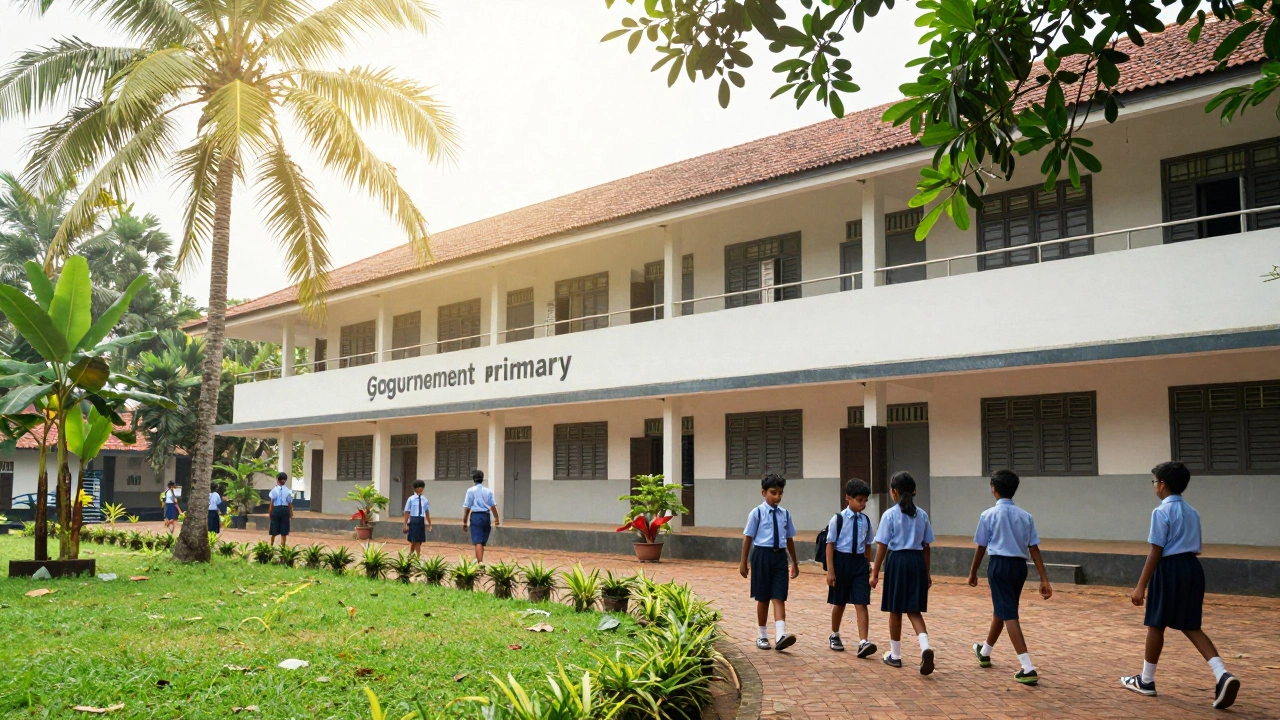
If we define 'best' by how many people can read and write, Kerala is the Indian state with the highest literacy rate, consistently hovering around 94-96% . But it's not just about the numbers. The state has a deep-rooted culture of investing in public health and schooling. You'll find that even in remote villages, the government schools are often well-maintained and the teachers are highly qualified.
The secret here is the decentralized management of schools. Local panchayats have a say in how schools are run, which means the community actually cares if the roof is leaking or if the textbooks arrive on time. For a parent, this means a reliable safety net. You don't necessarily need a fancy private school in Kerala to get a quality foundational education, which is a rarity in other parts of the country.
The Urban Hubs: Delhi and Maharashtra
Now, if you're looking for the best education state India in terms of variety, global exposure, and access to the CBSE Syllabus (Central Board of Secondary Education), you have to look at the metropolitan hubs. Delhi and Maharashtra operate differently than Kerala. Here, the battle isn't between public and private, but between different types of private schooling: International Baccalaureate (IB), Cambridge, and CBSE.
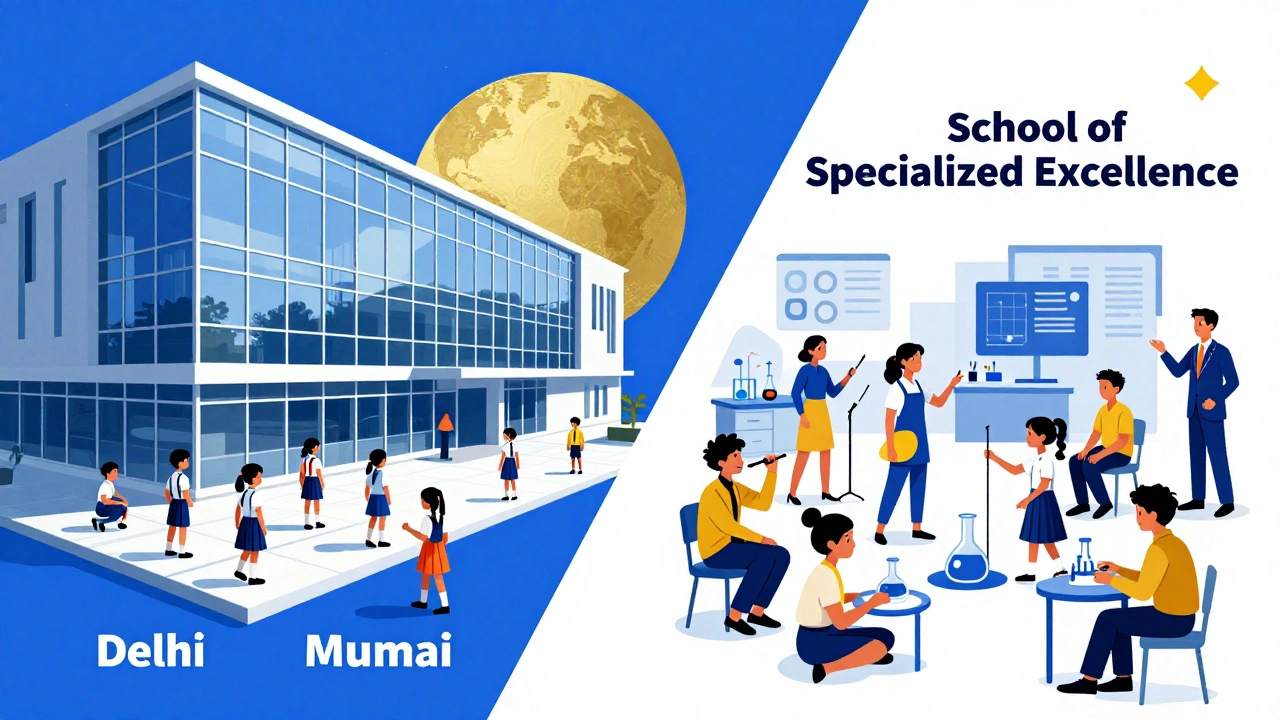
In Delhi, the government has recently pushed a massive overhaul of state schools, introducing 'Schools of Specialized Excellence'. This is a game-changer because it allows students to focus on things like Performing Arts or Health Sciences as early as 9th grade. Meanwhile, Maharashtra-specifically Mumbai and Pune-serves as the gateway for professional courses. The density of coaching institutes and the proximity to top-tier universities make it a magnet for ambitious students.
| State | Primary Strength | Typical Board Focus | Best For... |
|---|---|---|---|
| Kerala | Public Schooling | State Board / CBSE | Foundational Literacy |
| Delhi | Specialized Schooling | CBSE / IB | Holistic & Diverse Options |
| Tamil Nadu | STEM & Tech | State Board / CBSE | Engineering & Medicine |
| Maharashtra | Higher Ed & Coaching | State Board / CBSE | Professional Networking |
The Technical Edge in Tamil Nadu
Walk into any neighborhood in Chennai or Coimbatore, and you'll see a staggering number of tuition centers and technical institutes. Tamil Nadu has carved out a niche in technical education. The state's focus on mathematics and science in the school curriculum is legendary, which is why it produces such a high volume of engineers.
What's interesting here is the synergy between schools and the industry. Because the state is a manufacturing hub (especially in electronics and automotive), the education system tends to lean toward practical application. If you want your child to be proficient in coding or robotics by the time they hit 12, Tamil Nadu's ecosystem is arguably the most supportive in India.
The Coaching Capital: Rajasthan and Haryana
We can't talk about education in India without talking about the 'shadow education' system-coaching. In states like Rajasthan (specifically Kota) and parts of Haryana, the education system is designed almost exclusively for one thing: cracking the IIT JEE or NEET exams.
Is this the 'best' education? That depends on your definition. If you measure success by the number of students entering the Indian Institute of Technology (IIT), then these regions are unbeatable. The rigor is unmatched. However, this often comes at the cost of a balanced childhood. The focus is heavily on the CBSE syllabus because it aligns perfectly with these competitive exams, making these states the epicenter of a very specific, high-pressure academic culture.
Choosing the Right Board: CBSE vs. State Boards
A huge part of the 'best state' debate is actually a debate about the curriculum. Most parents now prefer the CBSE over state boards, even in states with great local systems. Why? Because the CBSE syllabus is standardized across the country. If you move from Bangalore to Delhi, your child doesn't have to learn a whole new set of textbooks.
State boards, on the other hand, are better for students who want to stay within that state for higher education. For example, the Tamil Nadu state board is meticulously designed to help students excel in state-level engineering entrance tests. The trade-off is flexibility. CBSE is the 'safe' bet for national mobility, while state boards are the 'specialist' bet for regional success.
The Role of Private vs. Government Spending
The divide in Indian education isn't just state-to-state, but system-to-system. In states like Bihar or Uttar Pradesh, there is a massive gap between the struggling government schools and the elite private schools. In contrast, Kerala's gap is much smaller. When we ask which state is best, we have to ask: Best for whom?
For a middle-class family with a budget for private schooling, Delhi or Bangalore offer world-class facilities. For a family relying on public infrastructure, Kerala is the only real answer. This disparity shows that 'education quality' in India is often a reflection of the local government's willingness to fund the public sector versus the market's ability to provide private alternatives.
Is the CBSE syllabus better than State Boards?
It depends on your goals. CBSE is generally better if you plan to move between states or are aiming for national competitive exams like JEE or NEET, as the curriculum is aligned with these tests. State boards are often better for those pursuing professional degrees within their own state, as they may offer specific advantages for state-quota admissions.
Why is Kerala considered the most educated state?
Kerala has the highest literacy rate in India due to a long history of social reform and heavy government investment in primary education and healthcare. Their model focuses on universal access, meaning almost every child, regardless of their background, has access to a functioning school.
Which state is best for coaching for competitive exams?
Rajasthan, specifically Kota, is the most famous hub for IIT-JEE and NEET coaching. However, Delhi and Hyderabad have also become massive centers for these exams, offering a mix of traditional classroom coaching and modern ed-tech solutions.
Are private schools in Delhi better than those in other states?
Delhi has a very high density of top-tier private and international schools, giving parents more choices. While other states like Maharashtra or Karnataka also have elite schools, Delhi's concentration of high-end institutions makes it a top choice for families seeking a global curriculum.
Does the state affect the quality of the CBSE syllabus?
The syllabus itself is the same across India because it is set by the central board in Delhi. However, the delivery of that syllabus-the quality of teachers, the school infrastructure, and the additional coaching provided-varies significantly from state to state.
Next Steps for Parents and Students
If you're deciding where to settle for your child's education, start by identifying your priority. If you want a stress-free, high-literacy environment with great public options, look toward the South, specifically Kerala. If you're aiming for the Ivy League or top Indian institutes and don't mind the pressure, the hubs in Delhi, Kota, or Mumbai are your best bet.
Also, consider the 'Board' first. If you aren't sure where you'll be living in five years, stick with CBSE. It removes the friction of relocating. Finally, don't just look at state averages-look at the specific city. Education in India is often a 'city-level' phenomenon rather than a 'state-level' one. A great school in a small town in Rajasthan might be better than a mediocre one in a big city in Kerala.